Lawrence Sherman - Böcker
Visar alla böcker från författaren Lawrence Sherman. Handla med fri frakt och snabb leverans.
5 produkter
5 produkter
384 kr
Skickas
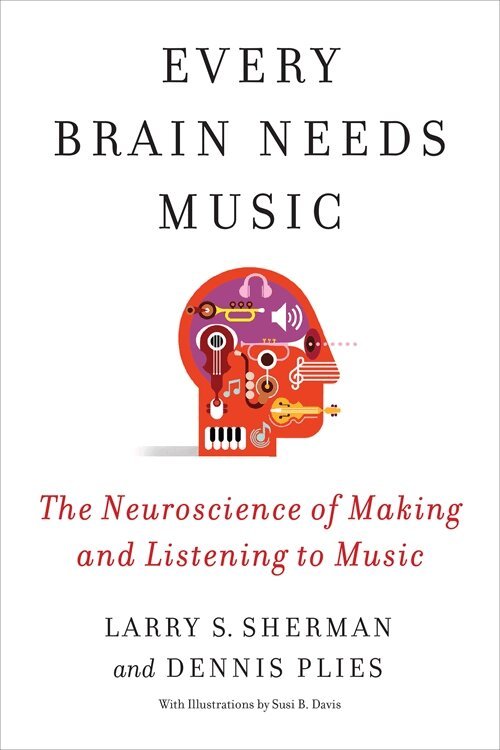
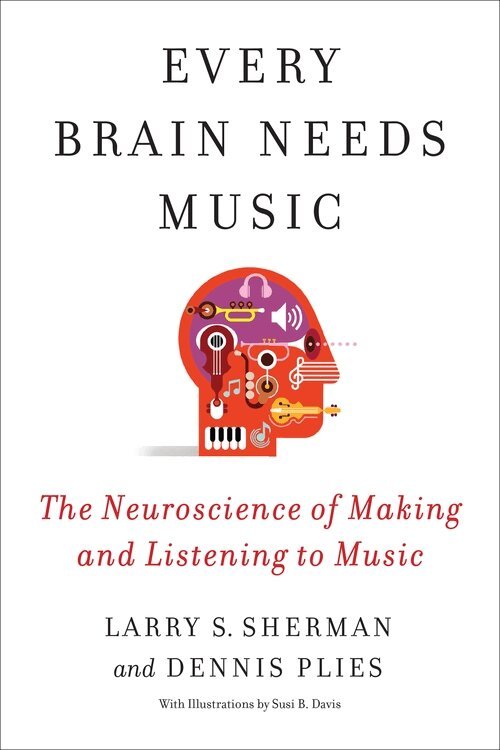
Whenever a person engages with music—when a piano student practices a scale, a jazz saxophonist riffs on a melody, a teenager sobs to a sad song, or a wedding guest gets down on the dance floor—countless neurons are firing. Playing an instrument requires all of the resources of the nervous system, including cognitive, sensory, and motor functions. Composition and improvisation are remarkable demonstrations of the brain’s capacity for creativity. Something as seemingly simple as listening to a tune involves mental faculties most of us don’t even realize we have.Larry S. Sherman, a neuroscientist and lifelong musician, and Dennis Plies, a professional musician and teacher, collaborate to show how our brains and music work in harmony. They consider music in all the ways we encounter it—teaching, learning, practicing, listening, composing, improvising, and performing—in terms of neuroscience as well as music pedagogy, showing how the brain functions and even changes in the process. Every Brain Needs Music draws on leading behavioral, cellular, and molecular neuroscience research as well as surveys of more than a hundred musical people. It provides new perspectives on learning to play, teaching, how to practice and perform, the ways we react to music, and why the brain benefits from musical experiences.Written for both musical and nonmusical people, including newcomers to brain science, this book is a lively and easy-to-read exploration of the neuroscience of music and its significance in our lives.
210 kr
Skickas inom 7-10 vardagar
Whenever a person engages with music—when a piano student practices a scale, a jazz saxophonist riffs on a melody, a teenager sobs to a sad song, or a wedding guest gets down on the dance floor—countless neurons are firing. Playing an instrument requires all of the resources of the nervous system, including cognitive, sensory, and motor functions. Composition and improvisation are remarkable demonstrations of the brain’s capacity for creativity. Something as seemingly simple as listening to a tune involves mental faculties most of us don’t even realize we have.Larry S. Sherman, a neuroscientist and lifelong musician, and Dennis Plies, a professional musician and teacher, collaborate to show how our brains and music work in harmony. They consider music in all the ways we encounter it—teaching, learning, practicing, listening, composing, improvising, and performing—in terms of neuroscience as well as music pedagogy, showing how the brain functions and even changes in the process. Every Brain Needs Music draws on leading behavioral, cellular, and molecular neuroscience research as well as surveys of more than a hundred musical people. It provides new perspectives on learning to play, teaching, how to practice and perform, the ways we react to music, and why the brain benefits from musical experiences.Written for both musical and nonmusical people, including newcomers to brain science, this book is a lively and easy-to-read exploration of the neuroscience of music and its significance in our lives.
2 302 kr
Skickas inom 10-15 vardagar
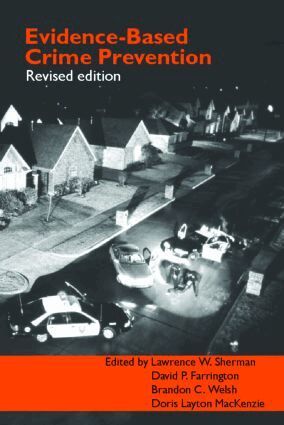
Crime prevention policy and practice is, on the whole, far from objective. Instead of being based on scientific evidence, the crime policy agenda is seemingly driven by political ideology, anecdotal evidence and programme trends. Evidence-Based Crime Prevention seeks to change this by comprehensively and rigorously assessing the existing scientific knowledge on the effectiveness of crime prevention programmes internationally. Reviewing more than 600 scientific evaluations of programmes intended to prevent crime in settings such as families, schools, labour markets and communities, this book grades programmes on their scientific validity using the 'scientific methods scale'. This collection, which brings together contributions from leading researchers in the field of crime prevention, will provide policy-makers, researchers and community leaders with an understandable source of information about what works, what does not work and what is promising in preventing crime.
1 073 kr
Skickas inom 10-15 vardagar
Crime prevention policy and practice is often far from objective. Instead of being based on scientific evidence, the crime policy agenda is sometimes driven by political ideology, anecdotal evidence and program favorites of the month. Evidence-Based Crime Prevention seeks to change this by comprehensively and rigorously assessing the existing scientific knowledge on the effectiveness of crime prevention programs internationally.Reviewing more than 600 scientific evaluations of programs intended to prevent crime in settings such as families, schools, labor markets, places and communities, this book grades programs on their validity using "the scientific methods scale." This collection, which brings together contributions from leading researchers in the field of crime prevention, will provide policy makers, researchers and community leaders with an understandable source of information about what works, what does not work and what is promising in preventing crime. The revised edition of this internationally renown and highly influential book contains an entirely new and up-to-date introductory chapter. This new chapter takes stock of important new developments that are helping to make crime prevention more rational and also sets out the contribution of this book to evidence-based crime prevention.
749 kr
Skickas inom 10-15 vardagar
What are the cost savings from preventing a typical burglary, robbery, assault, or even a criminal career? Who benefits from these savings? How often do the benefits from preventing crime or criminal behaviour exceed the resources spent on preventing or controlling crime? Is it more cost-effective to invest in early childhood programs or juvenile boot camps to reduce criminal offending? These are some of the important questions that face policymakers in crime and justice today. Answering them is no easy task. Nevertheless, it is important to provide answers in order to ensure that the dollars devoted to crime reduction are spent as efficiently as possible. The principle aim of Costs and Benefits of Preventing Crime is to report on and assess the present state of knowledge on the monetary costs and benefits of crime prevention programs. Remarkably, this crucial topic has rarely been studied up to the present time. This book examines key methodological issues, reports on the most up-to-date research findings, discusses international policy perspectives, and presents an agenda for future research and policy development on the economic analysis of crime prevention. Throughout, it addresses the important question of how governments should be allocating scarce resources to make crime prevention policy and practice more effective and to produce the greatest economic benefits to society. The book brings together research and perspectives from across North America, Europe, and Australia.