Lawrence Sklar - Böcker
Visar alla böcker från författaren Lawrence Sklar. Handla med fri frakt och snabb leverans.
15 produkter
15 produkter
1 025 kr
Skickas inom 5-8 vardagar
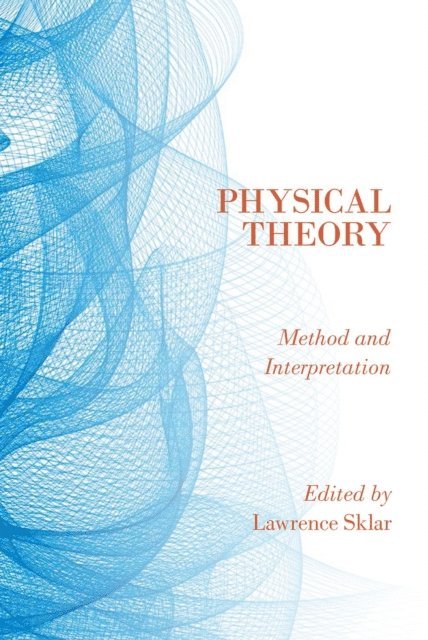
In nine new essays, distinguished philosophers of science take on outstanding philosophical issues that arise in the exploration of the foundations of contemporary, especially physical scientific theories. In the first part of the book issues of scientific method are explored. What are we asking when we pose scientific "why?" questions? How does probability play a role in answering such questions? What are scientific laws of nature? How can we understand what abstract theories are telling us about the world? What is the structure of the theories we use to explain the observable phenomena? Finally, how do theories evolve over time and what consequence do such changes have for our intuition that science is seeking the truth? In the second part of the volume, foundational issues are explored in a number of crucial physical theories. What do our best available theories tell us about space and time? When we apply quantum theory to fields or other systems with infinite degrees of freedom, what new foundational puzzles appear and how might a theory of interpretation deal with them? Finally, what are the crucial foundational issues in statistical mechanics, where probabilities are applied to explain macroscopic thermal phenomena?

642 kr
Skickas inom 5-8 vardagar
The systematic study of the physical world had its orgins in philosophy; two-and-a-half millennia later, the scientific advances of the twentieth century are bringing the two fields closer together again. In this brilliant new textbook, Lawrence Sklar gives a broad overview of contemporary philosophy of physics which readers at all levels, especially students, should find accessible and engaging. Professor Sklar provides a clear and accurate guide to the key topics: the nature of space and time, the problems of probability and irreversibility in statistical mechanics, and, of course, the many notorious problems raised by quantum mechanics. He discusses sophisticated scientific questions, but avoids the use of technical formalism, so that the discussion will be accessible to those without a training in philosophy or physics.
603 kr
Skickas inom 7-10 vardagar
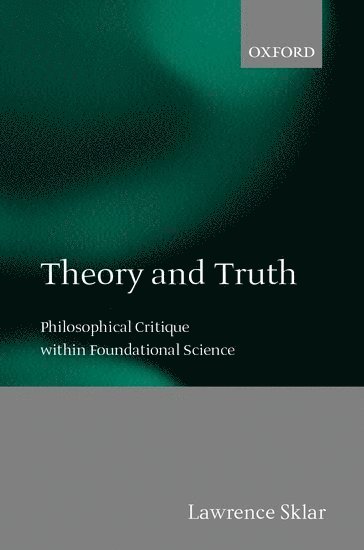
Skeptics have cast doubt on the idea that scientific theories give us a true picture of an objective world. Lawrence Sklar examines three kinds of skeptical arguments about scientific truth, and explores the important role that these play within foundational science itself, especially physics.First, doubts have been expressed about the legitimacy of claiming truth for assertions about the realm of the unobservable. Second, scientific theories have been characterized as relying heavily on idealization of the physical systems they seek to describe. Third, it is noted that scientific theories tend to be transient, and even the best currently available are expected to be replaced in the future. Sklar demonstrates that these kinds of philosophical critique are employed within science itself, and reveals the clear difference between how they operate in a scientific and in a more abstract philosophical context.The underlying theme of Theory and Truth is that science and philosophy are essential to, and inextricable from, each other. One cannot understand the methods of science except by understanding philosophy, and one cannot fruitfully pursue philosophy of science without understanding foundational science as well.
1 953 kr
Skickas inom 10-15 vardagar
The study of the physical world had its origins in philosophy, and, two-and-one-half millennia later, the scientific advances of the twentieth century are bringing the two fields closer together again. So argues Lawrence Sklar in this brilliant new text on the philosophy of physics.Aimed at students of both disciplines, Philosophy of Physics is a broad overview of the problems of contemporary philosophy of physics that readers of all levels of sophistication should find accessible and engaging. Professor Sklar's talent for clarity and accuracy is on display throughout as he guides students through the key problems: the nature of space and time, the problems of probability and irreversibility in statistical mechanics, and, of course, the many notorious problems raised by quantum mechanics.Integrated by the theme of the interconnectedness of philosophy and science, and linked by many references to the history of both disciplines, Philosophy of Physics is always clear, while remaining faithful to the complexity and integrity of the issues. It will take its place as a classic text in a field of fundamental intellectual importance.
282 kr
Skickas inom 7-10 vardagar
In this book, Lawrence Sklar demonstrates the interdependence of science and philosophy by examining a number of crucial problems on the nature of space and time - problems that require for their resolution the resources of philosophy and of physics. The overall issues explored are our knowledge of the geometry of the world, the existence of spacetime as an entity over and above the material objects of the world, the relation between temporal order and causal order, and the problem of the direction of time. Without neglecting the most subtle philosophical points or the most advanced contributions of contemporary physics, the author has taken pains to make his explorations intelligible to the reader with no advanced training in physics, mathematics, or philosophy. The arguments are set forth step-by-step, beginning from first principles; and, the philosophical discussions are supplemented in detail by nontechnical expositions of crucial features of physical theories.
Physics and Chance
Philosophical Issues in the Foundations of Statistical Mechanics
Häftad, Engelska, 1995
599 kr
Skickas inom 7-10 vardagar
Statistical mechanics is one of the crucial fundamental theories of physics, and in his new book Lawrence Sklar, one of the pre-eminent philosophers of physics, offers a comprehensive, non-technical introduction to that theory and to attempts to understand its foundational elements. Among the topics treated in detail are: probability and statistical explanation, the basic issues in both equilibrium and non-equilibrium statistical mechanics, the role of cosmology, the reduction of thermodynamics to statistical mechanics, and the alleged foundation of the very notion of time asymmetry in the entropic asymmetry of systems in time. The book emphasises the interaction of scientific and philosophical modes of reasoning, and in this way will interest all philosophers of science as well as those in physics and chemistry concerned with philosophical questions. The book could also be read by an informed general reader interested in the foundations of modern science.
322 kr
Skickas inom 7-10 vardagar
Although now replaced by more modern theories, classical mechanics remains a core foundational element of physical theory. From its inception, the theory of dynamics has been riddled with conceptual issues and differing philosophical interpretations and throughout its long historical development, it has shown subtle conceptual refinement. The interpretive program for the theory has also shown deep evolutionary change over time. Lawrence Sklar discusses crucial issues in the central theory from which contemporary foundational theories are derived and shows how some core issues (the nature of force, the place of absolute reference frames) have nevertheless remained deep puzzles despite the increasingly sophisticated understanding of the theory which has been acquired over time. His book will be of great interest to philosophers of science, philosophers in general and physicists concerned with foundational interpretive issues in their field.
1 034 kr
Skickas inom 7-10 vardagar
Although now replaced by more modern theories, classical mechanics remains a core foundational element of physical theory. From its inception, the theory of dynamics has been riddled with conceptual issues and differing philosophical interpretations and throughout its long historical development, it has shown subtle conceptual refinement. The interpretive program for the theory has also shown deep evolutionary change over time. Lawrence Sklar discusses crucial issues in the central theory from which contemporary foundational theories are derived and shows how some core issues (the nature of force, the place of absolute reference frames) have nevertheless remained deep puzzles despite the increasingly sophisticated understanding of the theory which has been acquired over time. His book will be of great interest to philosophers of science, philosophers in general and physicists concerned with foundational interpretive issues in their field.
793 kr
Skickas inom 10-15 vardagar
The study of the physical world had its origins in philosophy, and, two-and-one-half millennia later, the scientific advances of the twentieth century are bringing the two fields closer together again. So argues Lawrence Sklar in this brilliant new text on the philosophy of physics.Aimed at students of both disciplines, Philosophy of Physics is a broad overview of the problems of contemporary philosophy of physics that readers of all levels of sophistication should find accessible and engaging. Professor Sklar's talent for clarity and accuracy is on display throughout as he guides students through the key problems: the nature of space and time, the problems of probability and irreversibility in statistical mechanics, and, of course, the many notorious problems raised by quantum mechanics.Integrated by the theme of the interconnectedness of philosophy and science, and linked by many references to the history of both disciplines, Philosophy of Physics is always clear, while remaining faithful to the complexity and integrity of the issues. It will take its place as a classic text in a field of fundamental intellectual importance.
15 378 kr
Tillfälligt slut
First published in 2000. Routledge is an imprint of Taylor & Francis, an informa company.
1 294 kr
Skickas inom 10-15 vardagar
About the Series Contemporary philosophy of science combines a general study from a philosophical perspective of the methods of science, with an inquiry, again from the philosophical point of view, into foundational issues that arise in the various special sciences. Methodological philosophy of science has deep connections with issues at the center of pure philosophy. It makes use of important results, for example, in traditional epistemology, metaphysics and the philosophy of language. It also connects in various ways with other disciplines such as the history and sociology of the sciences, with pure logic, and with such branches of mathematics as probability theory. These volumes are, for the most part, devoted to readings in the methodological aspects of the philosophy of science. One volume, however, takes up the philosophical issues in the foundations of a particularly important special science, that is the issues in the foundations of theories of contemporary physics. The methodological volumes cover a number of crucial general problem areas. The first volume takes up issues in the nature of scientific explanation, and the related issues of the nature of scientific law and of the casual relation among events. The second volume explores issues in the nature and structure of scientific theories. The third volume collects inquiries into the nature of scientific change, as one theory is replaced by another. Volume four is devoted to readings concerning the nature of probability and the nature and justification of inductive reasoning in science. The following volume continues the exploration of the issue of confirming and rejecting theories with a series of readings devoted to Bayesian methodologies in science and to the exploration of non-inductive strategies for rationalizing belief. Finally, volume six explores three major problem areas in the foundation of physics: the nature and rationale for physical theories of space and time; the interpretive problems arising out of the quantum theory; and some puzzles arising out of statistical mechanical theories of physics. The readings are selected and arranged to provide the user with systematic access to the most important contemporary themes in methodological philosophy of science and in philosophy of physics. The selections include many recent contributions to the field, as well as papers and extracts from books and journals otherwise not easily available.
2 289 kr
Skickas inom 10-15 vardagar
About the Series Contemporary philosophy of science combines a general study from a philosophical perspective of the methods of science, with an inquiry, again from the philosophical point of view, into foundational issues that arise in the various special sciences. Methodological philosophy of science has deep connections with issues at the center of pure philosophy. It makes use of important results, for example, in traditional epistemology, metaphysics and the philosophy of language. It also connects in various ways with other disciplines such as the history and sociology of the sciences, with pure logic, and with such branches of mathematics as probability theory. These volumes are, for the most part, devoted to readings in the methodological aspects of the philosophy of science. One volume, however, takes up the philosophical issues in the foundations of a particularly important special science, that is the issues in the foundations of theories of contemporary physics. The methodological volumes cover a number of crucial general problem areas. The first volume takes up issues in the nature of scientific explanation, and the related issues of the nature of scientific law and of the casual relation among events. The second volume explores issues in the nature and structure of scientific theories. The third volume collects inquiries into the nature of scientific change, as one theory is replaced by another. Volume four is devoted to readings concerning the nature of probability and the nature and justification of inductive reasoning in science. The following volume continues the exploration of the issue of confirming and rejecting theories with a series of readings devoted to Bayesian methodologies in science and to the exploration of non-inductive strategies for rationalizing belief. Finally, volume six explores three major problem areas in the foundation of physics: the nature and rationale for physical theories of space and time; the interpretive problems arising out of the quantum theory; and some puzzles arising out of statistical mechanical theories of physics. The readings are selected and arranged to provide the user with systematic access to the most important contemporary themes in methodological philosophy of science and in philosophy of physics. The selections include many recent contributions to the field, as well as papers and extracts from books and journals otherwise not easily available.
1 294 kr
Skickas inom 10-15 vardagar
About the Series Contemporary philosophy of science combines a general study from a philosophical perspective of the methods of science, with an inquiry, again from the philosophical point of view, into foundational issues that arise in the various special sciences. Methodological philosophy of science has deep connections with issues at the center of pure philosophy. It makes use of important results, for example, in traditional epistemology, metaphysics and the philosophy of language. It also connects in various ways with other disciplines such as the history and sociology of the sciences, with pure logic, and with such branches of mathematics as probability theory. These volumes are, for the most part, devoted to readings in the methodological aspects of the philosophy of science. One volume, however, takes up the philosophical issues in the foundations of a particularly important special science, that is the issues in the foundations of theories of contemporary physics. The methodological volumes cover a number of crucial general problem areas. The first volume takes up issues in the nature of scientific explanation, and the related issues of the nature of scientific law and of the casual relation among events. The second volume explores issues in the nature and structure of scientific theories. The third volume collects inquiries into the nature of scientific change, as one theory is replaced by another. Volume four is devoted to readings concerning the nature of probability and the nature and justification of inductive reasoning in science. The following volume continues the exploration of the issue of confirming and rejecting theories with a series of readings devoted to Bayesian methodologies in science and to the exploration of non-inductive strategies for rationalizing belief. Finally, volume six explores three major problem areas in the foundation of physics: the nature and rationale for physical theories of space and time; the interpretive problems arising out of the quantum theory; and some puzzles arising out of statistical mechanical theories of physics. The readings are selected and arranged to provide the user with systematic access to the most important contemporary themes in methodological philosophy of science and in philosophy of physics. The selections include many recent contributions to the field, as well as papers and extracts from books and journals otherwise not easily available.
576 kr
Skickas inom 10-15 vardagar
About the Series Contemporary philosophy of science combines a general study from a philosophical perspective of the methods of science, with an inquiry, again from the philosophical point of view, into foundational issues that arise in the various special sciences. Methodological philosophy of science has deep connections with issues at the center of pure philosophy. It makes use of important results, for example, in traditional epistemology, metaphysics and the philosophy of language. It also connects in various ways with other disciplines such as the history and sociology of the sciences, with pure logic, and with such branches of mathematics as probability theory. These volumes are, for the most part, devoted to readings in the methodological aspects of the philosophy of science. One volume, however, takes up the philosophical issues in the foundations of a particularly important special science, that is the issues in the foundations of theories of contemporary physics. The methodological volumes cover a number of crucial general problem areas. The first volume takes up issues in the nature of scientific explanation, and the related issues of the nature of scientific law and of the casual relation among events. The second volume explores issues in the nature and structure of scientific theories. The third volume collects inquiries into the nature of scientific change, as one theory is replaced by another. Volume four is devoted to readings concerning the nature of probability and the nature and justification of inductive reasoning in science. The following volume continues the exploration of the issue of confirming and rejecting theories with a series of readings devoted to Bayesian methodologies in science and to the exploration of non-inductive strategies for rationalizing belief. Finally, volume six explores three major problem areas in the foundation of physics: the nature and rationale for physical theories of space and time; the interpretive problems arising out of the quantum theory; and some puzzles arising out of statistical mechanical theories of physics. The readings are selected and arranged to provide the user with systematic access to the most important contemporary themes in methodological philosophy of science and in philosophy of physics. The selections include many recent contributions to the field, as well as papers and extracts from books and journals otherwise not easily available.
1 752 kr
Skickas inom 10-15 vardagar
About the Series Contemporary philosophy of science combines a general study from a philosophical perspective of the methods of science, with an inquiry, again from the philosophical point of view, into foundational issues that arise in the various special sciences. Methodological philosophy of science has deep connections with issues at the center of pure philosophy. It makes use of important results, for example, in traditional epistemology, metaphysics and the philosophy of language. It also connects in various ways with other disciplines such as the history and sociology of the sciences, with pure logic, and with such branches of mathematics as probability theory. These volumes are, for the most part, devoted to readings in the methodological aspects of the philosophy of science. One volume, however, takes up the philosophical issues in the foundations of a particularly important special science, that is the issues in the foundations of theories of contemporary physics. The methodological volumes cover a number of crucial general problem areas. The first volume takes up issues in the nature of scientific explanation, and the related issues of the nature of scientific law and of the casual relation among events. The second volume explores issues in the nature and structure of scientific theories. The third volume collects inquiries into the nature of scientific change, as one theory is replaced by another. Volume four is devoted to readings concerning the nature of probability and the nature and justification of inductive reasoning in science. The following volume continues the exploration of the issue of confirming and rejecting theories with a series of readings devoted to Bayesian methodologies in science and to the exploration of non-inductive strategies for rationalizing belief. Finally, volume six explores three major problem areas in the foundation of physics: the nature and rationale for physical theories of space and time; the interpretive problems arising out of the quantum theory; and some puzzles arising out of statistical mechanical theories of physics. The readings are selected and arranged to provide the user with systematic access to the most important contemporary themes in methodological philosophy of science and in philosophy of physics. The selections include many recent contributions to the field, as well as papers and extracts from books and journals otherwise not easily available.