Le Hong Hiep – författare
Visar alla böcker från författaren Le Hong Hiep. Handla med fri frakt och snabb leverans.
3 produkter
3 produkter
Living Next to the Giant
The Political Economy of Vietnam's Relations with China Under Doi Moi
Häftad, Engelska, 2016
332 kr
Skickas inom 10-15 vardagar
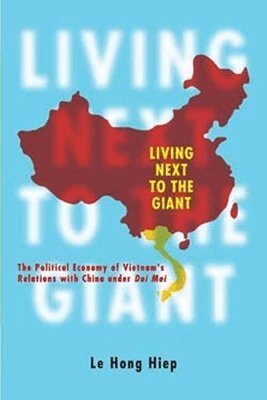
This book examines how the interaction between political and economic factors under Doi Moi has shaped Vietnam's China policy and bilateral relations since the late 1980s. After providing a historical background, the book examines the conflicting effects that Doi Moi has generated on bilateral relations. It demonstrates that Vietnam's economic considerations following the adoption of Doi Moi contributed decidedly to the Sino-Vietnamese normalization in 1991 as well as the continuous improvements in bilateral ties ever since. At the same time, Vietnam's economic activities in the South China Sea and China's responses have intensified bilateral rivalry and put their ties under considerable strains. The book goes on to argue that Doi Moi has indeed brought Vietnam newfound opportunities to develop a multi-level omni-directional hedging strategy against China. Finally, the book concludes by looking at the prospects of democratization in both countries and assessing the future trajectory of their relations under such circumstances. As the most comprehensive and up-to-date survey of Vietnam's relations with China over the past thirty years, the book is a useful reference source for academics, policymakers, students, and anyone interested in contemporary Vietnam foreign policy in general and Vietnam–China relations in particular.
332 kr
Skickas inom 10-15 vardagar
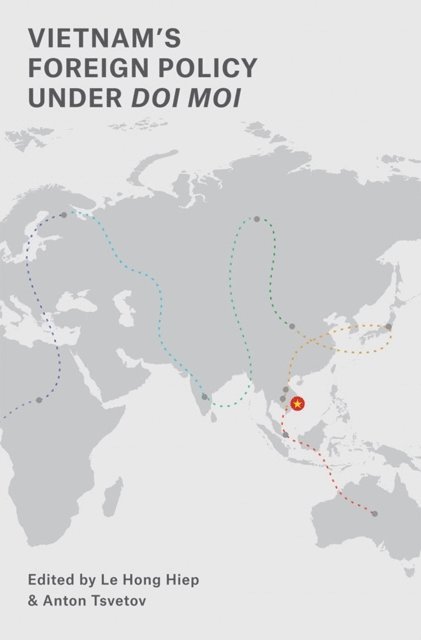
In 1986, the Communist Party of Vietnam (CPV) adopted the Doi Moi (Renovation) policy at its sixth national congress, opening up a new chapter in the country’s modern history. Under Doi Moi, Vietnam has undergone significant socio-economic, political and foreign policy reforms that have transformed the country in many meaningful ways. This edited volume aims to provide an in-depth analysis of the multiple aspects and transformations of Vietnam’s foreign policy over the past thirty years. The book is divided into three sections. The first covers the broader framework of Vietnam’s foreign policymaking and the historical evolution of Vietnam’s diplomacy under Doi Moi. The second examines Vietnam’s bilateral relationships with its major partners, namely the United States, China, Japan, India, Russia, its smaller neighbours (Cambodia and Laos), and ASEAN. Finally, the book looks into two major issues in Vietnam’s current foreign policy: the management of the South China Sea disputes and the international economic integration process. As the most informative, updated and comprehensive volume on Vietnam’s foreign policy under Doi Moi, the book is a useful reference source for academics, policymakers, students as well as anyone interested in contemporary Vietnam in general and its foreign policy in particular.
Vietnam's Industrializaton Ambitions
The Case of Vingroup and the Automotive Industry
Häftad, Engelska, 2019
131 kr
Tillfälligt slut
Vietnam has officially admitted its failure to achieve industrialized economy status by 2020. This failure is partly due to its inability to grow a strong local manufacturing base and develop key strategic industries. The participation of Vingroup, the country’s largest private conglomerate, in the automotive industry has sparked new hopes for Vietnam’s industrialization drive. The company, through its subsidiary Vinfast, aims to become a leading automaker in Southeast Asia with an annual capacity of 500,000 units and a localization ratio of 60 per cent by 2025. Challenges that Vinfast faces include its unproven track record in the industry; the limited size of the national car market; the lack of infrastructure to support car usage in Vietnam; the intense competition from foreign brands; and its initial reliance on imported technologies and know-hows. However, Vinfast enjoys certain advantages in the domestic market, including the large potential of the Vietnamese automotive market; its freedom as a new automaker to define its business strategies without having to deal with legacy issues; Vingroup’s sound business and financial performance and its ecosystem; strong support from the Vietnamese government; and nationalist sentiments that will encourage certain Vietnamese customers to choose its products. If Vinfast is successful, it will boost Vietnam’s GDP growth and reinvent the country’s automotive industry. Its success will also contribute significantly to the realization of Vietnam’s industrialization ambitions and bring private actors into the centre stage of the economy. If the company fails, however, it will cause considerable problems for both Vingroup and the Vietnamese economy.