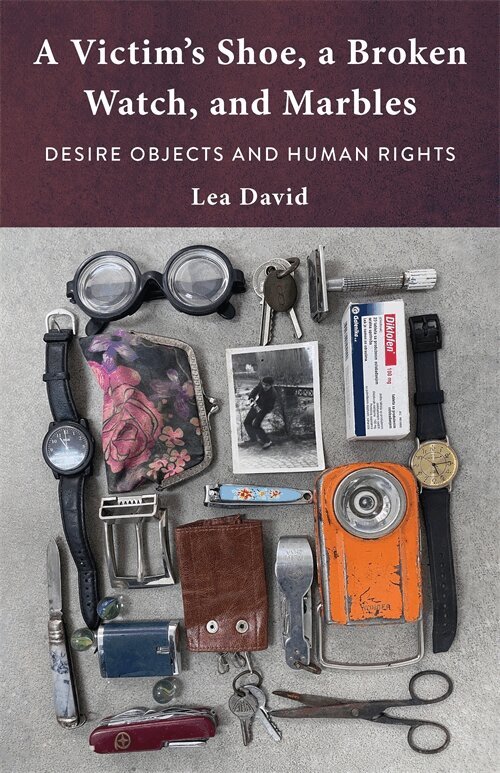
Honorable Mention, 2025 Outstanding Book Award, Peace, War, and Social Conflict Section of the American Sociological AssociationEveryday items found at the sites of atrocities possess a striking emotional force. Victims’ garments, broken glasses, wallets, shoes, and other such personal property that are recovered from places of death including concentration camps, mass graves, and prisons have become staples of memorial museums, exhibited to the public as material testimony in order to evoke sympathy and promote human rights. How do these objects take on such power, and what are the benefits and pitfalls of deploying them for political purposes?A Victim’s Shoe, a Broken Watch, and Marbles examines how artifacts of atrocities circulate and, in so doing, sheds new light on the institutions and social processes that shape collective memory of human rights abuses. Lea David traces the journeys of what she terms “desire objects”: their rediscovery at the locations of mass atrocities, their use in forensic and legal procedures, their return to the homes of grieving families, their appearance in public spaces such as museums and exhibitions, and their role in political protests. She critically investigates the logic that shapes why and how desire objects gain symbolic power and political significance, showing when and under what circumstances they are used to promote particular worldviews and narratives. Featuring both novel theoretical methods and keen empirical analysis, this book offers important insights into the shortcomings of common assumptions about human rights.
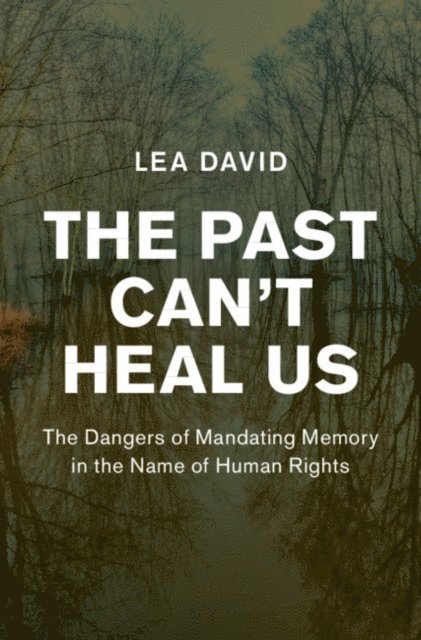
In this innovative study, Lea David critically investigates the relationship between human rights and memory, suggesting that, instead of understanding human rights in a normative fashion, human rights should be treated as an ideology. Conceptualizing human rights as an ideology gives us useful theoretical and methodological tools to recognize the real impact human rights has on the ground. David traces the rise of the global phenomenon that is the human rights memorialization agenda, termed 'Moral Remembrance', and explores what happens once this agenda becomes implemented. Based on evidence from the Western Balkans and Israel/Palestine, she argues that the human rights memorialization agenda does not lead to a better appreciation of human rights but, contrary to what would be expected, it merely serves to strengthen national sentiments, divisions and animosities along ethnic lines, and leads to the new forms of societal inequalities that are closely connected to different forms of corruptions.
In this innovative study, Lea David critically investigates the relationship between human rights and memory, suggesting that, instead of understanding human rights in a normative fashion, human rights should be treated as an ideology. Conceptualizing human rights as an ideology gives us useful theoretical and methodological tools to recognize the real impact human rights has on the ground. David traces the rise of the global phenomenon that is the human rights memorialization agenda, termed ''Moral Remembrance'', and explores what happens once this agenda becomes implemented. Based on evidence from the Western Balkans and Israel/Palestine, she argues that the human rights memorialization agenda does not lead to a better appreciation of human rights but, contrary to what would be expected, it merely serves to strengthen national sentiments, divisions and animosities along ethnic lines, and leads to the new forms of societal inequalities that are closely connected to different forms of corruptions.