Leandro Prados de la Escosura - Böcker
Visar alla böcker från författaren Leandro Prados de la Escosura. Handla med fri frakt och snabb leverans.
8 produkter
8 produkter
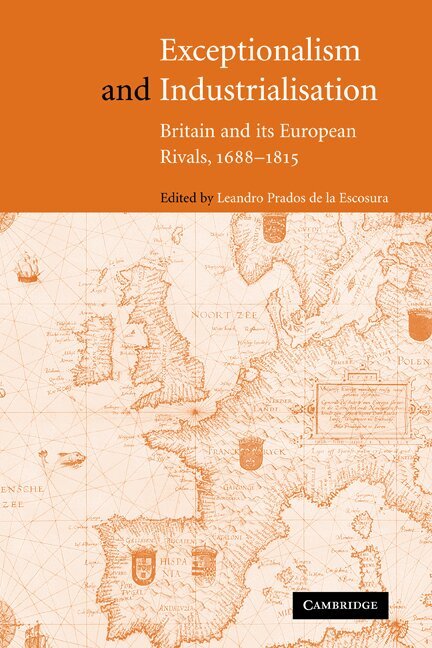
Exceptionalism and Industrialisation
Britain and its European Rivals, 1688-1815
Häftad, Engelska, 2011
631 kr
Skickas inom 7-10 vardagar
This 2004 book explores the question of British exceptionalism in the period from the Glorious Revolution to the Congress of Vienna. Leading historians examine why Great Britain emerged from years of sustained competition with its European rivals in a discernible position of hegemony in the domains of naval power, empire, global commerce, agricultural efficiency, industrial production, fiscal capacity and advanced technology. They deal with Britain's unique path to industrial revolution and distinguish four themes on the interactions between its emergence as a great power and as the first industrial nation. First, they highlight growth and industrial change, the interconnections between agriculture, foreign trade and industrialisation. Second, they examine technological change and, especially, Britain's unusual inventiveness. Third, they study her institutions and their role in facilitating economic growth. Fourth and finally, they explore British military and naval supremacy, showing how this was achieved and how it contributed to Britain's economic supremacy.
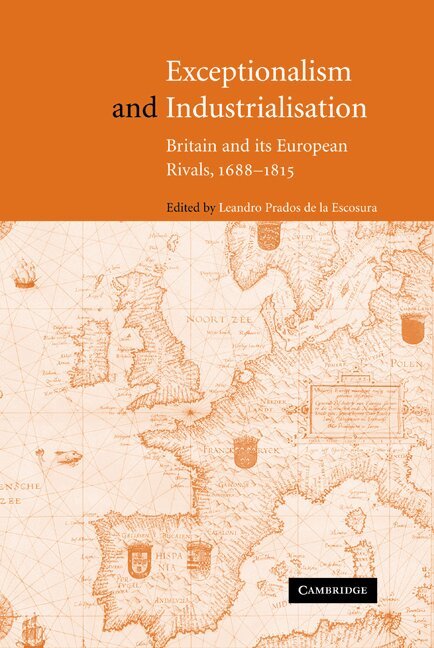
Exceptionalism and Industrialisation
Britain and its European Rivals, 1688-1815
Inbunden, Engelska, 2004
997 kr
Skickas inom 7-10 vardagar
This 2004 book explores the question of British exceptionalism in the period from the Glorious Revolution to the Congress of Vienna. Leading historians examine why Great Britain emerged from years of sustained competition with its European rivals in a discernible position of hegemony in the domains of naval power, empire, global commerce, agricultural efficiency, industrial production, fiscal capacity and advanced technology. They deal with Britain's unique path to industrial revolution and distinguish four themes on the interactions between its emergence as a great power and as the first industrial nation. First, they highlight growth and industrial change, the interconnections between agriculture, foreign trade and industrialisation. Second, they examine technological change and, especially, Britain's unusual inventiveness. Third, they study her institutions and their role in facilitating economic growth. Fourth and finally, they explore British military and naval supremacy, showing how this was achieved and how it contributed to Britain's economic supremacy.
997 kr
Skickas inom 7-10 vardagar
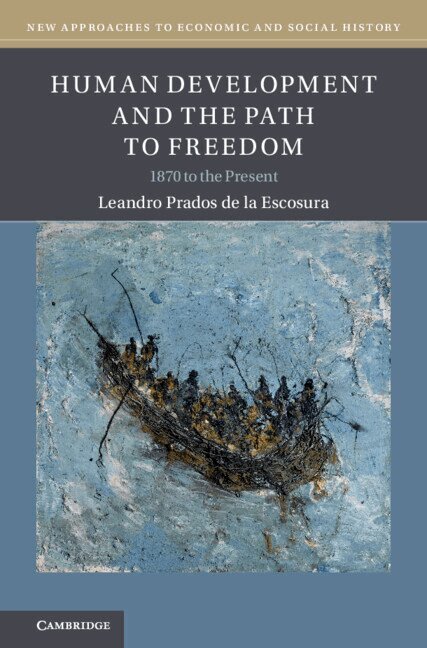
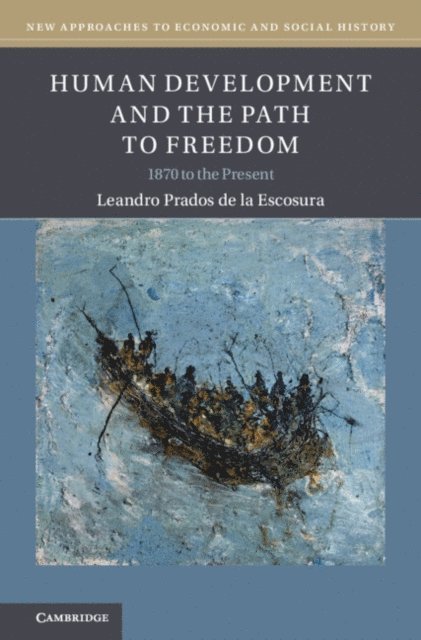
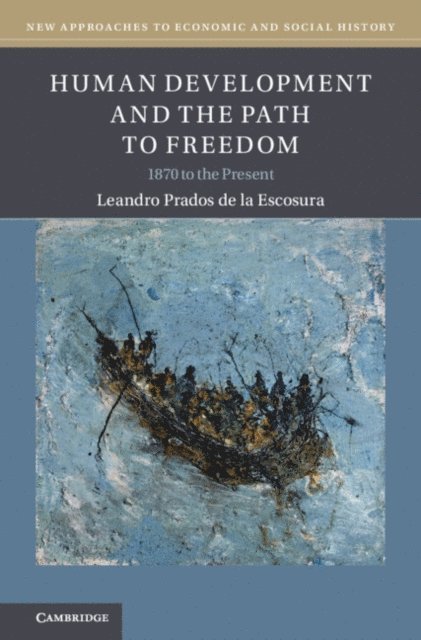
How has human development evolved during the last 150 years of globalization and economic growth? How has human development been distributed across countries? How do developing countries compare to developed countries? Do social systems matter for wellbeing? Are there differences in the performance of developing regions over time? Employing a capabilities approach, Human Development and the Path to Freedom addresses these key questions in the context of modern economic growth and globalization from c.1870 to the present. Leandro Prados de la Escosura shows that health, access to knowledge, standards of living, and civil and political freedom can substitute for GDP per head as more accurate measures of our wellbeing.
318 kr
Skickas inom 7-10 vardagar
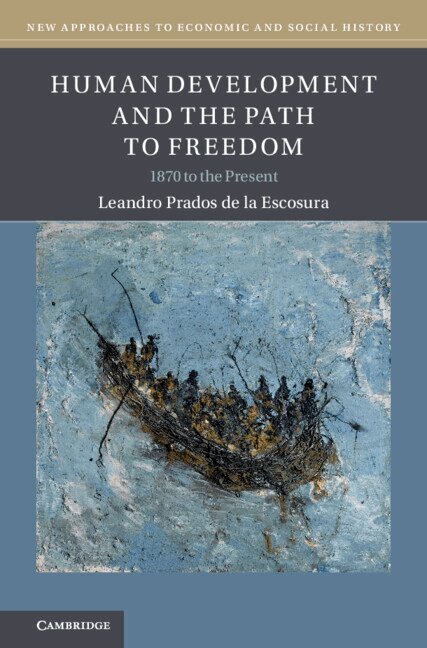
How has human development evolved during the last 150 years of globalization and economic growth? How has human development been distributed across countries? How do developing countries compare to developed countries? Do social systems matter for wellbeing? Are there differences in the performance of developing regions over time? Employing a capabilities approach, Human Development and the Path to Freedom addresses these key questions in the context of modern economic growth and globalization from c.1870 to the present. Leandro Prados de la Escosura shows that health, access to knowledge, standards of living, and civil and political freedom can substitute for GDP per head as more accurate measures of our wellbeing.
550 kr
Skickas inom 10-15 vardagar
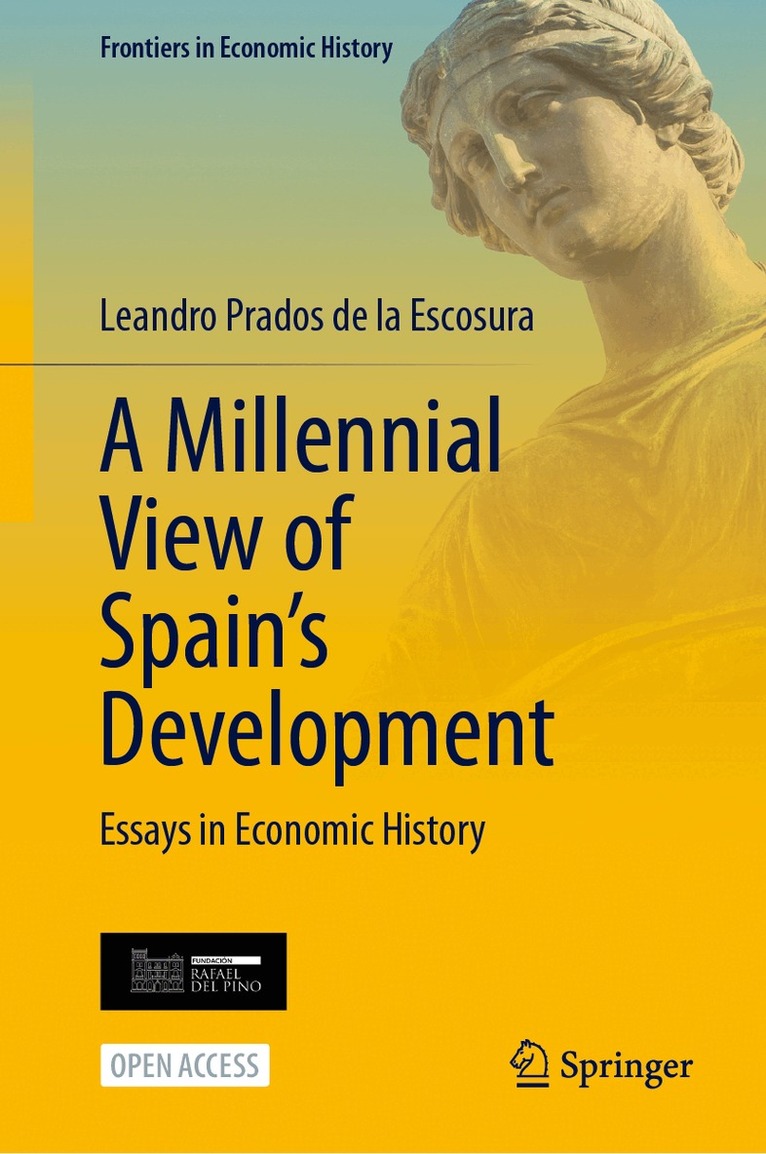
This open access book presents the evolution of the Spanish economy over the past seven centuries since the end of the Reconquest and examines how much economic progress has Spain achieved, as well as its impact on living standards and income distribution over the very long run. It shows that preindustrial Spain was far from stagnant, although levels of output per head in the early nineteenth century were not much different from those on the eve of the Black Death (1348). It further discusses how phases of simultaneous per capita output and population expansion and shrinkage alternated, lending support to the recurring growth and frontier economy hypotheses. While a collapse in the 1570s gave way to sluggish growth and higher inequality after a long phase of sustained growth and lower inequality, the book shows how real per capita income has improved substantially over the last two centuries, driven by increased labor productivity, and derived from more intense andefficient use of physical and human capital per worker. Presenting exposure to international competition as a stimulus for this development, the book sheds light on the underperformance of Spain up to 1950 in a European comparison and describes the catch-up of Spain’s economy with more advanced countries until 2007. Finally, the book explains how modern economic growth is associated with an increase in the material well-being of its inhabitants, as the most dynamic economic phases of the last century have been associated with an improvement in income distribution, although the relationship between growth and inequality has not been linear. This book is a must-read for students, researchers, and scholars of economics and economic history interested in a better understanding of cliometrics, long-run analyses, economic development, economic growth, as well as the Spanish economy.
442 kr
Skickas inom 10-15 vardagar
This open access book presents the evolution of the Spanish economy over the past seven centuries since the end of the Reconquest and examines how much economic progress has Spain achieved, as well as its impact on living standards and income distribution over the very long run. It shows that preindustrial Spain was far from stagnant, although levels of output per head in the early nineteenth century were not much different from those on the eve of the Black Death (1348). It further discusses how phases of simultaneous per capita output and population expansion and shrinkage alternated, lending support to the recurring growth and frontier economy hypotheses. While a collapse in the 1570s gave way to sluggish growth and higher inequality after a long phase of sustained growth and lower inequality, the book shows how real per capita income has improved substantially over the last two centuries, driven by increased labor productivity, and derived from more intense andefficient use of physical and human capital per worker. Presenting exposure to international competition as a stimulus for this development, the book sheds light on the underperformance of Spain up to 1950 in a European comparison and describes the catch-up of Spain’s economy with more advanced countries until 2007. Finally, the book explains how modern economic growth is associated with an increase in the material well-being of its inhabitants, as the most dynamic economic phases of the last century have been associated with an improvement in income distribution, although the relationship between growth and inequality has not been linear. This book is a must-read for students, researchers, and scholars of economics and economic history interested in a better understanding of cliometrics, long-run analyses, economic development, economic growth, as well as the Spanish economy.
311 kr
Skickas inom 10-15 vardagar
This book is open access under a CC BY 4.0 license.This text offers a comprehensive and nuanced view of the economic development of Spain since 1850. It provides a new set of historical GDP estimates for Spain from the demand and supply sides, and presents a reconstruction of production and expenditure series for the century prior to the introduction of modern national accounts. The author splices available national accounts sets over the period 1958–2015 through interpolation, as an alternative to conventional retropolation. The resulting national accounts series are linked to the historical estimates providing yearly series for GDP and its components since 1850. On the basis of new population estimates, the author derives GDP per head, decomposed into labour productivity and the amount of work per person, and placed into international perspective. With theoretical reasoning and historiographical implications, Prados de la Escosura provides a useful methodological reference work for anyone interested in national accounting.Open Access has been made possible thanks to Fundación Rafael del Pino's generous support.You can find the full dataset here: http://espacioinvestiga.org/bbdd-chne/?lang=en‘This book stands among the classics for the Kuznetian paradigm in empirical economics. This is the definitive study of Spain's transition to a modern economy.’ —Patrick Karl O'Brien, Emeritus Fellow at St. Antony’s College, the University of Oxford, UK, and Professor Emeritus of Global Economic History at the London School of Economics and Political Science, UK‘The definitive account of Spanish economic growth since 1850, based firmly on a magisterial reconstruction of that country’s national accounts and an unrivalled knowledge of both Spanish and global economic history of the period.’ —Stephen Broadberry, Professor of Economic History at Nuffield College, the University of Oxford, UK
311 kr
Skickas inom 10-15 vardagar
This book is open access under a CC BY 4.0 license.This text offers a comprehensive and nuanced view of the economic development of Spain since 1850. It provides a new set of historical GDP estimates for Spain from the demand and supply sides, and presents a reconstruction of production and expenditure series for the century prior to the introduction of modern national accounts. The author splices available national accounts sets over the period 1958–2015 through interpolation, as an alternative to conventional retropolation. The resulting national accounts series are linked to the historical estimates providing yearly series for GDP and its components since 1850. On the basis of new population estimates, the author derives GDP per head, decomposed into labour productivity and the amount of work per person, and placed into international perspective. With theoretical reasoning and historiographical implications, Prados de la Escosura provides a useful methodological reference work for anyone interested in national accounting.Open Access has been made possible thanks to Fundación Rafael del Pino's generous support.You can find the full dataset here: http://espacioinvestiga.org/bbdd-chne/?lang=en‘This book stands among the classics for the Kuznetian paradigm in empirical economics. This is the definitive study of Spain's transition to a modern economy.’ —Patrick Karl O'Brien, Emeritus Fellow at St. Antony’s College, the University of Oxford, UK, and Professor Emeritus of Global Economic History at the London School of Economics and Political Science, UK‘The definitive account of Spanish economic growth since 1850, based firmly on a magisterial reconstruction of that country’s national accounts and an unrivalled knowledge of both Spanish and global economic history of the period.’ —Stephen Broadberry, Professor of Economic History at Nuffield College, the University of Oxford, UK