Lee Hock Guan – författare
Visar alla böcker från författaren Lee Hock Guan. Handla med fri frakt och snabb leverans.
5 produkter
5 produkter
475 kr
Skickas inom 10-15 vardagar
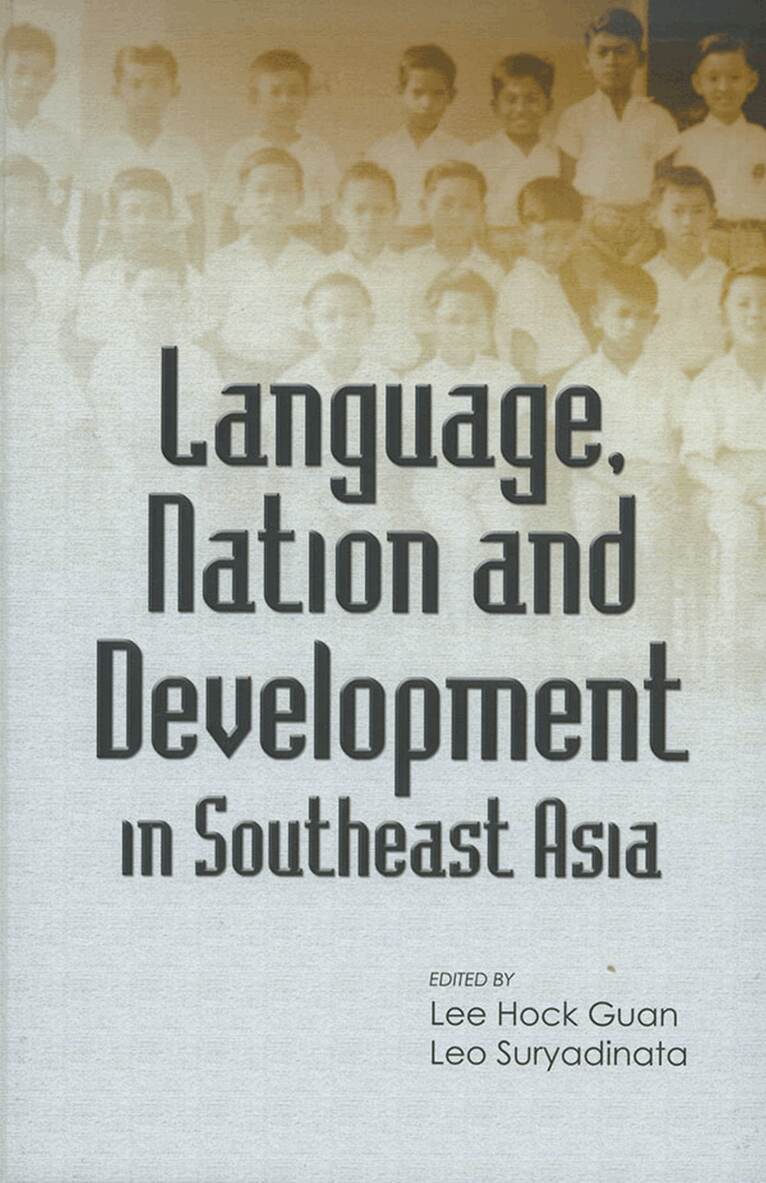
Language policies in Southeast Asia have been shaped by the process of nation-building on the one hand and by political and economic considerations on the other. The early years of nation-building in Southeast Asia generated intensive language conflicts precisely because state policies privileged the idea of a monolingual nation and thus endeavoured to co-opt or even do away with troublesome ethnic identities. In recent years, language policies are increasingly influenced by pragmatic considerations, especially globalization and the awareness of a linkage between language and economic development, such that Southeast Asian states in varying degrees have become less insistent on promoting monolingual nationalism.This book evaluates the successes and drawbacks of language policies in Indonesia, Malaysia, Singapore, the Philippines, Thailand, Vietnam and Myanmar, especially the ways in which these policies have often been resisted or contested. It is an invaluable primer on this linguistically complex region and a resource for scholars, policy-makers, civil society activists and NGOs in various parts of the world facing equally challenging ethnic/language issues.
595 kr
Skickas inom 10-15 vardagar
Southeast and East Asian countries are undergoing varying stages of population ageing. The social, economic and political implications of population ageing will be enormous, and because of the fast speed of ageing in the region, the countries cannot afford the luxury of time for the gradual evolution of social and structural support systems and networks for the older population. The essays in this volume critically examine national ageing policies and programmes, the sustainability of existing pension systems, housing and living arrangements, inter-generational transfer, and aspects of quality of life of the elderly population. While the findings show that most Southeast Asian countries have started to formulate and implement national ageing policies, they also indicate that the existing policies are by and large inadequate and underdeveloped in serving the needs of the older population and indeed much more must be done to prepare for the future.
328 kr
Skickas inom 10-15 vardagar
627 kr
Skickas inom 10-15 vardagar
288 kr
Skickas inom 10-15 vardagar
Prior to the era of globalization, education in Southeast Asia was viewed in the context of the national state and it was deployed in the service of state and nation-building and national economic development. States monopolized education, and public-funded centralized education systems were established to teach literacy, transmit national cultures and promote social cohesion, and to produce literate workers. Globalization forces, however, dramatically impacted in varying ways and degrees the national education systems across the region. As states begun to see their citizens as resources to enhance the countries' competitiveness in the global market, it, among other things, led to the increasing demand for highly skilled and qualified human capital. The accompanying neoliberal ideology led to varying degrees of decentralization, privatization and internationalization of education, especially of higher education, in Southeast Asia.The chapters in this volume focus on a number of issues and challenges confronting the education sector in Southeast Asia, including: (i) the contrasting language in education policy in Singapore and Malaysia; (ii) the introduction of an English-medium private education sector in Malaysia; (iii) the internationalization of Thai higher education; (iv) access and quality issues in the massification of Malaysian higher education; (v) secondary school quality and higher education participation in Indonesia;(vi) equity, access and retention in primary school education in Malaysia; and(vii) reforms in the primary and secondary education in Myanmar.