Lee McIntyre – författare
185 kr
Skickas
169 kr
Skickas
199 kr
Läs direkt efter köp
How we arrived in a post-truth era, when “alternative facts” replace actual facts, and feelings have more weight than evidence.
Are we living in a post-truth world, where “alternative facts” replace actual facts and feelings have more weight than evidence? How did we get here? In this volume in the MIT Press Essential Knowledge series, Lee McIntyre traces the development of the post-truth phenomenon from science denial through the rise of “fake news,” from our psychological blind spots to the public''s retreat into “information silos.”
What, exactly, is post-truth? Is it wishful thinking, political spin, mass delusion, bold-faced lying? McIntyre analyzes recent examples—claims about inauguration crowd size, crime statistics, and the popular vote—and finds that post-truth is an assertion of ideological supremacy by which its practitioners try to compel someone to believe something regardless of the evidence. Yet post-truth didn''t begin with the 2016 election; the denial of scientific facts about smoking, evolution, vaccines, and climate change offers a road map for more widespread fact denial. Add to this the wired-in cognitive biases that make us feel that our conclusions are based on good reasoning even when they are not, the decline of traditional media and the rise of social media, and the emergence of fake news as a political tool, and we have the ideal conditions for post-truth. McIntyre also argues provocatively that the right wing borrowed from postmodernism—specifically, the idea that there is no such thing as objective truth—in its attacks on science and facts.
McIntyre argues that we can fight post-truth, and that the first step in fighting post-truth is to understand it.
212 kr
Läs direkt efter köp
An argument that what makes science distinctive is its emphasis on evidence and scientists'' willingness to change theories on the basis of new evidence.
Attacks on science have become commonplace. Claims that climate change isn''t settled science, that evolution is “only a theory,” and that scientists are conspiring to keep the truth about vaccines from the public are staples of some politicians'' rhetorical repertoire. Defenders of science often point to its discoveries (penicillin! relativity!) without explaining exactly why scientific claims are superior. In this book, Lee McIntyre argues that what distinguishes science from its rivals is what he calls “the scientific attitude”—caring about evidence and being willing to change theories on the basis of new evidence. The history of science is littered with theories that were scientific but turned out to be wrong; the scientific attitude reveals why even a failed theory can help us to understand what is special about science.
McIntyre offers examples that illustrate both scientific success (a reduction in childbed fever in the nineteenth century) and failure (the flawed “discovery” of cold fusion in the twentieth century). He describes the transformation of medicine from a practice based largely on hunches into a science based on evidence; considers scientific fraud; examines the positions of ideology-driven denialists, pseudoscientists, and “skeptics” who reject scientific findings; and argues that social science, no less than natural science, should embrace the scientific attitude. McIntyre argues that the scientific attitude—the grounding of science in evidence—offers a uniquely powerful tool in the defense of science.
236 kr
Läs direkt efter köp
181 kr
Läs direkt efter köp
179 kr
Skickas
154 kr
Skickas
709 kr
Skickas inom 10-15 vardagar
811 kr
Läs direkt efter köp
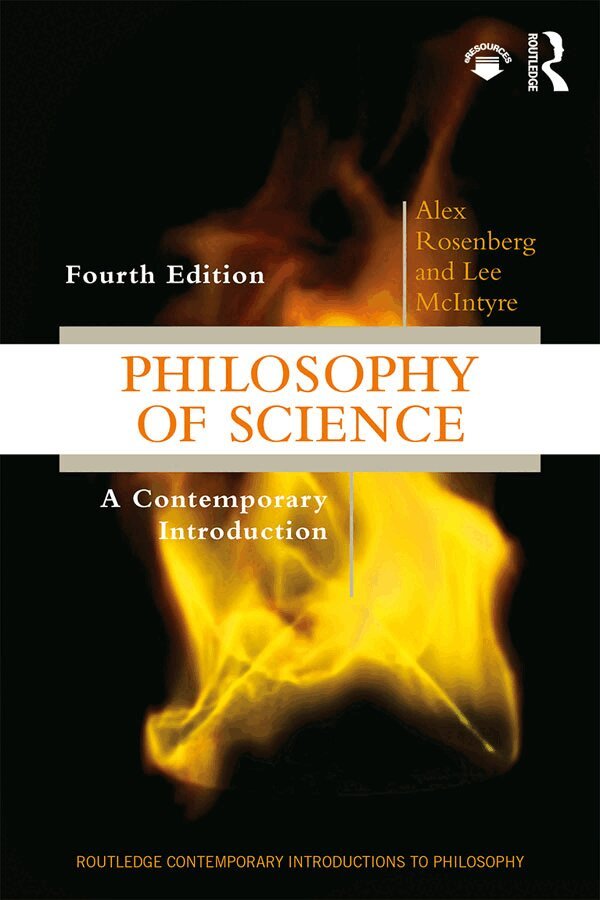
Any serious student attempting to better understand the nature, methods, and justification of science will value Alex Rosenberg and Lee McIntyre’s updated and substantially revised fourth edition of Philosophy of Science: A Contemporary Introduction. Weaving lucid explanations with clear analyses, the volume is a much- used, thematically oriented introduction to the field.
The fourth edition has been thoroughly rewritten based on instructor and student feedback, to improve readability and accessibility, without sacrificing depth. It retains, however, all of the logically structured, extensive coverage of earlier editions, which a review in the journal Teaching Philosophy called “the industry standard” and “essential reading.”
Key Features of the Fourth Edition:
Revised and rewritten for readability based on feedback from student and instructor surveys. Updated text on the problem of underdetermination, social science, and the realism/antirealism debate. Improved continuity between chapters. Revised and updated Study Questions and annotated Suggested Readings at the end of each chapter. Updated Bibliography.For a list of relevant online primary sources, please visit: www.routledge.com/9781138331518.
841 kr
Läs direkt efter köp
Any serious student attempting to better understand the nature, methods, and justification of science will value Alex Rosenberg and Lee McIntyre’s updated and substantially revised fourth edition of Philosophy of Science: A Contemporary Introduction. Weaving lucid explanations with clear analyses, the volume is a much- used, thematically oriented introduction to the field.
The fourth edition has been thoroughly rewritten based on instructor and student feedback, to improve readability and accessibility, without sacrificing depth. It retains, however, all of the logically structured, extensive coverage of earlier editions, which a review in the journal Teaching Philosophy called “the industry standard” and “essential reading.”
Key Features of the Fourth Edition:
Revised and rewritten for readability based on feedback from student and instructor surveys. Updated text on the problem of underdetermination, social science, and the realism/antirealism debate. Improved continuity between chapters. Revised and updated Study Questions and annotated Suggested Readings at the end of each chapter. Updated Bibliography.For a list of relevant online primary sources, please visit: www.routledge.com/9781138331518.
559 kr
Skickas inom 10-15 vardagar
2 004 kr
Skickas inom 5-8 vardagar
2 420 kr
Läs direkt efter köp
The first anthology devoted to the theory and practice of all forms of public philosophy
A Companion to Public Philosophy brings together in a single volume the diverse practices, modalities, and perspectives of this rapidly growing field. Forty-two chapters written by established practitioners and newer voices alike consider questions ranging from the definition of public philosophy to the value of public philosophy to both society and philosophy itself. Throughout the book, philosophers offer insights into the different publics they have engaged, the topics they have explored, the methods they have used and the lessons they have learned from these engagements.
The Companion explores important philosophical issues concerning the practice of philosophy in the public sphere, how public philosophy relates to advocacy, philosophical collaborations with political activists, locations where public philosophy can be done, and more. Many essays highlight underserved topics such as effective altruism, fat activism, trans activism, indigenous traditions, and Africana philosophy, while other essays set the stage for rigorous debates about the boundaries of public philosophy and its value as a legitimate way to do philosophy.
Discusses the range of approaches that professional philosophers can use to engage with non-academic audiences Explores the history and impact of public philosophy from the time of Socrates to the modern era Highlights the work of public philosophers concerning issues of equity, social justice, environmentalism, and medical ethics Covers the modalities used by contemporary public philosophers, including film and television, podcasting, internet memes, and community-engaged teaching Includes essays by those who bring philosophy to corporations, government policy, consulting, American prisons, and activist groups across the political spectrumA Companion to Public Philosophy is essential reading for philosophers from all walks of life who are invested in and curious about the ways that philosophy can impact the public and how the public can impact philosophy. It is also an excellent text for undergraduate and graduate courses on the theory and practice of public philosophy as well as broader courses on philosophy, normative ethics, and comparative and world philosophy.
2 278 kr
Läs direkt efter köp
The first anthology devoted to the theory and practice of all forms of public philosophy
A Companion to Public Philosophy brings together in a single volume the diverse practices, modalities, and perspectives of this rapidly growing field. Forty-two chapters written by established practitioners and newer voices alike consider questions ranging from the definition of public philosophy to the value of public philosophy to both society and philosophy itself. Throughout the book, philosophers offer insights into the different publics they have engaged, the topics they have explored, the methods they have used and the lessons they have learned from these engagements.
The Companion explores important philosophical issues concerning the practice of philosophy in the public sphere, how public philosophy relates to advocacy, philosophical collaborations with political activists, locations where public philosophy can be done, and more. Many essays highlight underserved topics such as effective altruism, fat activism, trans activism, indigenous traditions, and Africana philosophy, while other essays set the stage for rigorous debates about the boundaries of public philosophy and its value as a legitimate way to do philosophy.
Discusses the range of approaches that professional philosophers can use to engage with non-academic audiences Explores the history and impact of public philosophy from the time of Socrates to the modern era Highlights the work of public philosophers concerning issues of equity, social justice, environmentalism, and medical ethics Covers the modalities used by contemporary public philosophers, including film and television, podcasting, internet memes, and community-engaged teaching Includes essays by those who bring philosophy to corporations, government policy, consulting, American prisons, and activist groups across the political spectrumA Companion to Public Philosophy is essential reading for philosophers from all walks of life who are invested in and curious about the ways that philosophy can impact the public and how the public can impact philosophy. It is also an excellent text for undergraduate and graduate courses on the theory and practice of public philosophy as well as broader courses on philosophy, normative ethics, and comparative and world philosophy.
483 kr
Skickas inom 5-8 vardagar
2 183 kr
Skickas inom 10-15 vardagar
709 kr
Skickas inom 10-15 vardagar
3 727 kr
Skickas inom 10-15 vardagar
2 183 kr
Skickas inom 10-15 vardagar
583 kr
Skickas inom 10-15 vardagar
817 kr
Läs direkt efter köp
The Routledge Companion to Philosophy of Social Science is an outstanding guide to the major themes, movements, debates, and topics in the philosophy of social science. It includes thirty-seven newly written chapters, by many of the leading scholars in the field, as well as a comprehensive introduction by the editors. Insofar as possible, the material in this volume is presented in accessible language, with an eye toward undergraduate and graduate students who may be coming to some of this material for the first time. Scholars too will appreciate this clarity, along with the chance to read about the latest advances in the discipline. The Routledge Companion to Philosophy of Social Science is broken up into four parts.
Historical and Philosophical Context
Concepts
Debates
Individual Sciences
Edited by two of the leading scholars in the discipline, this volume is essential reading for anyone interested in the philosophy of social science, and its many areas of connection and overlap with key debates in the philosophy of science.
841 kr
Läs direkt efter köp
The Routledge Companion to Philosophy of Social Science is an outstanding guide to the major themes, movements, debates, and topics in the philosophy of social science. It includes thirty-seven newly written chapters, by many of the leading scholars in the field, as well as a comprehensive introduction by the editors. Insofar as possible, the material in this volume is presented in accessible language, with an eye toward undergraduate and graduate students who may be coming to some of this material for the first time. Scholars too will appreciate this clarity, along with the chance to read about the latest advances in the discipline. The Routledge Companion to Philosophy of Social Science is broken up into four parts.
Historical and Philosophical Context
Concepts
Debates
Individual Sciences
Edited by two of the leading scholars in the discipline, this volume is essential reading for anyone interested in the philosophy of social science, and its many areas of connection and overlap with key debates in the philosophy of science.
690 kr
Läs direkt efter köp
Throughout history, humans have always indulged in certain irrationalities and held some fairly wrong-headed beliefs. But in his newest book, philosopher Lee McIntyre shows how we''ve now reached a watershed moment for ignorance in the modern era, due to the volume of misinformation, the speed with which it can be digitally disseminated, and the savvy exploitation of our cognitive weaknesses by those who wish to advance their ideological agendas. In Respecting Truth: Willful Ignorance in the Internet Age, McIntyre issues a call to fight back against this slide into the witless abyss. In the tradition of Galileo, the author champions the importance of using tested scientific methods for arriving at true beliefs, and shows how our future survival is dependent on a more widespread, reasonable world.
690 kr
Läs direkt efter köp
Throughout history, humans have always indulged in certain irrationalities and held some fairly wrong-headed beliefs. But in his newest book, philosopher Lee McIntyre shows how we''ve now reached a watershed moment for ignorance in the modern era, due to the volume of misinformation, the speed with which it can be digitally disseminated, and the savvy exploitation of our cognitive weaknesses by those who wish to advance their ideological agendas. In Respecting Truth: Willful Ignorance in the Internet Age, McIntyre issues a call to fight back against this slide into the witless abyss. In the tradition of Galileo, the author champions the importance of using tested scientific methods for arriving at true beliefs, and shows how our future survival is dependent on a more widespread, reasonable world.
Philosophy of Chemistry
Synthesis of a New Discipline
1 626 kr
Skickas inom 10-15 vardagar
2 049 kr
Läs direkt efter köp
361 kr
Skickas inom 10-15 vardagar
336 kr
Läs direkt efter köp
Philosophy of Chemistry
Synthesis of a New Discipline
1 633 kr
Skickas inom 10-15 vardagar