
Lei Ping – författare
Visar alla böcker från författaren Lei Ping. Handla med fri frakt och snabb leverans.
3 produkter
3 produkter
Inbunden, Engelska, 2025
1 328 kr
Skickas inom 10-15 vardagar
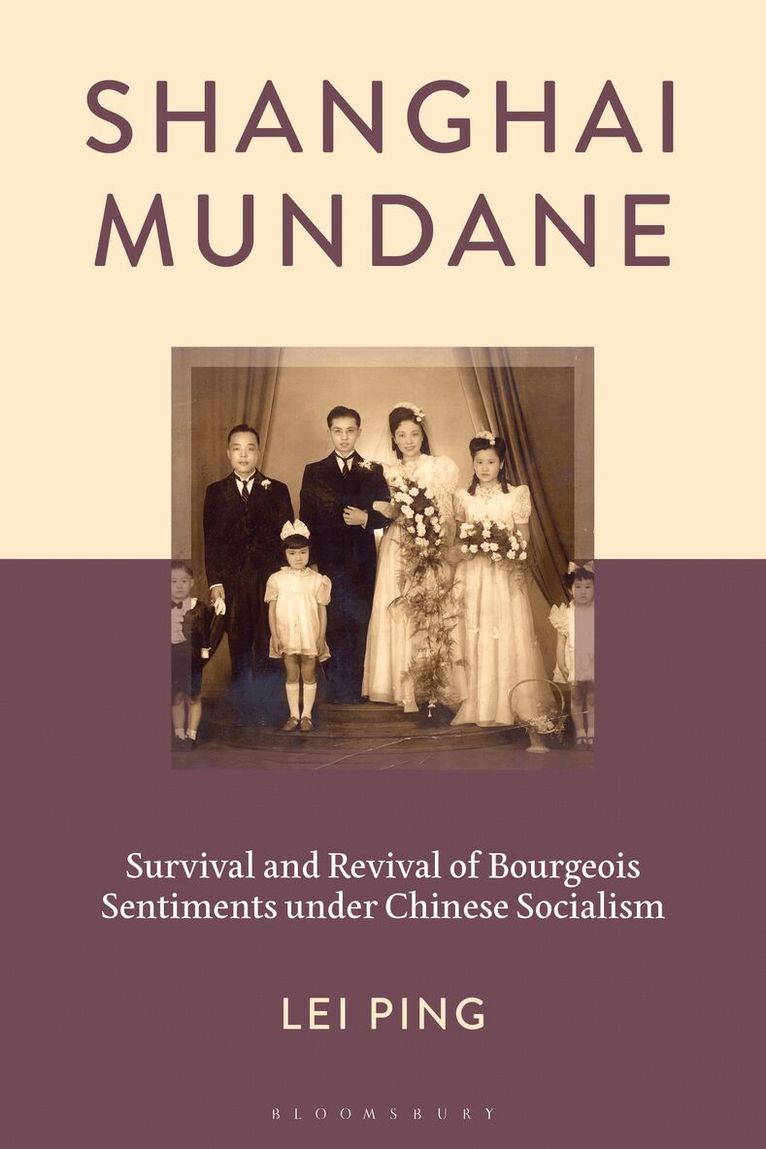
This book offers a new critical intervention into the studies of the paradox of Chinese socialism. Centering on the “unremodable” Shanghai bourgeoisie and middle class, the book brilliantly discovers Chinese society’s persistent aspiration to bourgeois lifestyle and remarkable resistance to socialist ideology from the Mao era to the Xi era.Shanghai Mundane offers a new critical intervention into the studies of the paradox of Chinese socialism. Through the lens of contested state-society relations, the book challenges conventional China Studies by repositioning Shanghai as the key to decode the protracted ideological warfare between socialism and capitalism. Based on significant archival, ethnographic, and theoretical evidence unearthed from the distinct cases of Shanghai bourgeoisie and middle class, Lei Ping discovers the city’s persistent aspiration to bourgeois lifestyle and remarkable resistance to socialist ideology throughout the entire history of the People’s Republic of China. Ping argues that despite the socialist remolding of capitalist industry and commerce, the post-1949 Chinese state failed to eradicate bourgeois heritage in the domain of everyday life in the Mao era, which ironically contributed to its controversial policy reversals in the post-Mao era, from Deng to Xi. What lies at the heart of the major intellectual conundrum, namely the survival and revival of bourgeois sentiments, is what Ping calls the “unremodable Shanghai mundane.” This captivating and provocative account sheds new light on understanding the larger questions as to the crisis-ridden practices of Chinese socialism and the raison d'être of the Chinese Communist Party in the twenty-first century.
Häftad, Engelska, 2027
678 kr
Kommande
E-bok
Engelska, 20251 481 kr
Läs direkt efter köp
This book offers a new critical intervention into the studies of the paradox of Chinese socialism. Centering on the "e;unremodable"e; Shanghai bourgeoisie and middle class, the book brilliantly discovers Chinese society's persistent aspiration to bourgeois lifestyle and remarkable resistance to socialist ideology from the Mao era to the Xi era.Shanghai Mundane offers a new critical intervention into the studies of the paradox of Chinese socialism. Through the lens of contested state-society relations, the book challenges conventional China Studies by repositioning Shanghai as the key to decode the protracted ideological warfare between socialism and capitalism. Based on significant archival, ethnographic, and theoretical evidence unearthed from the distinct cases of Shanghai bourgeoisie and middle class, Lei Ping discovers the city's persistent aspiration to bourgeois lifestyle and remarkable resistance to socialist ideology throughout the entire history of the People's Republic of China. Ping argues that despite the socialist remolding of capitalist industry and commerce, the post-1949 Chinese state failed to eradicate bourgeois heritage in the domain of everyday life in the Mao era, which ironically contributed to its controversial policy reversals in the post-Mao era, from Deng to Xi. What lies at the heart of the major intellectual conundrum, namely the survival and revival of bourgeois sentiments, is what Ping calls the "e;unremodable Shanghai mundane."e; This captivating and provocative account sheds new light on understanding the larger questions as to the crisis-ridden practices of Chinese socialism and the raison d'etre of the Chinese Communist Party in the twenty-first century.