Lei Ye - Böcker
Visar alla böcker från författaren Lei Ye. Handla med fri frakt och snabb leverans.
4 produkter
4 produkter
159 kr
Skickas inom 5-8 vardagar
2 110 kr
Skickas inom 10-15 vardagar
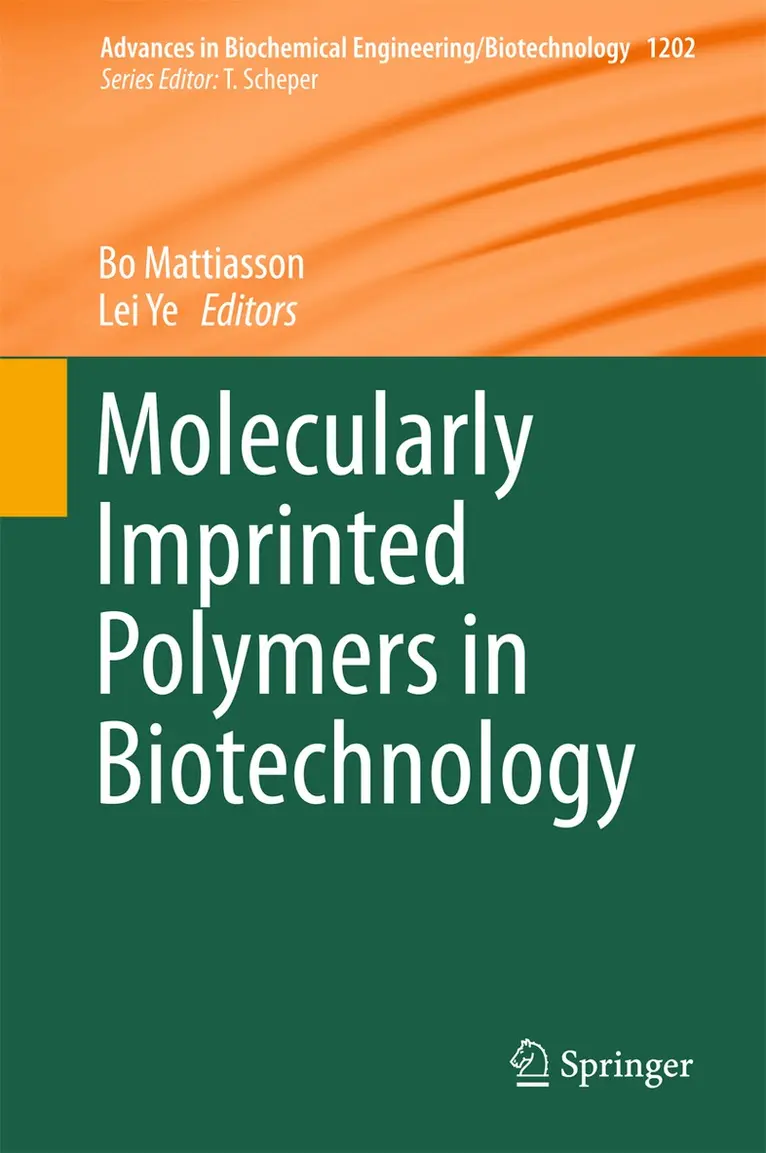
Controlled radical polymerization techniques for molecular imprinting, by Mark E. ByrneFrom bulk polymers to nanoparticles, by Lei YePost-imprinting and in-cavity functionalization, by Toshifumi TakeuchiCharacterization of MIPs (affinity, selectivity, site heterogeneity…), by Richard AnsellTheoretical aspects and computer modelling, by Ian NichollsMIPs in aqueous environments, by Bin LuMIPs for binding macromolecules, by Kenneth J. SheaSolid phase extraction, by Ecevit YilmazSensors, by Sergey A. PiletskyMIPs for catalysis and synthesis, by Marina ResminiWastewater treatment, by Bo MattiassonMIPs as tools for bioassays, biotransformation and drug delivery, by Meiping Zhao
2 803 kr
Skickas inom 5-8 vardagar
Controlled radical polymerization techniques for molecular imprinting, by Mark E. ByrneFrom bulk polymers to nanoparticles, by Lei YePost-imprinting and in-cavity functionalization, by Toshifumi TakeuchiCharacterization of MIPs (affinity, selectivity, site heterogeneity…), by Richard AnsellTheoretical aspects and computer modelling, by Ian NichollsMIPs in aqueous environments, by Bin LuMIPs for binding macromolecules, by Kenneth J. SheaSolid phase extraction, by Ecevit YilmazSensors, by Sergey A. PiletskyMIPs for catalysis and synthesis, by Marina ResminiWastewater treatment, by Bo MattiassonMIPs as tools for bioassays, biotransformation and drug delivery, by Meiping Zhao
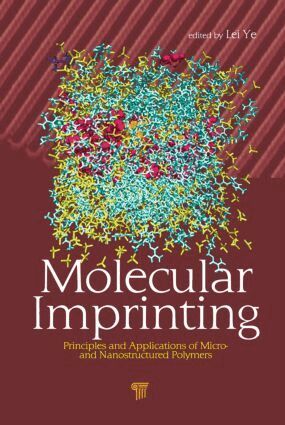
Molecular Imprinting
Principles and Applications of Micro- and Nanostructure Polymers
Inbunden, Engelska, 2013
1 558 kr
Skickas inom 10-15 vardagar
Molecular imprinting is one of the most efficient methods to fabricate functional polymer structures with pre-defined molecular recognition selectivity. Molecularly imprinted polymers (MIPs) have been used as antibody and enzyme mimics in a large number of applications. The outstanding stability and straightforward preparation make MIPs ideal substitutes for biologically derived molecular recognition materials, especially for development of affinity separation systems, chemical sensors and high selectivity catalysts. New MIP materials are being increasingly applied to solve challenging problems in environmental sciences, food safety control, biotechnology and medical diagnostics.Development in molecular imprinting research over the past decade has enabled tailor-designed molecular recognition sites to be created in synthetic materials with physical dimensions in the micro- and nano-regime. The new breakthroughs in MIP synthesis/fabrication have brought in many unprecedented functions of the micro- and nano-structured polymers. The aim of this review volume is to introduce to the readers the new developments in molecularly imprinted micro- and nano-structures, and the new applications that have been made possible with the new generation of imprinted materials.