Leigh W. Simmons - Böcker
Visar alla böcker från författaren Leigh W. Simmons. Handla med fri frakt och snabb leverans.
4 produkter
4 produkter
385 kr
Skickas inom 7-10 vardagar
Recently, the 50th anniversary of the publication of Animal Behaviour has passed. To mark the occasion, a group of prominent behaviourists have written essays relevant to their fields. These essays provide a glimpse of the study of behaviour looking in all directions. History and future aside, it is imperative to broadcast this information from the perspective of the behaviourists who have helped shape both the past and the future. It is important for any field to be both retrospective and prospective: where have we been, where are we going, where are we now? These essays provide a unique personal reflection on the history of animal behaviour from John Alcock, Stuart and Jeanne Altmann, Steve Arnold, Geoff Parker, and Felicity Huntingford. Six topics are reflected on and include: The History of Animal Behavioural Research, Proximate Mechanisms, Development, Adaptation, and Animal Welfare. Broad range of essays on animal behaviour Written by leaders in the field Offers a history of the study of behaviour plus essays on the future of behavioural studies Contains over 30 full color illustrations Includes essays on development, mechanisms and adaptive significance of behaviour
108 kr
Skickas inom 5-8 vardagar
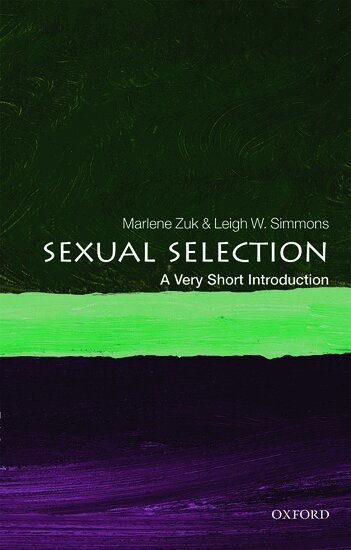
What is responsible for the differences between the sexes in so many animals, from the brilliant plumage of birds of paradise to the antlers on deer? And why are the traits that distinguish the sexes sometimes apparently detrimental to survival? Even when they look more or less alike, why do males and females sometimes behave differently? Questions like these have intrigued scientists and the public alike for many years, and new discoveries are showing us both how wildly variable the natural world is, and how some basic principles can help explain much of that variation. Like natural selection, sexual selection is a process that results from differential representation of genes in successive generations. Under sexual selection, however, the crucial characteristics that determine whether an individual reproduces depend on sexual competition, rather than survival ability. This Very Short Introduction considers the history of our understanding of sexual selection, from Darwin's key insights to the modern day. Considering the investment animals place on reproduction, variation in mating systems, sexual conflict, and the origin of sexual dimorphism, Marlene Zuk and Leigh Simmons discuss questions such as whether females can really choose between males on aesthetic grounds, and how sexual conflict is resolved in different species. They conclude with a consideration of the thorny question of how, and even if, sexual selection theory applies to humans.ABOUT THE SERIES: The Very Short Introductions series from Oxford University Press contains hundreds of titles in almost every subject area. These pocket-sized books are the perfect way to get ahead in a new subject quickly. Our expert authors combine facts, analysis, perspective, new ideas, and enthusiasm to make interesting and challenging topics highly readable.
871 kr
Skickas inom 7-10 vardagar
One hundred years after Darwin considered how sexual selection shapes the behavioral and morphological characteristics of males for acquiring mates, Parker realized that sexual selection continues after mating through sperm competition. Because females often mate with multiple males before producing offspring, selection favors adaptations that allow males to preempt sperm from previous males and to prevent their own sperm from preemption by future males. Since the 1970s, this area of research has seen exponential growth, and biologists now recognize sperm competition as an evolutionary force that drives such adaptations as mate guarding, genital morphology, and ejaculate chemistry across all animal taxa. The insects have been critical to this research, and they still offer the greatest potential to reveal fully the evolutionary consequences of sperm competition. This book analyzes and extends thirty years of theoretical and empirical work on insect sperm competition. It considers both male and female interests in sperm utilization and the sexual conflict that can arise when these differ.It covers the mechanics of sperm transfer and utilization, morphology, physiology, and behavior. Sperm competition is shown to have dramatic effects on adaptation in the context of reproduction as well as far-reaching ramifications on life-history evolution and speciation. Written by a top researcher in the field, this comprehensive, up-to-date review of the evolutionary causes and consequences of sperm competition in the insects will prove an invaluable reference for students and established researchers in behavioral ecology and evolutionary biology.
1 277 kr
Skickas inom 7-10 vardagar
This book describes the evolutionary and ecological consequences of reproductive competition for scarabaeine dung beetles. As well as giving us insight into the private lives of these fascinating creatures, this book shows how dung beetles can be used as model systems for improving our general understanding of broad evolutionary and ecological processes, and how they generate biological diversity. Over the last few decades we have begun to see further than ever before, with our research efforts yielding new information at all levels of analysis, from whole organism biology to genomics. This book brings together leading researchers who contribute chapters that integrate our current knowledge of phylogenetics and evolution, developmental biology, comparative morphology, physiology, behaviour, and population and community ecology. Dung beetle research is shedding light on the ultimate question of how best to document and conserve the world's biodiversity. The book will be of interest to established researchers, university teachers, research students, conservation biologists, and those wanting to know more about the dung beetle taxon.