Leila De Floriani – författare
Visar alla böcker från författaren Leila De Floriani. Handla med fri frakt och snabb leverans.
5 produkter
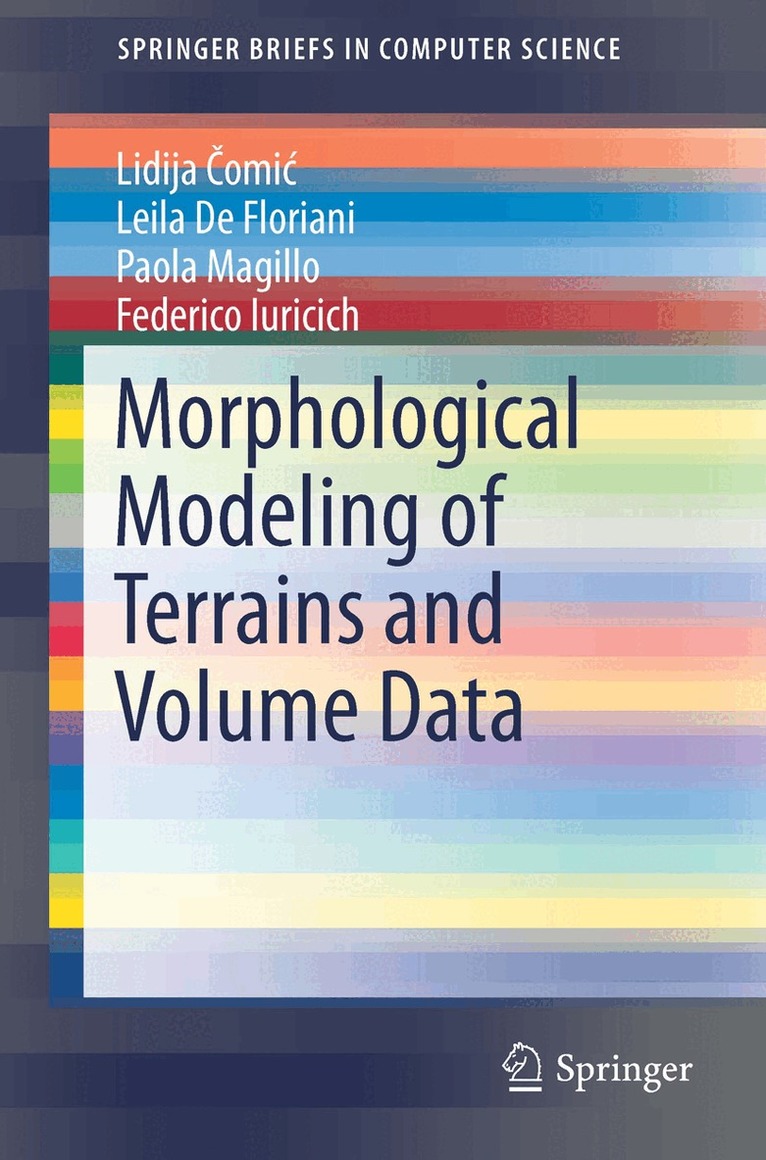
Morphological Modeling of Terrains and Volume Data
Av Lidija Čomić, Leila De Floriani m. fl.
Häftad, 2014
567 kr
Lägg i varukorg
This book describes the mathematical background behind discrete approaches to morphological analysis of scalar fields, with a focus on Morse theory and on the discrete theories due to Banchoff and Forman. The algorithms and data structures presented are used for terrain modeling and analysis, …
Morphological Modeling of Terrains and Volume Data
Av Federico Iuricich, Paola Magillo m. fl.
E-bok, 2014
755 kr
Lägg i varukorg
This book describes the mathematical background behind discrete approaches to morphological analysis of scalar fields, with a focus on Morse theory and on the discrete theories due to Banchoff and Forman. The algorithms and data structures presented are used for terrain modeling and analysis, …
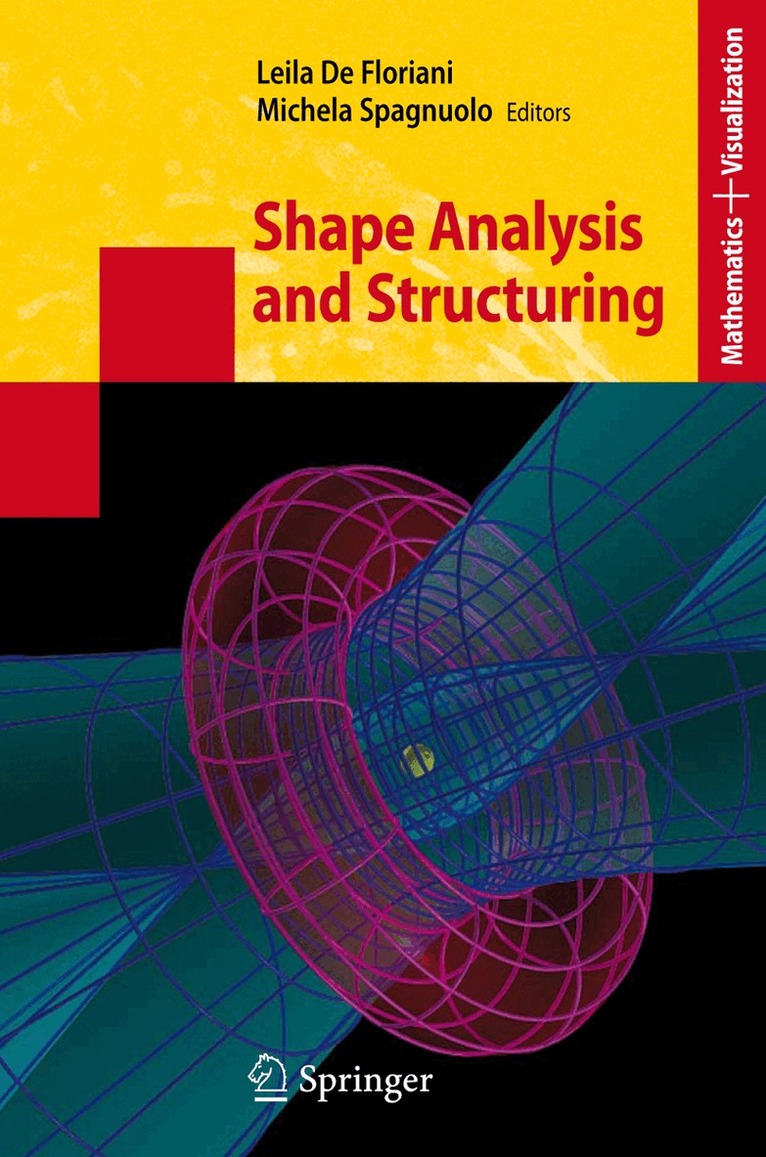
Shape Analysis and Structuring
Av Leila de Floriani, Michela Spagnuolo
Inbunden, 2007
1095 kr
Lägg i varukorg
Several techniques have been developed in the literature for processing different aspects of the geometry of shapes, for representing and manipulating a shape at different levels of detail, and for describing a shape at a structural level as a concise, part-based, or iconic model. Such techniques …
Shape Analysis and Structuring
Av Michela Spagnuolo, Leila de Floriani
E-bok, 2007
1427 kr
Lägg i varukorg
Several techniques have been developed in the literature for processing different aspects of the geometry of shapes, for representing and manipulating a shape at different levels of detail, and for describing a shape at a structural level as a concise, part-based, or iconic model. Such techniques …
Shape Analysis and Structuring
Av Leila de Floriani, Michela Spagnuolo
Häftad, 2010
1095 kr
Lägg i varukorg
Several techniques have been developed in the literature for processing different aspects of the geometry of shapes, for representing and manipulating a shape at different levels of detail, and for describing a shape at a structural level as a concise, part-based, or iconic model. Such techniques …