Leila Gómez – författare
Visar alla böcker från författaren Leila Gómez. Handla med fri frakt och snabb leverans.
5 produkter
5 produkter
Inbunden, Engelska, 2021
879 kr
Skickas inom 5-8 vardagar
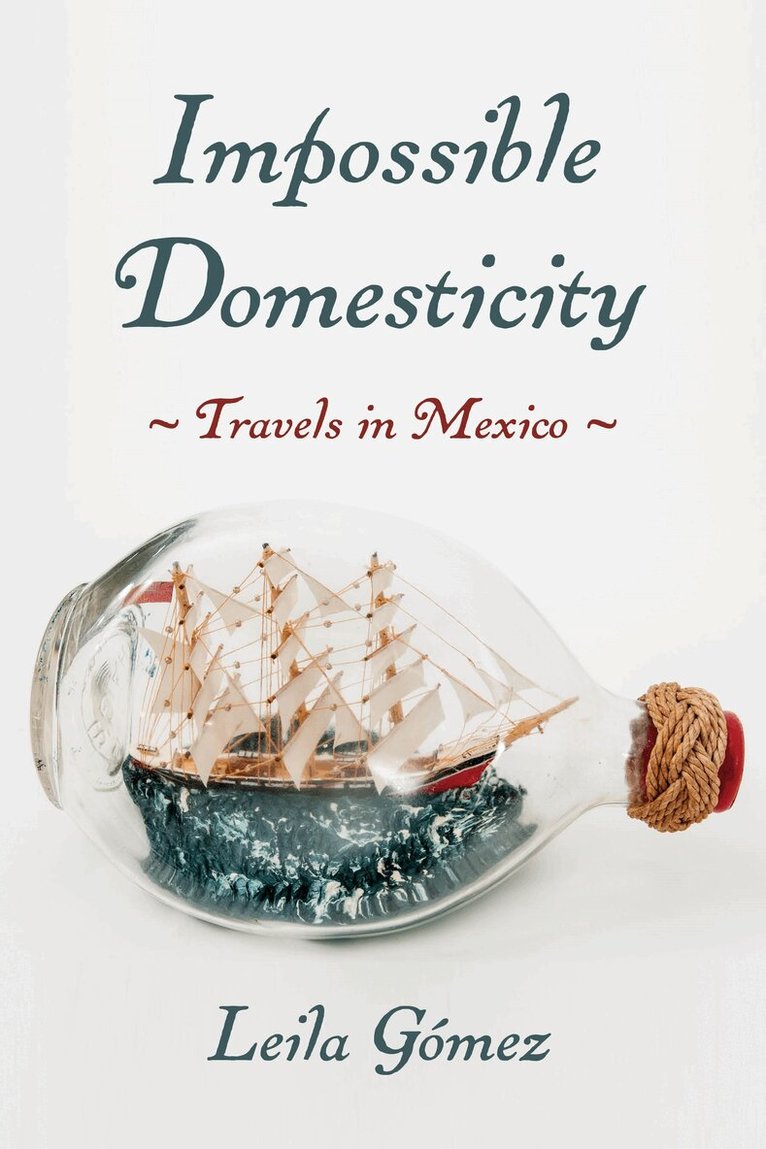
Translated by Robert WeisTravelers from Europe, North, and South America often perceive Mexico as a mythical place onto which they project their own cultures’ desires, fears, and anxieties. Gómez argues that Mexico’s role in these narratives was not passive and that the environment, peoples, ruins, political revolutions, and economy of Mexico were fundamental to the configuration of modern Western art and science. This project studies the images of Mexico and the ways they were contested by travelers of different national origins and trained in varied disciplines from the nineteenth to the twenty-first century. It starts with Alexander von Humboldt, the German naturalist whose fame sprang from his trip to Mexico and Latin America, and ends with Roberto Bolaño, the Chilean novelist whose work defines Mexico as an “oasis of horror.” In between, there are archaeologists, photographers, war correspondents, educators, writers, and artists for whom the trip to Mexico represented a rite of passage, a turning point in their intellectual biographies, their scientific disciplines, and their artistic practices.
Inbunden, Engelska, 2024
784 kr
Skickas inom 10-15 vardagar
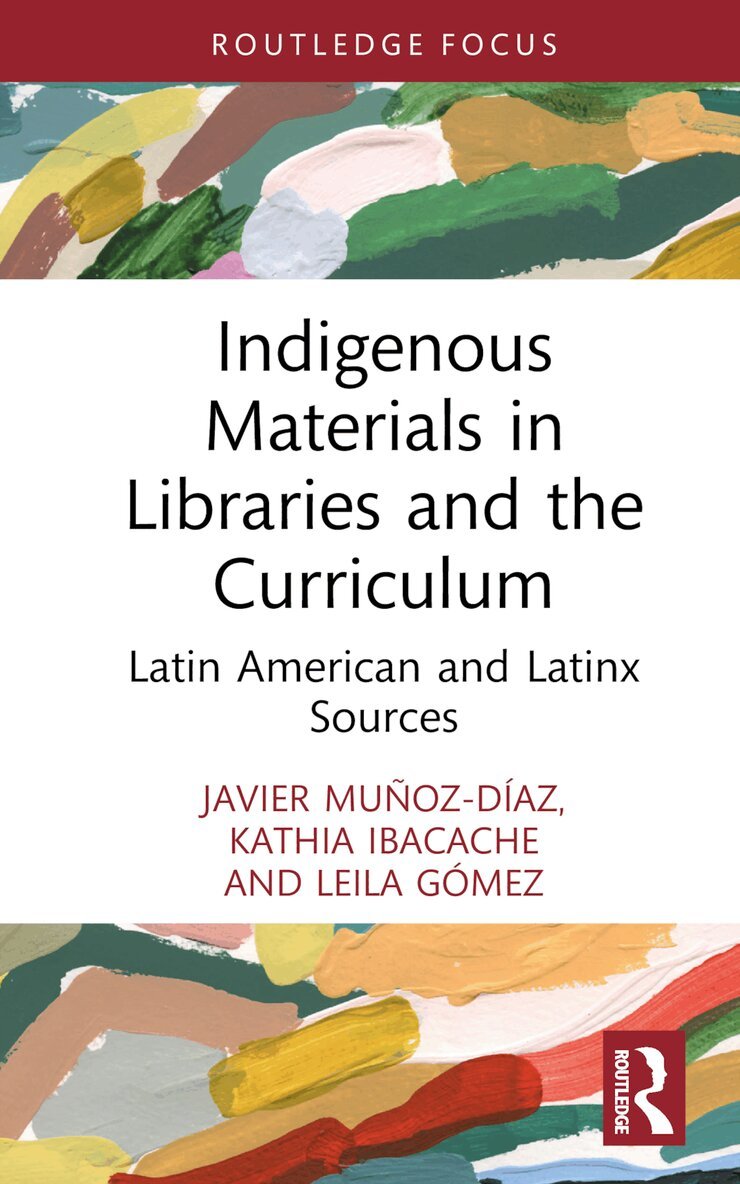
Indigenous Materials in Libraries and the Curriculum: Latin American and Latinx Sources argues for a decolonial engagement with Indigenous peoples’ creative work to build awareness of divergent epistemologies and foster healing in the learning community.This book explores how faculty and librarians can collaborate to develop inclusive library collections and curricula by supporting Indigenous peoples’ reclamation of lands and languages. The authors present practices to build and disseminate collections that showcase the work of Indigenous creators from Latin America and compensate for historical erasure and misrepresentation. Consideration is also given to developing a non-hegemonic curriculum in Indigenous languages and cultures for faculty and students from multicultural backgrounds, particularly Latinx students of Indigenous descent. Above all, the book aspires to facilitate the participation of Indigenous peoples in the scholarly conversation to counteract epistemic and material extractivism and transform the scaffolding of higher education in the current global climate crisis.Indigenous Materials in Libraries and the Curriculum is inspired by a transhemispheric vision to elicit conversation between Indigenous peoples from Latin America (Abiayala) and North America (Turtle Island). The book will appeal to academics, librarians, students, and activists interested in Indigenous languages and cultures, decolonization, DEI initiatives, and library collection development policies that prioritize non-hegemonic narratives.
Häftad, Engelska, 2025
339 kr
Skickas inom 10-15 vardagar
Indigenous Materials in Libraries and the Curriculum: Latin American and Latinx Sources argues for a decolonial engagement with Indigenous peoples’ creative work to build awareness of divergent epistemologies and foster healing in the learning community.This book explores how faculty and librarians can collaborate to develop inclusive library collections and curricula by supporting Indigenous peoples’ reclamation of lands and languages. The authors present practices to build and disseminate collections that showcase the work of Indigenous creators from Latin America and compensate for historical erasure and misrepresentation. Consideration is also given to developing a non-hegemonic curriculum in Indigenous languages and cultures for faculty and students from multicultural backgrounds, particularly Latinx students of Indigenous descent. Above all, the book aspires to facilitate the participation of Indigenous peoples in the scholarly conversation to counteract epistemic and material extractivism and transform the scaffolding of higher education in the current global climate crisis.Indigenous Materials in Libraries and the Curriculum is inspired by a transhemispheric vision to elicit conversation between Indigenous peoples from Latin America (Abiayala) and North America (Turtle Island). The book will appeal to academics, librarians, students, and activists interested in Indigenous languages and cultures, decolonization, DEI initiatives, and library collection development policies that prioritize non-hegemonic narratives.
Häftad, Engelska, 2020
270 kr
Skickas inom 5-8 vardagar
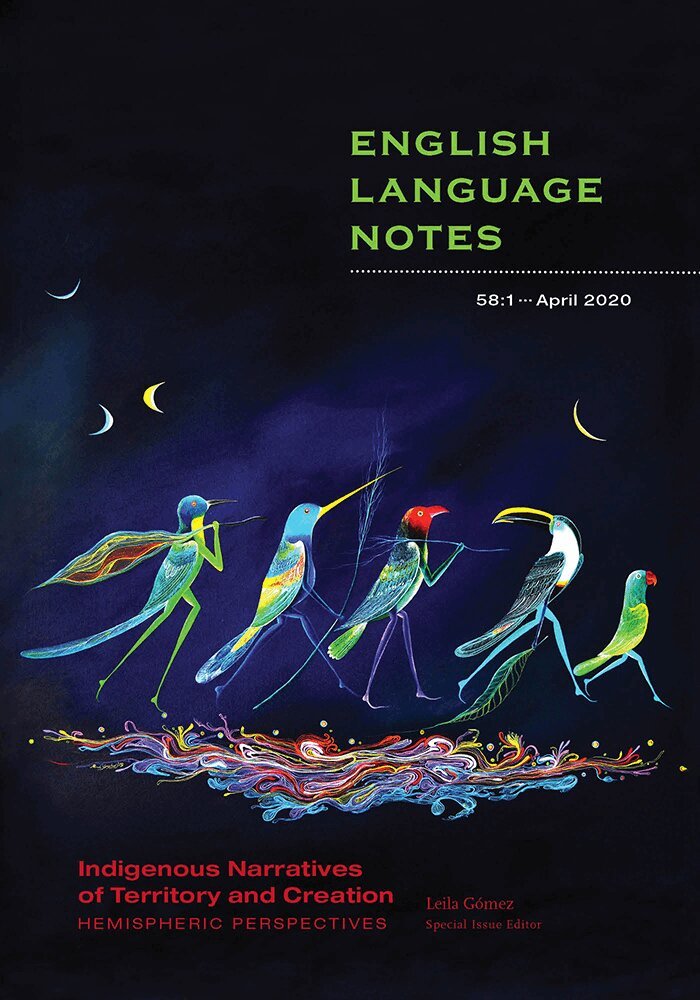
Indigenous activism in the Americas has long focused on the symbolic reclamation of land. Drawing on interdisciplinary perspectives, contributors to this issue explore narratives of territory and origin that provide a foundation for this political practice. The contributors study Indigenous-language stories from displaced communities, analyzing the meaning and power of these narratives in the context of diaspora and the struggle for land. Essays address topics including territorial struggle and environmentalism, Indigenous resistance to neoliberal policies of land dispossession, and alliances between academic and Indigenous knowledges and activisms. This issue brings together fruitful comparisons of theoretical frameworks and case studies in Indigenous studies across North and South America. Its contributors advance the process of returning to Indigenous knowledge, offering essential alternatives to Western epistemologies.Contributors. Amber Meadow Adams, Alexandre Belmonte, Enrique Manuel Bernales Albites, Andrew Cowell, Ella Deloria, Leila GÓmez, Sarah Hernandez, Penelope Kelsey, JosÉ Antonio Mazzotti, Javier MuÑoz-DÍaz, Craig Perez, Cheryl Savageau, Ángel Tuninetti, Christopher T. Vecsey
Inbunden, Engelska, 2011
1 495 kr
Skickas inom 10-15 vardagar
Darwinism in Argentina: Major Texts (1845-1909) brings together essays, letters, short-stories, and public lectures by travelers, scientists, writers, and politicians about Darwin and the theory of evolution in nineteenth century Argentina. This selection of texts provides a thorough overview of the socio-ideological implications of the theory of evolution in South America, as well as the intellectual debate this scientific theory promoted in the discourses of fiction, law, history, and medicine in the formation of modern Argentina. Some writers in this book considered the theory of evolution to be Argentinean because Darwin first conceived his theory traveling in the Beagle, across “the big cemetery of glyptodont and megatherium fossils” on the pampas and in Patagonia. This anthology includes texts from William H. Hudson, Francisco Muñiz, Florentino Ameghino, Eduardo Holmberg, Domingo F. Sarmiento, Hermann Burmeister, the Perito Moreno, Leopoldo Lugones, José María Ramos Mejía, and José Ingenieros, among others. Many of these texts have not been translated to English or reprinted until this edition, which was originally published with fewer texts in Spanish in 2008. Leila Gómez’s introduction reconstructs the historical-scientific contexts of the Darwinist debate in Argentina, the role of paleontology as modern discipline in South American countries, and the tensions between metropolitan and local scientific knowledge. Both the anthology and the introduction present a panorama of Darwin and evolution in Argentina, and the complex mechanism of inclusion and exclusion of indigenous, African descendants, mestizos, and immigrants in the modern nation. Darwinism in Argentina provides critical perspectives on evolutionism in South America that will interest students and specialists in literature, history, and science.