Leland de la Durantaye – författare
Visar alla böcker från författaren . Handla med fri frakt och snabb leverans.
6 produkter
6 produkter
Inbunden, Engelska, 2016
467 kr
Skickas inom 10-15 vardagar
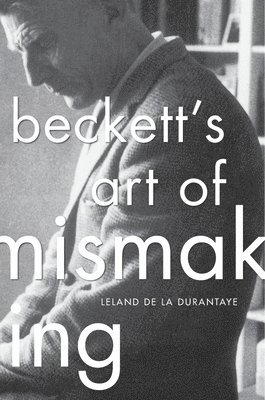
Readers have long responded to Samuel Beckett’s novels and plays with wonder or bafflement. They portray blind, lame, maimed creatures cracking whips and wielding can openers who are funny when they should be chilling, cruel when they should be tender, warm when most wounded. His works seem less to conclude than to stop dead. And so readers quite naturally ask: what might all this be meant to mean?In a lively and enlivening study of a singular creative nature, Leland de la Durantaye helps us better understand Beckett’s strangeness and the notorious difficulties it presents. He argues that Beckett’s lifelong campaign was to mismake on purpose—not to denigrate himself, or his audience, nor even to reconnect with the child or the savage within, but because he believed that such mismaking is in the interest of art and will shape its future. Whether called “creative willed mismaking,” “logoclasm,” or “word-storming in the name of beauty,” Beckett meant by these terms an art that attacks language and reason, unity and continuity, art and life, with wit and venom.Beckett’s Art of Mismaking explains Beckett’s views on language, the relation between work and world, and the interactions between stage and page, as well as the motives guiding his sixty-year-long career—his strange decision to adopt French as his literary language, swerve from the complex novels to the minimalist plays, determination to “fail better,” and principled refusal to follow any easy path to originality.
Inbunden, Engelska, 2007
797 kr
Skickas inom 10-15 vardagar
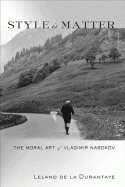
"How should we read Lolita? The beginning of an answer is that we should read it the way all great works deserve to be read: with attention and intelligence. But what sort of attention should we pay and what sort of intelligence should we apply to a work of art that recounts so much love, so much loss, so much thoughtlessness—and across which flashes something we might be tempted to call evil? To begin with, we should read with the attention and intelligence we call empathy. A point on which all readers can agree is that great literature offers us a lesson in empathy: it encourages us to feel with the strange and the familiar, the strong and the weak, the vulgar and the cultivated, the young and the old, the lover and the beloved. It urges us to see our own fates as connected to those of others, to link the starry sky we see above us with whatever moral laws we might sense within."—from Style is Matter"Some of my characters are, no doubt, pretty beastly, but I really don't care, they are outside my inner self like the mournful monsters of a cathedral facade—demons placed there merely to show that they have been booted out."—Vladimir Nabokov, Strong OpinionsWith this quote Leland de la Durantaye launches his elegant and incisive exploration of the ethics of art in the fiction of Vladimir Nabokov. Focusing on Lolita but also addressing other major works (especially Speak, Memory and Pale Fire), the author asks whether the work of this writer whom many find cruel contains a moral message and, if so, why that message is so artfully concealed. Style is Matter places Nabokov's work once and for all into dialogue with some of the most basic issues concerning the ethics of writing and of reading itself.De la Durantaye argues that Humbert's narrative confession artfully seduces the reader into complicity with his dark fantasies and even darker acts until the very end, where he expresses his bitter regret for what he has done. In this sense, Lolita becomes a study in the danger of art, the artist's responsibility to the real world, and the perils and pitfalls of reading itself. In addition to Nabokov's fictions, de la Durantaye also draws on his nonfiction writings to explore Nabokov's belief that all genuine art is deceptive—as is nature itself. Through de la Durantaye's deft and compelling writing, we see that Nabokov learned valuable lessons in mimicry and camouflage from the intricate patterns of the butterflies he adored.
Häftad, Engelska, 2010
498 kr
Skickas inom 10-15 vardagar
"How should we read Lolita? The beginning of an answer is that we should read it the way all great works deserve to be read: with attention and intelligence. But what sort of attention should we pay and what sort of intelligence should we apply to a work of art that recounts so much love, so much loss, so much thoughtlessness—and across which flashes something we might be tempted to call evil? To begin with, we should read with the attention and intelligence we call empathy. A point on which all readers can agree is that great literature offers us a lesson in empathy: it encourages us to feel with the strange and the familiar, the strong and the weak, the vulgar and the cultivated, the young and the old, the lover and the beloved. It urges us to see our own fates as connected to those of others, to link the starry sky we see above us with whatever moral laws we might sense within."—from Style is Matter"Some of my characters are, no doubt, pretty beastly, but I really don't care, they are outside my inner self like the mournful monsters of a cathedral facade—demons placed there merely to show that they have been booted out."—Vladimir Nabokov, Strong OpinionsWith this quote Leland de la Durantaye launches his elegant and incisive exploration of the ethics of art in the fiction of Vladimir Nabokov. Focusing on Lolita but also addressing other major works (especially Speak, Memory and Pale Fire), the author asks whether the work of this writer whom many find cruel contains a moral message and, if so, why that message is so artfully concealed. Style is Matter places Nabokov's work once and for all into dialogue with some of the most basic issues concerning the ethics of writing and of reading itself.De la Durantaye argues that Humbert's narrative confession artfully seduces the reader into complicity with his dark fantasies and even darker acts until the very end, where he expresses his bitter regret for what he has done. In this sense, Lolita becomes a study in the danger of art, the artist's responsibility to the real world, and the perils and pitfalls of reading itself. In addition to Nabokov's fictions, de la Durantaye also draws on his nonfiction writings to explore Nabokov's belief that all genuine art is deceptive—as is nature itself. Through de la Durantaye's deft and compelling writing, we see that Nabokov learned valuable lessons in mimicry and camouflage from the intricate patterns of the butterflies he adored.
Inbunden, Engelska, 2009
1 325 kr
Skickas inom 10-15 vardagar
Giorgio Agamben is a philosopher well known for his brilliance and erudition, as well as for the difficulty and diversity of his seventeen books. The interest which his Homo Sacer sparked in America is likely to continue to grow for a great many years to come. Giorgio Agamben: A Critical Introduction presents the complexity and continuity of Agamben's philosophy—and does so for two separate and distinct audiences. It attempts to provide readers possessing little or no familiarity with Agamben's writings with points of entry for exploring them. For those already well acquainted with Agamben's thought, it offers a critical analysis of the achievements that have marked it.
Häftad, Engelska, 2009
318 kr
Skickas inom 5-8 vardagar
Giorgio Agamben is a philosopher well known for his brilliance and erudition, as well as for the difficulty and diversity of his seventeen books. The interest which his Homo Sacer sparked in America is likely to continue to grow for a great many years to come. Giorgio Agamben: A Critical Introduction presents the complexity and continuity of Agamben's philosophy—and does so for two separate and distinct audiences. It attempts to provide readers possessing little or no familiarity with Agamben's writings with points of entry for exploring them. For those already well acquainted with Agamben's thought, it offers a critical analysis of the achievements that have marked it.
E-bok
Engelska, 2009387 kr
Läs direkt efter köp
Giorgio Agamben is a philosopher well known for his brilliance and erudition, as well as for the difficulty and diversity of his seventeen books. The interest which his Homo Sacer sparked in America is likely to continue to grow for a great many years to come. Giorgio Agamben: A Critical Introduction presents the complexity and continuity of Agamben's philosophy—and does so for two separate and distinct audiences. It attempts to provide readers possessing little or no familiarity with Agamben's writings with points of entry for exploring them. For those already well acquainted with Agamben's thought, it offers a critical analysis of the achievements that have marked it.