Lena Partzsch - Böcker
Visar alla böcker från författaren Lena Partzsch. Handla med fri frakt och snabb leverans.
6 produkter
6 produkter
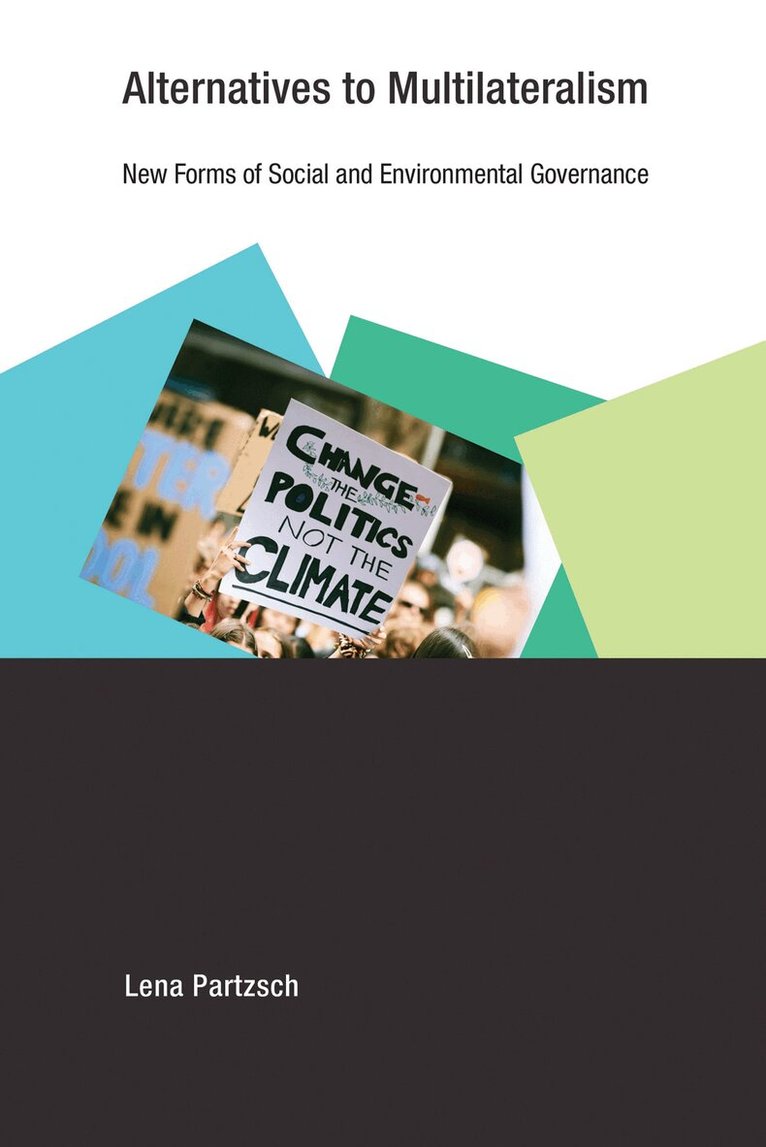
Alternatives to Multilateralism
New Forms of Social and Environmental Governance
Häftad, Engelska, 2020
500 kr
Skickas inom 5-8 vardagar
617 kr
Skickas inom 10-15 vardagar
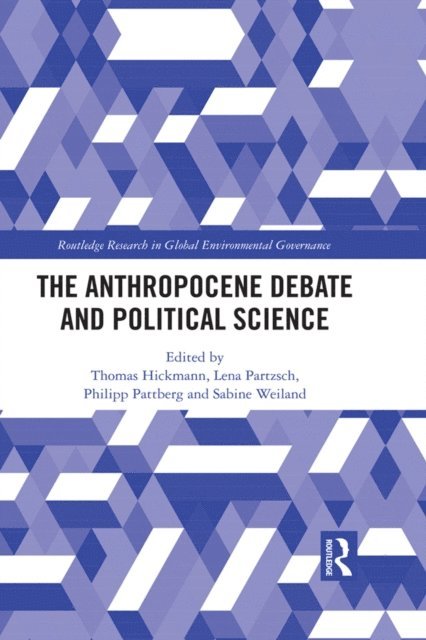
Anthropocene has become an environmental buzzword. It denotes a new geological epoch that is human‐dominated. As mounting scientific evidence reveals, humankind has fundamentally altered atmospheric, geological, hydrological, biospheric, and other Earth system processes to an extent that the risk of an irreversible system change emerges. Human societies must therefore change direction and navigate away from critical tipping points in the various ecosystems of our planet. This hypothesis has kicked off a debate not only on the geoscientific definition of the Anthropocene era, but increasingly also in the social sciences. However, the specific contribution of the social sciences disciplines and in particular that of political science still needs to be fully established. This edited volume analyzes, from a political science perspective, the wider social dynamics underlying the ecological and geological changes, as well as their implications for governance and politics in the Anthropocene. The focus is on two questions: (1) What is the contribution of political science to the Anthropocene debate, e.g. in terms of identified problems, answers, and solutions? (2) What are the conceptual and practical implications of the Anthropocene debate for the discipline of political science? Overall, this book contributes to the Anthropocene debate by providing novel theoretical and conceptual accounts of the Anthropocene, engaging with contemporary politics and policy-making in the Anthropocene, and offering a critical reflection on the Anthropocene debate as such. The volume will be of great interest to students and scholars of political science, global environmental politics and governance, and sustainable development.
2 088 kr
Skickas inom 10-15 vardagar
Anthropocene has become an environmental buzzword. It denotes a new geological epoch that is human‐dominated. As mounting scientific evidence reveals, humankind has fundamentally altered atmospheric, geological, hydrological, biospheric, and other Earth system processes to an extent that the risk of an irreversible system change emerges. Human societies must therefore change direction and navigate away from critical tipping points in the various ecosystems of our planet. This hypothesis has kicked off a debate not only on the geoscientific definition of the Anthropocene era, but increasingly also in the social sciences. However, the specific contribution of the social sciences disciplines and in particular that of political science still needs to be fully established. This edited volume analyzes, from a political science perspective, the wider social dynamics underlying the ecological and geological changes, as well as their implications for governance and politics in the Anthropocene. The focus is on two questions: (1) What is the contribution of political science to the Anthropocene debate, e.g. in terms of identified problems, answers, and solutions? (2) What are the conceptual and practical implications of the Anthropocene debate for the discipline of political science? Overall, this book contributes to the Anthropocene debate by providing novel theoretical and conceptual accounts of the Anthropocene, engaging with contemporary politics and policy-making in the Anthropocene, and offering a critical reflection on the Anthropocene debate as such. The volume will be of great interest to students and scholars of political science, global environmental politics and governance, and sustainable development.
Environment in Global Sustainability Governance
Perceptions, Actors, Innovations
Häftad, Engelska, 2023
385 kr
Skickas
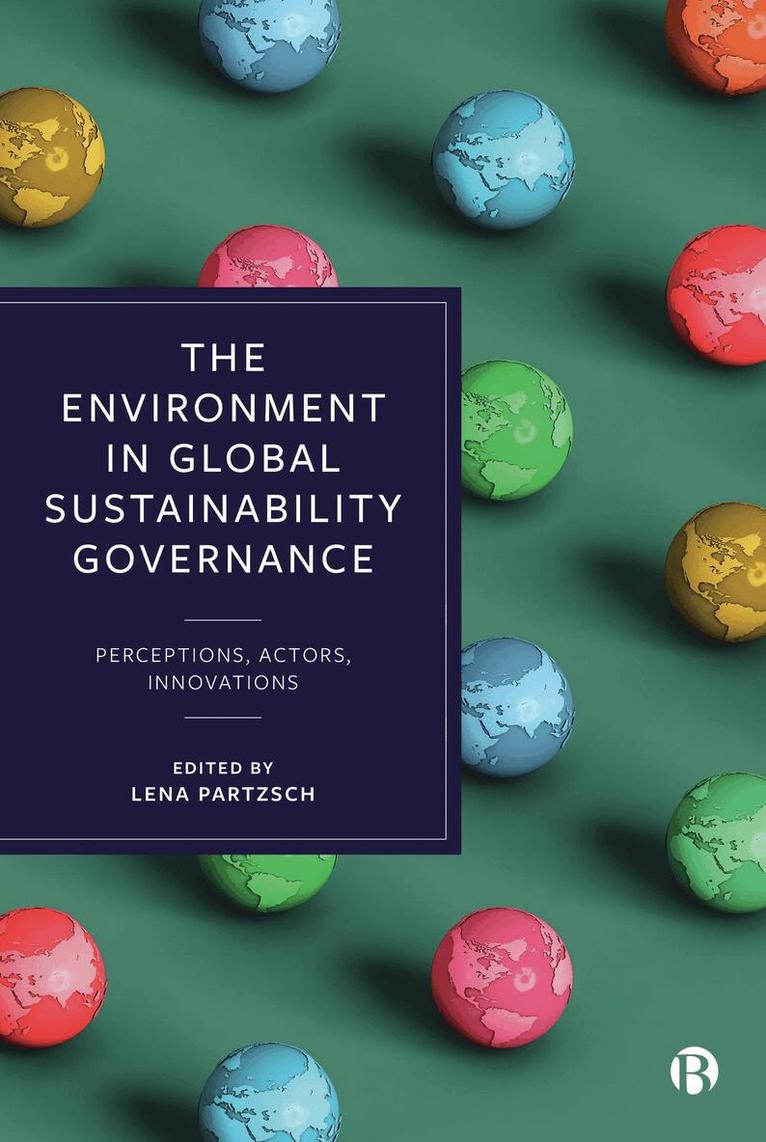
Available Open Access digitally under CC-BY-NC-ND licence.With Agenda 2030, the UN adopted wide-ranging Sustainable Development Goals (SDGs) that integrate development and environmental agendas. This book focuses on the political tensions between the environmental objectives and socio-economic aspects of sustainable development. The collection provides an introduction to interlinkages, synergies and trade-offs between the ‘green’ and other goals, such as gender equality and economic growth. It also considers related goals on cities and partnerships as crucial for implementing environmentally sound sustainability. Identifying governance failures and responsibilities, it advocates for a shift towards cooperative economics and politics for the common good.
1 690 kr
Skickas inom 7-10 vardagar
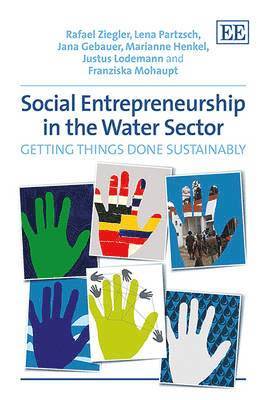
There are few sectors where 'getting things done sustainably' is as important as it is for the water sector. From drinking water and sanitation to water use in agriculture, industry and ecosystems, Rafael Ziegler and his co-authors investigate the contribution of social entrepreneurship to the sustainable use of water.Using detailed case studies from Africa, Asia, Europe and Latin America, the authors assess the role and potential of social entrepreneurship for the sustainable use of water. In addition, they examine the ethics and politics of new ideas for sustainability in the water sector. In so doing, they critically discuss the impact of these new innovations, with the emphasis on ideas changing heads rather than money changing hands.By bringing together questions from ecology, ethics, management and political science, and drawing on research in close collaboration with practitioners across the world, the approach taken is both inter- and trans-disciplinary. The result will be of significant interest to researchers and practitioners in social entrepreneurship and social innovation, as well as in water and sustainability politics.
502 kr
Skickas inom 7-10 vardagar
There are few sectors where 'getting things done sustainably' is as important as it is for the water sector. From drinking water and sanitation to water use in agriculture, industry and ecosystems, Rafael Ziegler and his co-authors investigate the contribution of social entrepreneurship to the sustainable use of water.Using detailed case studies from Africa, Asia, Europe and Latin America, the authors assess the role and potential of social entrepreneurship for the sustainable use of water. In addition, they examine the ethics and politics of new ideas for sustainability in the water sector. In so doing, they critically discuss the impact of these new innovations, with the emphasis on ideas changing heads rather than money changing hands.By bringing together questions from ecology, ethics, management and political science, and drawing on research in close collaboration with practitioners across the world, the approach taken is both inter- and trans-disciplinary. The result will be of significant interest to researchers and practitioners in social entrepreneurship and social innovation, as well as in water and sustainability politics.