Lenore T. Ealy - Böcker
Visar alla böcker från författaren Lenore T. Ealy. Handla med fri frakt och snabb leverans.
7 produkter
7 produkter
2 088 kr
Skickas inom 10-15 vardagar
Since the end of the Cold War, the human face of economics has gained renewed visibility and generated new conversations among economists and other social theorists. The monistic, mechanical "economic systems" that characterized the capitalism vs. socialism debates of the mid-twentieth century have given way to pluralistic ecologies of economic provisioning in which complexly constituted agents cooperate via heterogeneous forms of production and exchange. Through the lenses of multiple disciplines, this book examines how this pluralistic turn in economic thinking bears upon the venerable social–theoretical division of cooperative activity into separate spheres of impersonal Gesellschaft (commerce) and ethically thick Gemeinschaft (community).Drawing resources from diverse disciplinary and philosophical traditions, these essays offer fresh, critical appraisals of the Gemeinschaft / Gesellschaft segregation of face-to-face community from impersonal commerce. Some authors issue urgent calls to transcend this dualism, whilst others propose to recast it in more nuanced ways or affirm the importance of treating impersonal and personal cooperation as ethically, epistemically, and economically separate worlds. Yet even in their disagreements, our contributors paint the process of voluntary cooperation – the space commerce and community – with uncommon color and nuance by traversing the boundaries that once separated the thin sociality of economics (as science of commerce) from the thick sociality of sociology and anthropology (as sciences of community).This book facilitates critical exchange among economists, philosophers, sociologists, anthropologists, and other social theorists by exploring the overlapping notions of cooperation, rationality, identity, reciprocity, trust, and exchange that emerge from multiple analytic traditions within and across their respective disciplines.
901 kr
Skickas inom 10-15 vardagar
Since the end of the Cold War, the human face of economics has gained renewed visibility and generated new conversations among economists and other social theorists. The monistic, mechanical "economic systems" that characterized the capitalism vs. socialism debates of the mid-twentieth century have given way to pluralistic ecologies of economic provisioning in which complexly constituted agents cooperate via heterogeneous forms of production and exchange. Through the lenses of multiple disciplines, this book examines how this pluralistic turn in economic thinking bears upon the venerable social–theoretical division of cooperative activity into separate spheres of impersonal Gesellschaft (commerce) and ethically thick Gemeinschaft (community).Drawing resources from diverse disciplinary and philosophical traditions, these essays offer fresh, critical appraisals of the Gemeinschaft / Gesellschaft segregation of face-to-face community from impersonal commerce. Some authors issue urgent calls to transcend this dualism, whilst others propose to recast it in more nuanced ways or affirm the importance of treating impersonal and personal cooperation as ethically, epistemically, and economically separate worlds. Yet even in their disagreements, our contributors paint the process of voluntary cooperation – the space commerce and community – with uncommon color and nuance by traversing the boundaries that once separated the thin sociality of economics (as science of commerce) from the thick sociality of sociology and anthropology (as sciences of community).This book facilitates critical exchange among economists, philosophers, sociologists, anthropologists, and other social theorists by exploring the overlapping notions of cooperation, rationality, identity, reciprocity, trust, and exchange that emerge from multiple analytic traditions within and across their respective disciplines.
1 142 kr
Skickas inom 10-15 vardagar
A cryptodemocracy is cryptographically-secured collective choice infrastructure on which individuals coordinate their voting property rights. Drawing on economic and political theory, a cryptodemocracy is a more fluid and emergent form of collective choice. This book examines these theoretical characteristics before exploring specific applications of a cryptodemocracy in labor bargaining and corporate governance. The analysis of the characteristics of a more emergent and contractual democratic process has implications for a wide range of collective choice.
434 kr
Skickas inom 10-15 vardagar
A cryptodemocracy is cryptographically-secured collective choice infrastructure on which individuals coordinate their voting property rights. Drawing on economic and political theory, a cryptodemocracy is a more fluid and emergent form of collective choice. This book examines these theoretical characteristics before exploring specific applications of a cryptodemocracy in labor bargaining and corporate governance. The analysis of the characteristics of a more emergent and contractual democratic process has implications for a wide range of collective choice.
1 142 kr
Skickas inom 10-15 vardagar
The author argues for the virtues of diversity in cities, organizations, strategies for development, and human discourse in general. The opening chapter develops the vision of Jane Jacobs (the "diva of diversity") for the development of city regions. Many of the later chapters are based on the author's ten years in the World Bank and Senior Advisor and speechwriter for Joseph Stiglitz. Many of the problems in the World Bank's policies were based on a narrow ideological vision that did not tolerate a diversity of pragmatic approaches to the complex questions of economic and social development. Finally, the narrow social-engineering criterion for evaluating social projects is cost-benefit analysis, and the penultimate chapter develops a logical fallacy in the Kaldor-Hicks Principle that is the theoretical basis for cost-benefit analysis.
1 209 kr
Skickas inom 10-15 vardagar
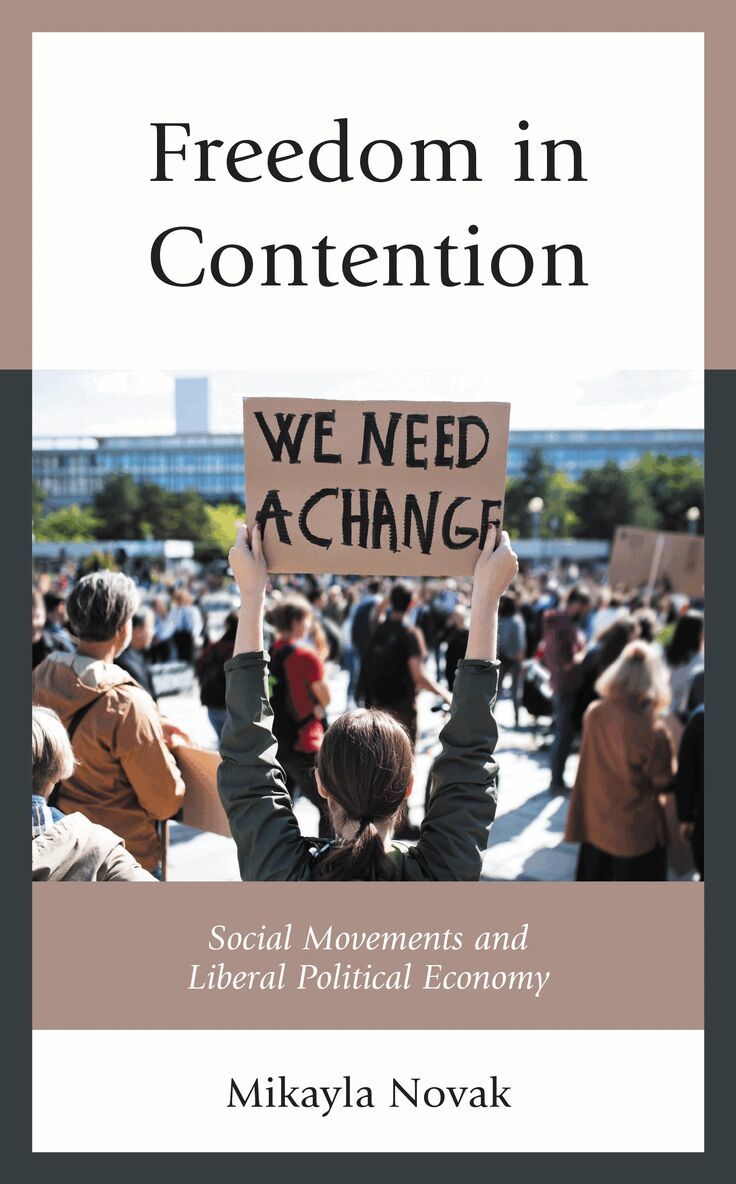
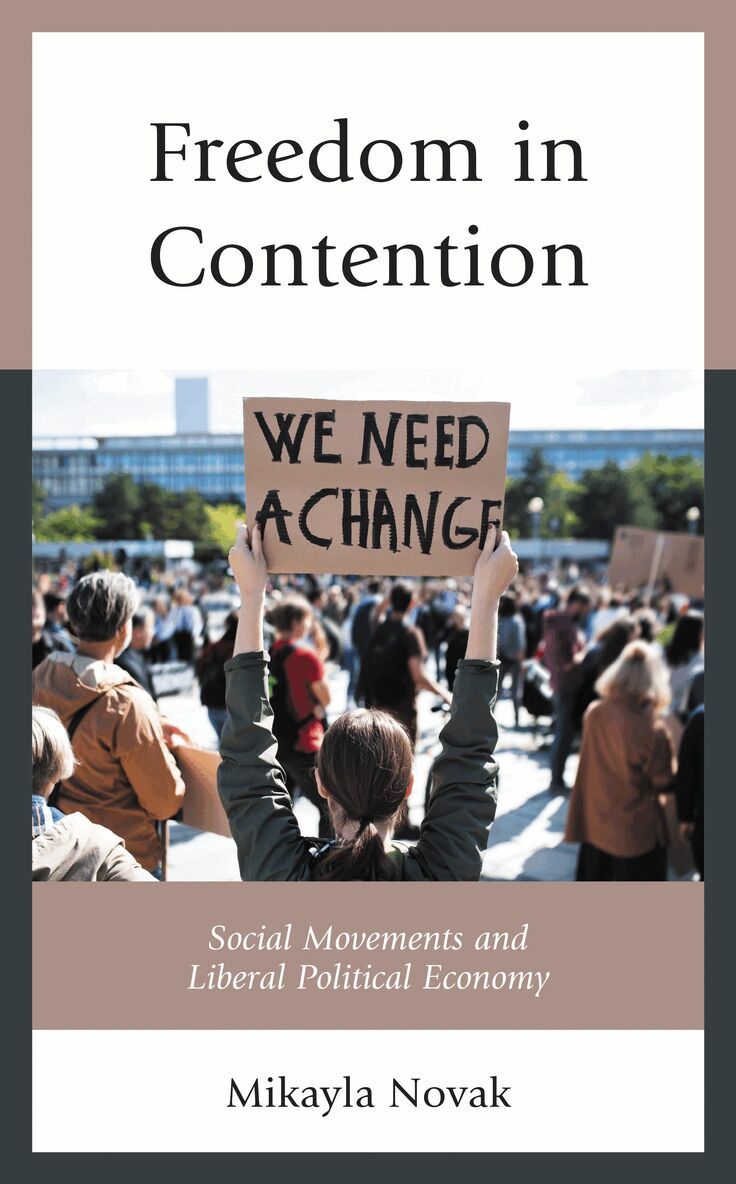
Social movements have been implicated in long-term societal transformations, helping bring about political democratization, economic freedom, and social equality. In recent years, movements such as Occupy Wall Street, the Arab Spring, and Black Lives Matter have organized protests, and other contentious activities, against varied injustices in the world today. But what are social movements, how do they work, and what are their impacts upon society? In this landmark contribution, social movement activities and outcomes are understood through the lens of liberal political economy. This approach emphasizes dynamic collective choices within multi-faceted economic, political, and social environments, with the capacity for such choices to promote freedom, equality, and dignity. Inspired by the works of Friedrich Hayek, Elinor and Vincent Ostrom, and James Buchanan, Freedom in Contention illustrates how social movements fluidly organize in often repressive environments, bringing people together in their efforts to audaciously challenge public power and other forms of authority. Using historical and contemporary case studies, this book reveals how advances in human liberty are shaped by the struggles of social movement activists to have their concerns heard and respected. This important book will appeal to social scientists, decision-makers, and people interested in how social movements affect our lives.
434 kr
Skickas inom 10-15 vardagar
Social movements have been implicated in long-term societal transformations, helping bring about political democratization, economic freedom, and social equality. In recent years, movements such as Occupy Wall Street, the Arab Spring, and Black Lives Matter have organized protests, and other contentious activities, against varied injustices in the world today. But what are social movements, how do they work, and what are their impacts upon society? In this landmark contribution, social movement activities and outcomes are understood through the lens of liberal political economy. This approach emphasizes dynamic collective choices within multi-faceted economic, political, and social environments, with the capacity for such choices to promote freedom, equality, and dignity. Inspired by the works of Friedrich Hayek, Elinor and Vincent Ostrom, and James Buchanan, Freedom in Contention illustrates how social movements fluidly organize in often repressive environments, bringing people together in their efforts to audaciously challenge public power and other forms of authority. Using historical and contemporary case studies, this book reveals how advances in human liberty are shaped by the struggles of social movement activists to have their concerns heard and respected. This important book will appeal to social scientists, decision-makers, and people interested in how social movements affect our lives.