Leo Treitler – författare
Visar alla böcker från författaren Leo Treitler. Handla med fri frakt och snabb leverans.
4 produkter
With Voice and Pen
Coming to Know Medieval Song and How it Was Made
Av Leo Treitler
E-bok, 2003
1125 kr
Lägg i varukorg
Leo Treitler''s seventeen classic essays trace the creation and spread of song (cantus), sacred and secular, through oral tradition and writing, in the European Middle Ages. The author examines songs in particular - their design, their qualities and character, their expressive meanings, and their …
With Voice and Pen
Coming to Know Medieval Song and How it Was Made
Av Leo Treitler
Häftad, 2007
1636 kr
Lägg i varukorg
Leo Treitler's seventeen classic essays trace the creation and spread of song (cantus), sacred and secular, through oral tradition and writing, in the European Middle Ages. The author examines songs in particular - their design, their qualities and character, their expressive meanings, and their …
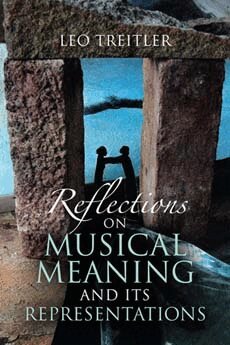
Reflections on Musical Meaning and Its Representations
Av Leo Treitler
Häftad, 2011
395 kr
Lägg i varukorg
How is it possible to talk or write about music? What is the link between graphic signs and music? What makes music meaningful? In this book, distinguished scholar Leo Treitler explores the relationships among language, musical notation, performance, compositional practice, and patterns of culture …
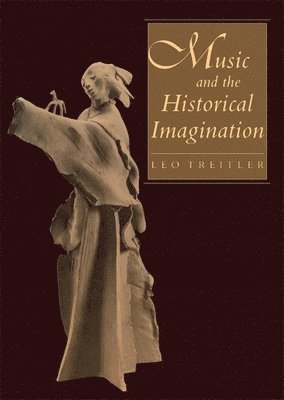
Music and the Historical Imagination
Av Leo Treitler
Häftad, 1990
4,0 utav 5 stjärnor. Totalt antal röster: (1)
524 kr
Lägg i varukorg
Leo Treitler is a central figure in American musicology, both for his writings on medieval and Renaissance music and for his influential work on historical analysis. In this elegant book he develops a powerful statement of what music analysis and criticism in relation to historical understanding …