Leo Troy – författare
Visar alla böcker från författaren Leo Troy. Handla med fri frakt och snabb leverans.
3 produkter
3 produkter
1 340 kr
Skickas inom 10-15 vardagar
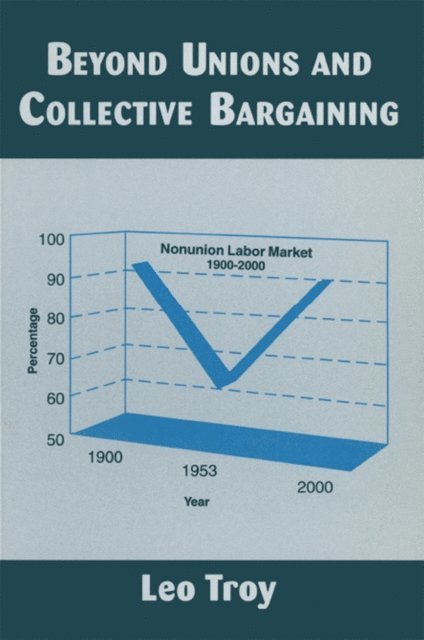
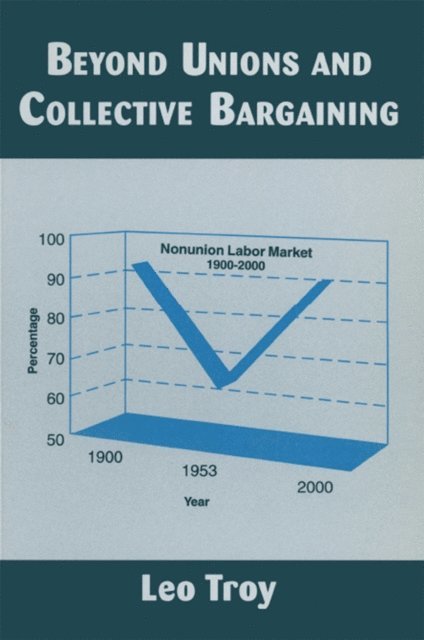
The first book to provide a comprehensive examination of nonunion industrial relations -- its definition and parameters, and the causes and factors that led to the nonunion reality. Beyond Unions and Collective Bargaining focuses on labor relations in the private -- sector labor market, which accounted for about 90% of the sector at the end of 1999. Troy discusses with clarity and authority the transformation in the United States from the organized to the private labor market. Within a two-part format, Troy first deals with the manifold historical conditions that set the stage for the competitive nonunion alternative and then addresses the all-important question, "What makes the nonunion system work?"
456 kr
Skickas inom 10-15 vardagar
The first book to provide a comprehensive examination of nonunion industrial relations -- its definition and parameters, and the causes and factors that led to the nonunion reality. Beyond Unions and Collective Bargaining focuses on labor relations in the private -- sector labor market, which accounted for about 90% of the sector at the end of 1999. Troy discusses with clarity and authority the transformation in the United States from the organized to the private labor market. Within a two-part format, Troy first deals with the manifold historical conditions that set the stage for the competitive nonunion alternative and then addresses the all-important question, "What makes the nonunion system work?"
New Unionism in the New Society
Public Sector Unions in the Redistributive States
Inbunden, Engelska, 1994
713 kr
Tillfälligt slut
Leo Troy describes and analyzes the changes in the economy and labor markets and the subsequent and continuing changes in unions. He contrasts new and old unionism, detailing the characteristics of the new union movement and patterns of organization. He sets this discussion in the context of the new industrial relations system and compares and contrasts the old and new philosophies of unionism. The book concludes with an examination of the philosophy of the new unionism and its consequences.