Leonard Muellner - Böcker
Visar alla böcker från författaren Leonard Muellner. Handla med fri frakt och snabb leverans.
3 produkter
3 produkter
Del 63 - Hellenic Studies Series
Poetry as Initiation
The Center for Hellenic Studies Symposium on the Derveni Papyrus
Häftad, Engelska, 2014
238 kr
Skickas inom 7-10 vardagar
The Derveni Papyrus is the oldest known European "book." It was meant to accompany the cremated body in Derveni Tomb A but, by a stroke of luck, did not burn completely. Considered the most important discovery for Greek philology in the twentieth century, the papyrus was found accidentally in 1962 during a public works project in an uninhabited place about 10 km from Thessaloniki, and it is now preserved in the Archaeological Museum of Thessaloniki.The papers in Poetry as Initiation discuss a number of open questions: Who was the author of the papyrus? What is the date of the text? What is the significance of burying a book with a corpse? What was the context of the peculiar chthonic ritual described in the text? Who were its performers? What is the relationship of the author and the ritual to the so-called Orphic texts?
1 120 kr
Skickas inom 10-15 vardagar
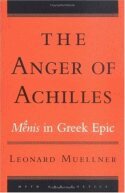
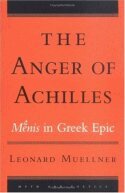
"Menis opens for consideration an immense range of significant poetic possibilities, not the least of which is that of an ethical sense for the term."—Bryn Mawr Classical Review"Henceforth no one will be able to claim that menis merely connotes strong emotion. Muellner has demonstrated that menis is a critical component of the workings of both the human and divine cosmos. And that is no small accomplishment."—American Journal of Philology"It is high praise, and deserved, to say that this study will take its place... as one of the works that have given us insights into truly fundamental issues in Homer."—Classical JournalLeonard Muellner's goal is to restore the Greek word for the anger of Achilles, menis, to its social, mythical, and poetic contexts. His point of departure is the anthropology of emotions. He believes that notions of anger vary between cultures and that the particular meaning of a word such as menis needs to emerge from a close study of Greek epic. Menis means more than an individual's emotional response. On the basis of the epic exemplifications of the word, Muellner defines the term as a cosmic sanction against behavior that violates the most basic rules of human society. To understand the way menis functions, Mueller stresses both the power and the danger that accrue to a person who violates such rules. Transgressive behavior has both a creative and a destructive aspect.
379 kr
Skickas inom 10-15 vardagar
"Menis opens for consideration an immense range of significant poetic possibilities, not the least of which is that of an ethical sense for the term."—Bryn Mawr Classical Review"Henceforth no one will be able to claim that menis merely connotes strong emotion. Muellner has demonstrated that menis is a critical component of the workings of both the human and divine cosmos. And that is no small accomplishment."—American Journal of Philology"It is high praise, and deserved, to say that this study will take its place... as one of the works that have given us insights into truly fundamental issues in Homer."—Classical JournalLeonard Muellner's goal is to restore the Greek word for the anger of Achilles, menis, to its social, mythical, and poetic contexts. His point of departure is the anthropology of emotions. He believes that notions of anger vary between cultures and that the particular meaning of a word such as menis needs to emerge from a close study of Greek epic. Menis means more than an individual's emotional response. On the basis of the epic exemplifications of the word, Muellner defines the term as a cosmic sanction against behavior that violates the most basic rules of human society. To understand the way menis functions, Mueller stresses both the power and the danger that accrue to a person who violates such rules. Transgressive behavior has both a creative and a destructive aspect.