Leonard R. Sayles – författare
Visar alla böcker från författaren Leonard R. Sayles. Handla med fri frakt och snabb leverans.
13 produkter
13 produkter
Häftad, Engelska, 1999
194 kr
Skickas inom 5-8 vardagar
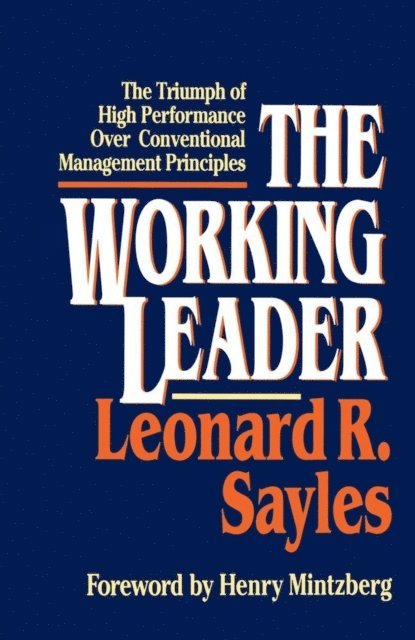
Schooled to oversee fixed, almost unvarying routines, managers today are unprepared to manage the conflicts in modern work flow relationships. Sayles shows with vivid case studies how middle managers with an in-depth understanding of the organization can resolve the inherent contradictions and ambiguities among design, sales, and manufacturing.
Inbunden, Engelska, 2021
457 kr
Skickas inom 3-6 vardagar
Inbunden, Engelska, 2021
523 kr
Skickas inom 3-6 vardagar
Häftad, Engelska, 2021
311 kr
Skickas inom 3-6 vardagar
Häftad, Engelska, 2021
366 kr
Skickas inom 3-6 vardagar
E-bok
Engelska, 2017568 kr
Läs direkt efter köp
Managing Large Systems examines a range of human, organizational, and managerial challenges associated with large systems. Special attention is given to the behavioral relationships among scientists and engineers, business and technical managers, sponsor organizations and their contractors, business and government officials, and line and functional managers.The descriptions of problems of technical organization and performance motivation are based primarily on an extended field study of the National Aeronautics and Space Administration. Managing Large Systems includes a description of the unique management system developed by NASA under the leadership of James Webb that many believe was responsible for their extraordinary technological achievements that culminated in the first moon landing. Parallels are drawn to other large-scale technology programs in aerospace and atomic energy.The authors find traditional managerial principles regarding controls, incentive systems, and planning to be inadequate in the context of large systems. They look to organizational clusters to manage future projects in advanced technological areas and in public sectors such as urban development, massive medical programs, and ecological improvements.
E-bok
PDF, Engelska, 2017568 kr
Läs direkt efter köp
Managing Large Systems examines a range of human, organizational, and managerial challenges associated with large systems. Special attention is given to the behavioral relationships among scientists and engineers, business and technical managers, sponsor organizations and their contractors, business and government officials, and line and functional managers.The descriptions of problems of technical organization and performance motivation are based primarily on an extended field study of the National Aeronautics and Space Administration. Managing Large Systems includes a description of the unique management system developed by NASA under the leadership of James Webb that many believe was responsible for their extraordinary technological achievements that culminated in the first moon landing. Parallels are drawn to other large-scale technology programs in aerospace and atomic energy.The authors find traditional managerial principles regarding controls, incentive systems, and planning to be inadequate in the context of large systems. They look to organizational clusters to manage future projects in advanced technological areas and in public sectors such as urban development, massive medical programs, and ecological improvements.
E-bok
Engelska, 2010113 kr
Läs direkt efter köp
The goal: To be a leader who has an agenda, knows the system inside out, is comfortable with fluidity, and recognizes that the parts do not always fit into an integrated whole.Schooled to oversee fixed, almost unvarying routines, managers today are unprepared to manage the conflicts in modern work flow relationships. Sayles shows with vivid case studies how middle managers with an in-depth understanding of the organization can resolve the inherent contradictions and ambiguities among design, sales, and manufacturing.
Häftad, Engelska, 1993
483 kr
Skickas inom 10-15 vardagar
Managing Large Systems examines a range of human, organizational, and managerial challenges associated with large systems. Special attention is given to the behavioral relationships among scientists and engineers, business and technical managers, sponsor organizations and their contractors, business and government officials, and line and functional managers.The descriptions of problems of technical organization and performance motivation are based primarily on an extended field study of the National Aeronautics and Space Administration. Managing Large Systems includes a description of the unique management system developed by NASA under the leadership of James Webb that many believe was responsible for their extraordinary technological achievements that culminated in the first moon landing. Parallels are drawn to other large-scale technology programs in aerospace and atomic energy.The authors find traditional managerial principles regarding controls, incentive systems, and planning to be inadequate in the context of large systems. They look to organizational clusters to manage future projects in advanced technological areas and in public sectors such as urban development, massive medical programs, and ecological improvements.
E-bok
Engelska, 1996182 kr
Läs direkt efter köp
Managing in a multicultural setting can be very challenging. Culture strongly influences how people behave and how they understand the behavior of others, and cultures vary in the behaviors they find proper and acceptable. This report--which integrates work done by experts in the fields of anthropology, cross-cultural psychology, and international business management with CCL''s perspective on how executives learn from experience--describes the cultural values, often unconsciously held, that underlie work in the U.S. and provides managers in the U.S. with a structured way of learning about the value preferences of people from other cultures. Examples drawn from workplaces around the world aid in applying the framework.
Häftad, Engelska, 1995
98 kr
Skickas inom 5-8 vardagar
Häftad, Engelska, 1996
153 kr
Skickas inom 5-8 vardagar
E-bok
PDF, Engelska, 2018182 kr
Läs direkt efter köp
Managing in a multicultural setting can be very challenging. Culture strongly influences how people behave and how they understand the behavior of others, and cultures vary in the behaviors they find proper and acceptable. This report—which integrates work done by experts in the fields of anthropology, crosscultural psychology, and international business management with CCL’s perspective on how executives learn from experience—describes the cultural values, often unconsciously held, that underlie work in the U.S. and provides managers in the U.S. with a structured way of learning about the value preferences of people from other cultures. Examples drawn from workplaces around the world aid in applying the framework.