Leonidas G. Anthopoulos - Böcker
Visar alla böcker från författaren Leonidas G. Anthopoulos. Handla med fri frakt och snabb leverans.
9 produkter
9 produkter
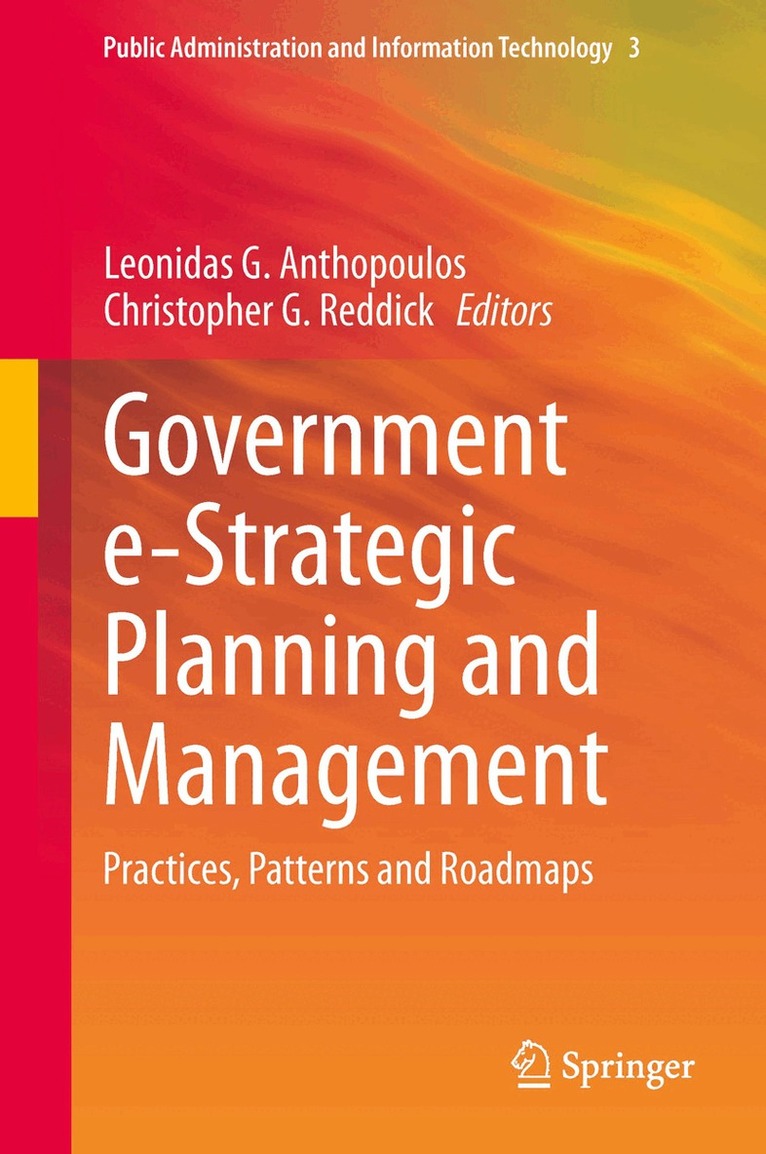
Government e-Strategic Planning and Management
Practices, Patterns and Roadmaps
Inbunden, Engelska, 2013
1 064 kr
Skickas inom 10-15 vardagar
Various e-strategies have been developed since the late '90s in an attempt to describe the governmental vision for administrative and for societal change, the objectives and priorities with regard to the development of the Information and Communication Technologies (ICT) at national and at supranational levels. Terms such as the European “Information Society”, the U.S. “Information Highways” and the Korean and Chinese “Informatization” try to describe social transformation that occurs due to the ICT, and to determine means with which governments will capitalize the ICT to improve social life and to support economic growth. This book focuses on the e-strategic management approaches that are followed worldwide, addresses the gaps that appear between e-strategic updates, and presents alternative strategic management methods adopted or to use strategic management methods as a means to describe the e-strategic evolution in their geographic areas. Each chapter evaluates e-strategic management approaches, to define multi-criteria decision-making systems for e-strategic transformation and Indicative methods for e-strategic analysis. This book also illustrates experiences from national and supranational cases, which come from different geographic areas regarding e-strategic planning and management, and demonstrates e-strategic initiation and development across different countries and continents, and the association between policies and ICT. It also seeks to perform a systematic analysis of various representative cases, in order to capture the realized e-Strategic transformation. It will be of interest to scholars and policy-makers in public administration, management, and information technology.
Government e-Strategic Planning and Management
Practices, Patterns and Roadmaps
Häftad, Engelska, 2016
1 064 kr
Skickas inom 10-15 vardagar
Various e-strategies have been developed since the late '90s in an attempt to describe the governmental vision for administrative and for societal change, the objectives and priorities with regard to the development of the Information and Communication Technologies (ICT) at national and at supranational levels. Terms such as the European “Information Society”, the U.S. “Information Highways” and the Korean and Chinese “Informatization” try to describe social transformation that occurs due to the ICT, and to determine means with which governments will capitalize the ICT to improve social life and to support economic growth. This book focuses on the e-strategic management approaches that are followed worldwide, addresses the gaps that appear between e-strategic updates, and presents alternative strategic management methods adopted or to use strategic management methods as a means to describe the e-strategic evolution in their geographic areas. Each chapter evaluates e-strategic management approaches, to define multi-criteria decision-making systems for e-strategic transformation and Indicative methods for e-strategic analysis. This book also illustrates experiences from national and supranational cases, which come from different geographic areas regarding e-strategic planning and management, and demonstrates e-strategic initiation and development across different countries and continents, and the association between policies and ICT. It also seeks to perform a systematic analysis of various representative cases, in order to capture the realized e-Strategic transformation. It will be of interest to scholars and policy-makers in public administration, management, and information technology.
1 841 kr
Skickas inom 10-15 vardagar
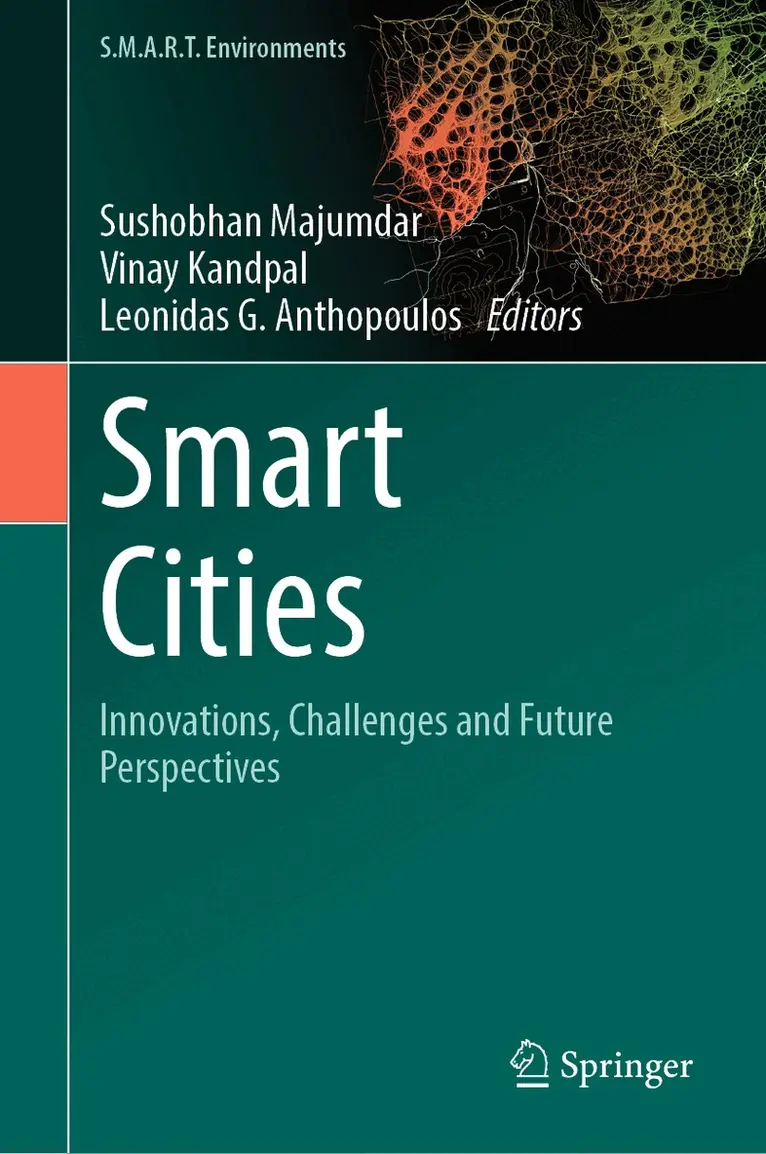
This book aims to integrate new technologies and adaptation tools into the process of smart city planning. It also emphasizes the value and importance of modern technologies such as IoT and data science as a smart technology for the formation of a smart city. The authors believe that various technologies in a smart city will reduce all the problems for the sustainable growth and future prospects of the city.The first section of this book discusses the innovation of new technologies (AI, data science, block chain, etc.) that has flourished in recent decades which will make the city smarter. This section also describes that block chain and IoT (Internet of Things) are two transformative technologies that can greatly impact smart cities by enhancing security, improving transparency, and enabling efficient management of resources.The second section of the book explains about the uses of AI tools and smart technologies (like waste management, public safety and security) for the development and management of smart cities. This chapter also describes AI-powered systems that are integrated into smart buildings to optimize energy usage, enhance occupant comfort, and improve building management. These systems can adjust lighting and HVAC settings based on occupancy, learn user preferences, and provide personalized energy efficiency recommendations.The third portion of the book investigates the recent challenges and barriers of smart city that have been faced by the smart cities in the recent decades. This section also describes various challenges and barriers for the implementation of IoT sensor, AI technologies, etc., for the formation of a smart city. The future prospects of a smart city are the main theme of the last chapter. In this section, an attempt has been made about the future vision and outlook of the smart city. This chapter also describes different approaches (like smart grid, societal smart city, smart city model, etc.) for the future planning and management of the city.
1 841 kr
Skickas inom 10-15 vardagar
This book aims to integrate new technologies and adaptation tools into the process of smart city planning. It also emphasizes the value and importance of modern technologies such as IoT and data science as a smart technology for the formation of a smart city. The authors believe that various technologies in a smart city will reduce all the problems for the sustainable growth and future prospects of the city.The first section of this book discusses the innovation of new technologies (AI, data science, block chain, etc.) that has flourished in recent decades which will make the city smarter. This section also describes that block chain and IoT (Internet of Things) are two transformative technologies that can greatly impact smart cities by enhancing security, improving transparency, and enabling efficient management of resources.The second section of the book explains about the uses of AI tools and smart technologies (like waste management, public safety and security) for the development and management of smart cities. This chapter also describes AI-powered systems that are integrated into smart buildings to optimize energy usage, enhance occupant comfort, and improve building management. These systems can adjust lighting and HVAC settings based on occupancy, learn user preferences, and provide personalized energy efficiency recommendations.The third portion of the book investigates the recent challenges and barriers of smart city that have been faced by the smart cities in the recent decades. This section also describes various challenges and barriers for the implementation of IoT sensor, AI technologies, etc., for the formation of a smart city. The future prospects of a smart city are the main theme of the last chapter. In this section, an attempt has been made about the future vision and outlook of the smart city. This chapter also describes different approaches (like smart grid, societal smart city, smart city model, etc.) for the future planning and management of the city.
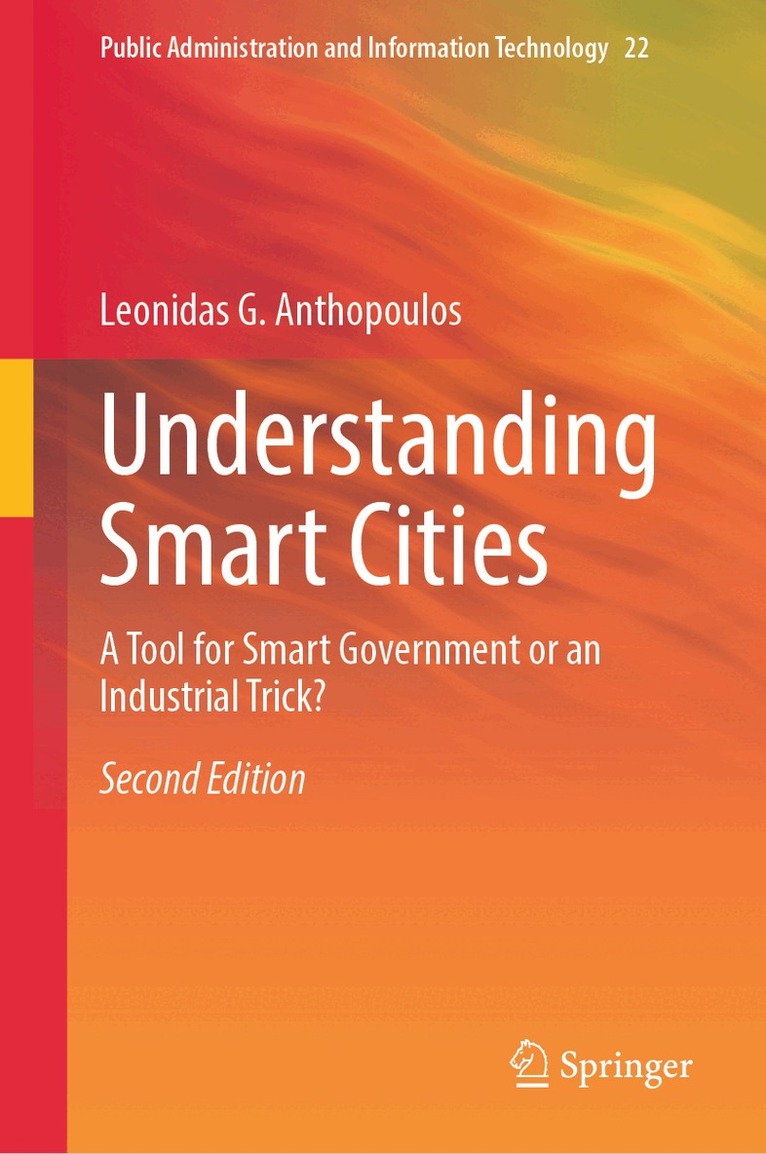
Understanding Smart Cities
A Tool for Smart Government or an Industrial Trick?
Inbunden, Engelska, 2026
1 381 kr
Skickas inom 10-15 vardagar
This book investigates the evolving role of smart cities in the broader context of urban innovation and digital government, identifies what a smart city is in practice and highlights its importance to the welfare of society. The book offers specific, measurable, and action-oriented public sector planning and management principles, technological artifacts, guides and ideas for smart governance in the era of global urbanization and innovation to help with the challenges in maintaining the democratic system of checks and balances as well as the division of powers in a highly interconnected world. Revised for the second edition, this volume includes up-to-date information about smart city progress, as well as new terminology, standards, technologies, and practices. The book will be of interest to researchers, practitioners, students, and public sector IT professionals that work within smart cities, innovation management, public administration, urban technologies and urban innovation, and public local administration studies.
1 381 kr
Skickas inom 10-15 vardagar
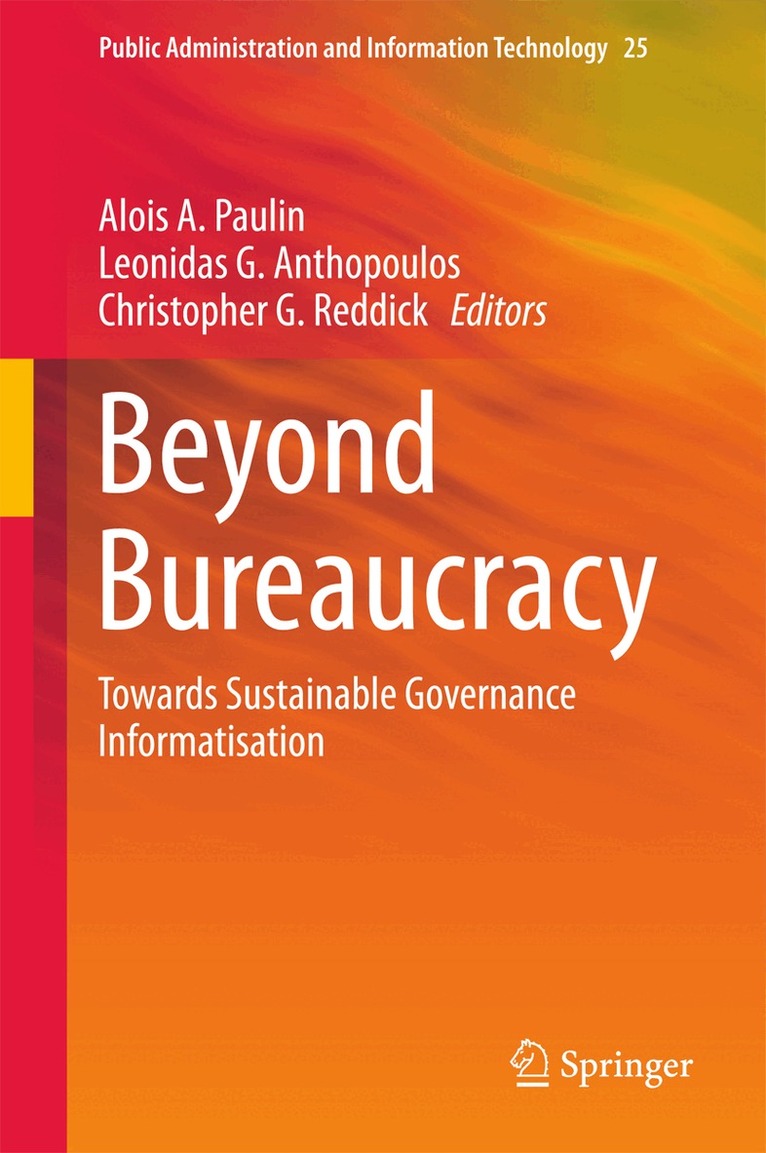
This book examines the role of bureaucracy in modern technologically advanced societies, the traditional models of governance, and the potential of information technology to fundamentally change and improve governance. In the area of public-domain governance, information and communication technologies (ICTs) have empowered public agencies to improve their activities and to strengthen the efficiency of their operations. Technology has enabled optimized transfer of knowledge and information between government agencies, more efficient supervision and control of relationships with citizens, and higher efficiency in law enforcement through better access to information. Throughout the last decades, technology has been used to strengthen the role of state bureaucracies and the relationship between the civil service and the citizens. We have witnessed the transformative powers of ICTs in private-sector enterprises in well-structured technological landscapes, which has produced new ecosystems comprised of software developers, providers, and consumers who provide and consume new products and services in ecosystems that are based on clear technological standards and shared modular generic artefacts, which allow for distributed peer production. ICTs will shape cultural and civic discourse and create products, services and tools, relying on the open toolsets, technologies and exchange of knowledge between peers. This book will be of particular interest to government CIOs, IT/IS managers, researchers, students, and practitioners in technical sciences, public administration, business management, public policy and IS management.
Understanding Smart Cities: A Tool for Smart Government or an Industrial Trick?
Inbunden, Engelska, 2017
1 718 kr
Skickas inom 5-8 vardagar
This book investigates the role of smart cities in the broader context of urban innovation and e-government, identifies what a smart city is in practice and highlights their importance to the welfare of society. The book offers specific, measurable, and action-oriented public sector planning and management principles and ideas for smart governance in the era of global urbanization and innovation to help with the challenges in maintaining the democratic system of checks and balances as well as the division of powers in a highly interconnected world. The book will be of interest researchers, practitioners, students, and public sector IT professionals that work within innovation management, public administration, urban technologies and urban innovation, and public local administration studies.
1 381 kr
Skickas inom 10-15 vardagar
This book examines the role of bureaucracy in modern technologically advanced societies, the traditional models of governance, and the potential of information technology to fundamentally change and improve governance.
Del 22 - Public Administration and Information Technology
Understanding Smart Cities: A Tool for Smart Government or an Industrial Trick?
Häftad, Engelska, 2018
1 381 kr
Skickas inom 10-15 vardagar
This book investigates the role of smart cities in the broader context of urban innovation and e-government, identifies what a smart city is in practice and highlights their importance to the welfare of society.