Leroy S. Rouner – författare
Visar alla böcker från författaren Leroy S. Rouner. Handla med fri frakt och snabb leverans.
21 produkter
21 produkter
Inbunden, Engelska, 1986
948 kr
Skickas inom 3-6 vardagar
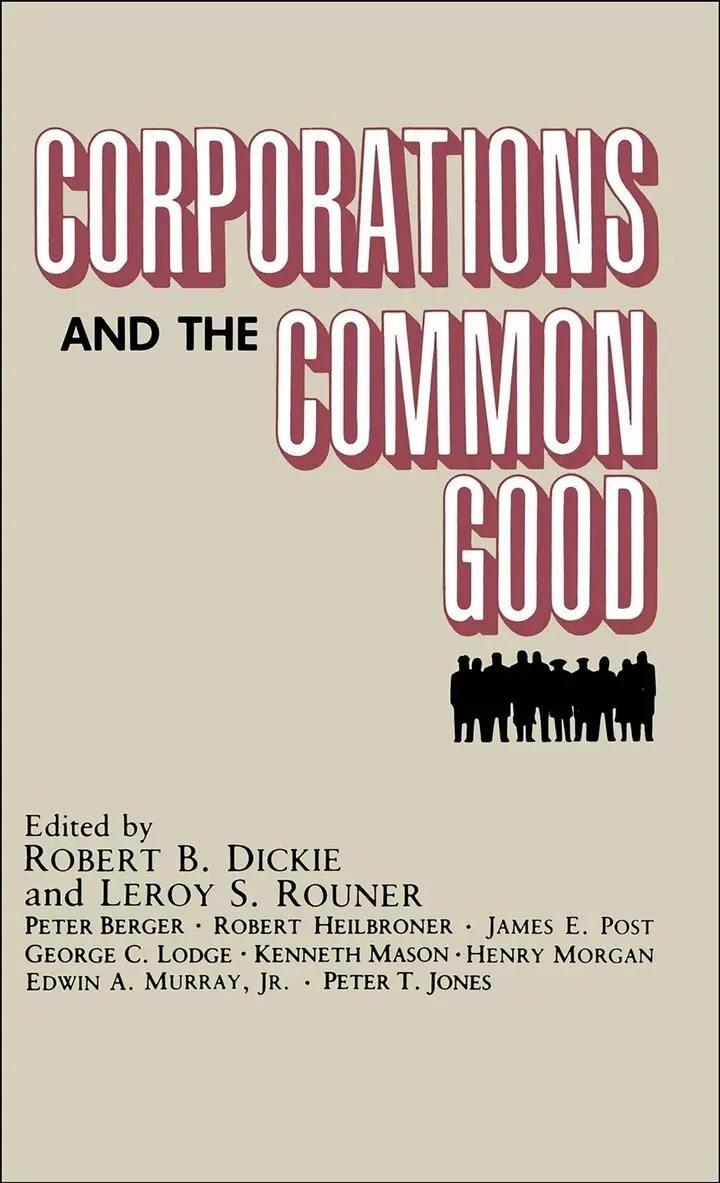
Multinational corporations are highly regarded by some as the crowning achievement of American enterprise. For a significant and increasingly vocal group of Americans, however, the large corporation inspires suspicion if not outright hostility.While some share these suspicions, the contributors to this volume are persuaded that the large corporation is not only here to stay, as Kenneth Mason argues, but has become the definitive institution of modern Western culture. The large corporation dominates the modern world in much the same way that the church and the university dominated the medieval world. Corporations and the Common Good clarifies the suspicions about how corporations came to be, what makes them work, and what needs to be done to change them and their impact on our society.These were the questions which motivated a colloquium at Boston University on what we chose to call "The Philosophy of the Large Corporation." That enigmatic title was their way of avoiding another conference on "business ethics" and inaugurating a too-brief, admittedly rough-edged, but nevertheless serious attempt to find out how large corporations affect the common good in our culture. The colloquium was sponsored jointly by Boston University's Institute for Philosophy and Religion and its School of Management.
Häftad, Engelska, 1987
334 kr
Skickas inom 10-15 vardagar
Multinational corporations are highly regarded by some as the crowning achievement of American enterprise. For a significant and increasingly vocal group of Americans, however, the large corporation inspires suspicion if not outright hostility.While some share these suspicions, the contributors to this volume are persuaded that the large corporation is not only here to stay, as Kenneth Mason argues, but has become the definitive institution of modern Western culture. The large corporation dominates the modern world in much the same way that the church and the university dominated the medieval world. Corporations and the Common Good clarifies the suspicions about how corporations came to be, what makes them work, and what needs to be done to change them and their impact on our society.These were the questions which motivated a colloquium at Boston University on what we chose to call "The Philosophy of the Large Corporation." That enigmatic title was their way of avoiding another conference on "business ethics" and inaugurating a too-brief, admittedly rough-edged, but nevertheless serious attempt to find out how large corporations affect the common good in our culture. The colloquium was sponsored jointly by Boston University's Institute for Philosophy and Religion and its School of Management.
Inbunden, Engelska, 2022
1 289 kr
Skickas inom 5-8 vardagar
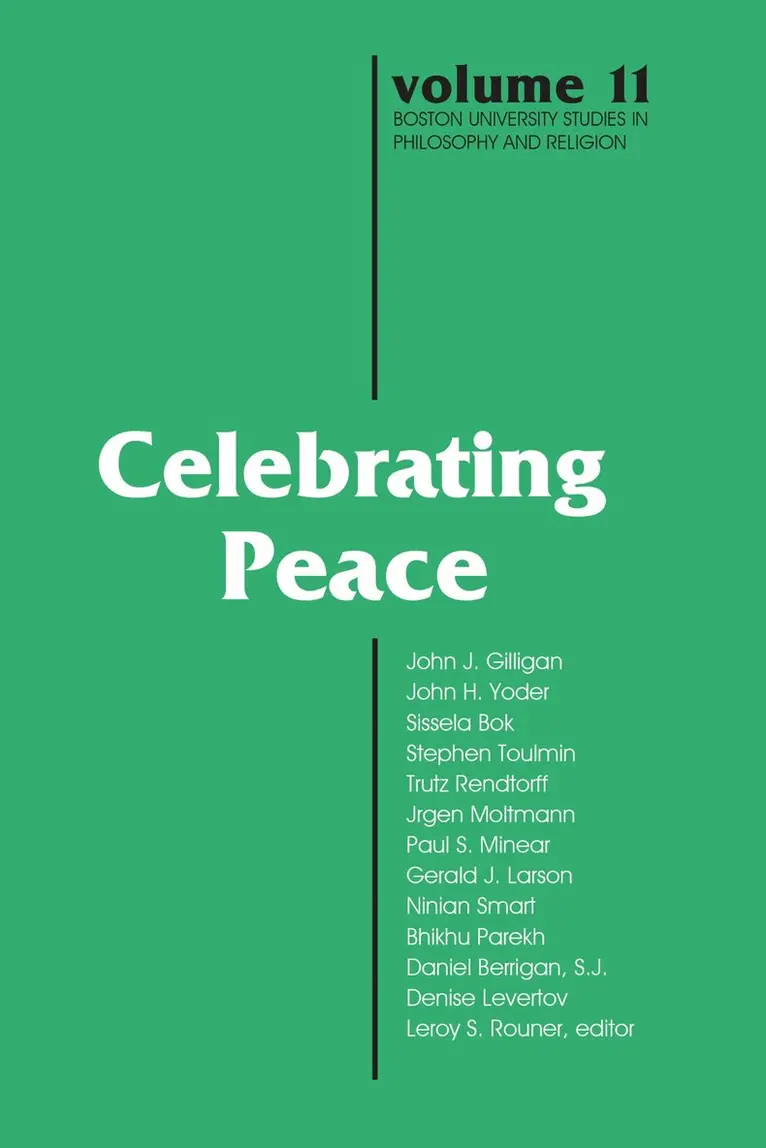
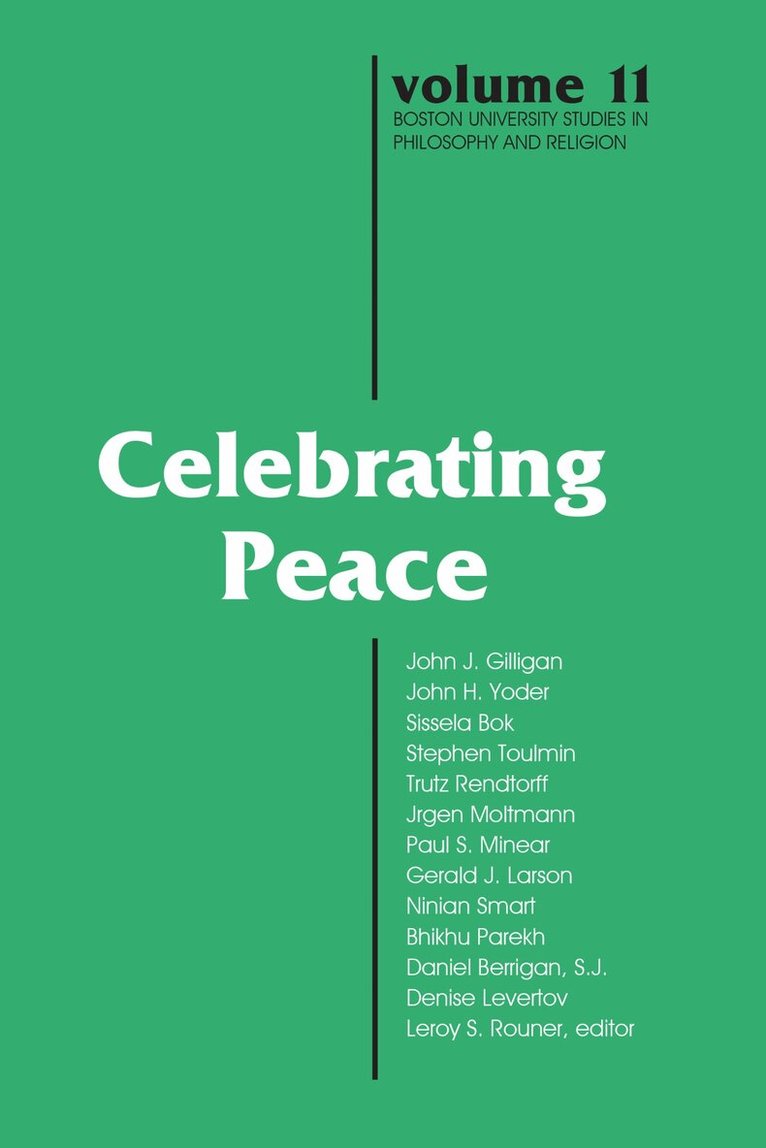
Coming in the wake of momentous changes in Eastern Europe, the Soviet Union, Germany and the movement for democracy in China, Celebrating Peace presents original essays by thinkers and writers to provide reflections on peace that go beyond current events and point towards extending and building peace. This volume intends not only to celebrate peace but to contribute to an understanding of it through philosophical, theological and literary explorations.Contributors include:Part I: Just War, Perpetual Peace, and the Nation-StateJohn J. Gilligan, John H. Yoder, Sissela Bok, and Stephen ToulminPart II: Christian Conceptions of PeaceTrutz Rendtorff, Jurgen Moltmann, and Paul S. MinearPart II: Hindu and Buddhist Views of PeaceGerlad J. Larson, Ninian Smart, and Bhukhu ParekPart IV: Making Peace: Prophecy, protest and poetryDaniel Berrigan, S.J., and Denise Levertov
Inbunden, Engelska, 1995
860 kr
Skickas inom 5-8 vardagar
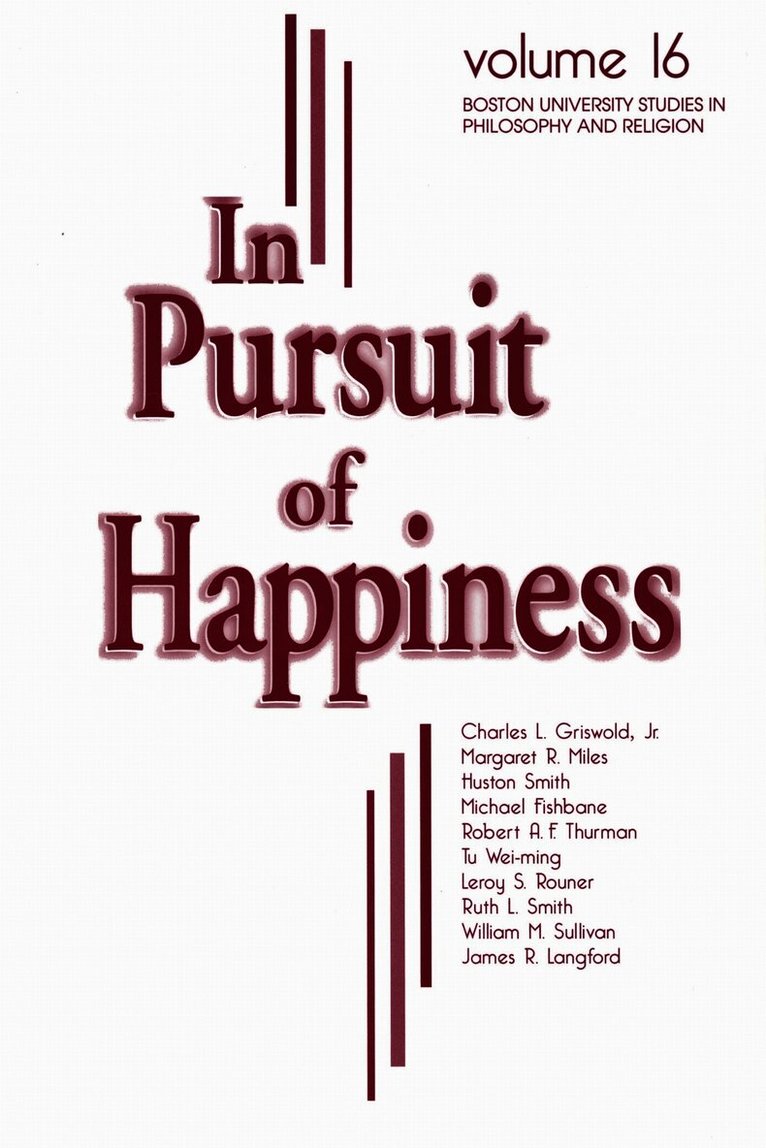
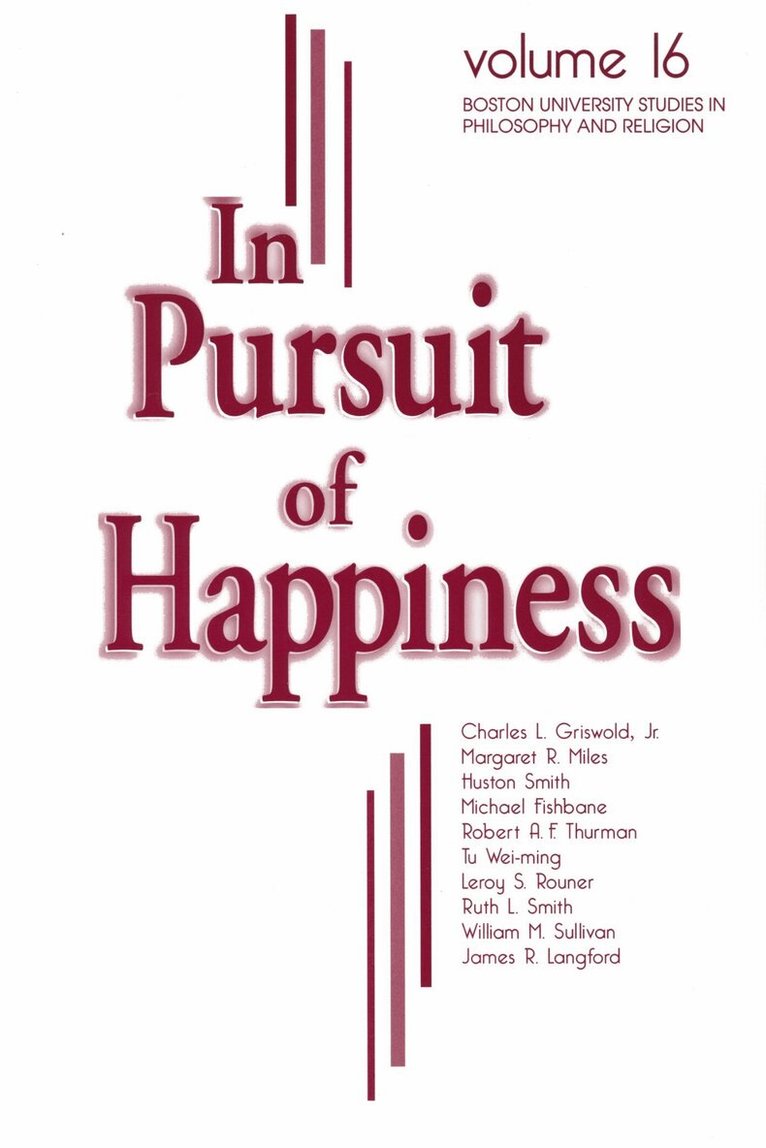
In the first section of this volume, the essayists begin by discussing happiness as a form of tranquility, desire, and blessedness. The second section deals with happiness in three major religious traditions: Jewish, Buddhist, and Confucian. The final section of In Pursuit of Happiness not only discusses happiness as a necessary component for knowledge, but includes a light-hearted philosophical essay that focuses on the long-ago baseball rivalry between the Cubs and the Red Sox.Happiness is a paradoxical thing. In our heart of hearts we all want to be happy, but we do not talk much about it, lest we seem sentimental or too optimistic. But what would happiness be like if we could find it? In the first section of this volume, the essayists begin by discussing happiness as a form of tranquility, desire, and blessedness. Charles L. Griswold provides a brief survey of the Western literature and concludes that tranquility is the definition of happiness. Margaret R. Miles emphasizes the role of the body in human happiness, turning to Augustine for an understanding of happiness as desire, and Huston Smith reflects on blessedness, beginning with a philosophical analysis of human experience and concluding with a theological affirmation about transcendence.The second section deals with happiness in three major religious traditions. Michael Fishbane articulates the dynamic tensions between law and spirit in which the Jewish sense of spiritual joy is generated. Robert A. F. Thurman's essay on "The Buddha's Smile" claims that enlightenment is happiness in the Buddhist tradition. Tu Wei-ming discusses the Confucian view of happiness, noting that "the fundamental concern of the Confucian tradition is learning to be human."The third section deals with various issues regarding the meaning and even the uses of happiness. Leroy S. Rouner explores the thesis that ecstasy, the ultimate form of human happiness, is the necessary context for a certain type of knowledge. Ruth L. Smith presents a dialogue with Reinhold Niebuhr, exploring the relationship between happiness and what Niebuhr called "the uneasy conscience." William M. Sullivan examines the possibility of happiness inherent in the promise of professionalism. And James R. Langford provides a light-hearted philosophical piece on happiness that focuses on the long-ago baseball rivalry between the Cubs and the Red Sox.
Inbunden, Engelska, 1997
860 kr
Skickas inom 5-8 vardagar
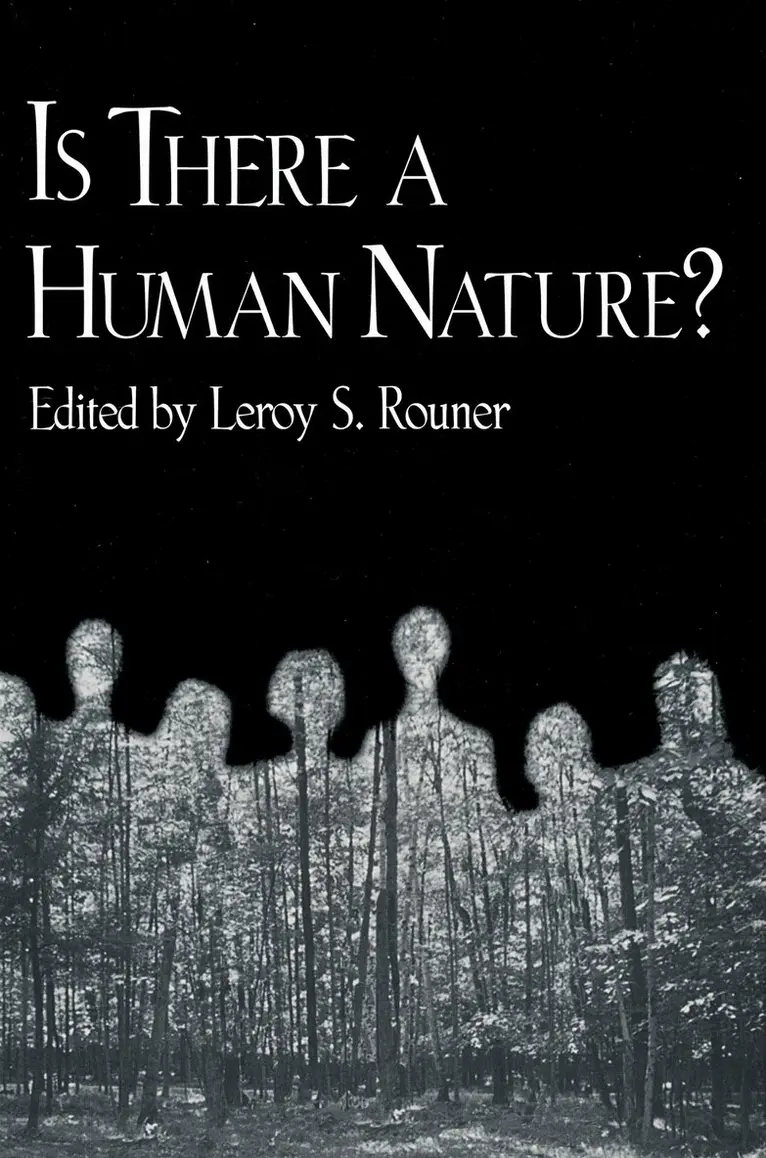
We humans are deeply convinced that there is something distinct about us as a species, but we have never been able to agree on what it is. In the West, the religion of Israel argued that the will is the fundamental vehicle of our relation to God and therefore the determining characteristic of our humanity. Greek philosophy countered with the view that reason is the definitively human characteristic, since humans are the only self-aware animal. Today that unresolved argument is further complicated by the pluralism of contemporary culture and the surprisingly different ways in which different groups understand themselves. These essays approach the question in two different ways. The first is a philosophical attempt at definition. Bhikhu Parekh agrees that there is a universal human nature but that there is also a nature which is culture-specific and a third which is self-reflective. Daniel O. Dahlstrom argues that we know our nature only when it is recognized by our culture and that the liberal democratic idea of the state both celebrates and threatens the notion of fundamental human equality. Stanley H. Rosen gives a contemporary interpretation of the classical Greek view in proposing that philosophy is an expression of our humanity, an openness to the human love of wisdom. Knud Haakonssen is not ready to endorse any given orthodoxy regarding human nature but argues rather for openness to experimental views and promising hypothesis. Lisa Sowle Cahill defends a feminist interpretation of Catholic moral theology; we must be able to say that the battering of women is everywhere and always wrong. And Robert Cummings Neville notes that being human means having the obligation to take responsibility for our history.The second group of essays recognizes that we are what we do as well as what we say we are and asks what it means to be genuinely humane. Glenn C. Loury criticizes Murray and Herrnstein's The Bell Curve as advocacy for a particular elitist view of human nature, which he rejects. Ray L. Hart explores the moral "fault" and "fallenness" in human nature. Graham Parkes insists that human nature is not morally privileged but must be seen as part of nature taken as a whole. Tu Wei-ming explores the Confucian idea of filial piety as a key to global ethics. Leroy S. Rouner examines Kierkegaard's psychology of sin, and Sissela Bok uses the metaphor of the lifeboat to see what extreme situations reveal about our nature as human beings.These essays tend to view true humanity as partly given but largely an achievement. Human nature is now more varied than in the past.
Häftad, Engelska, 1985
297 kr
Skickas inom 5-8 vardagar
Focusing on the contemporary experience of cultural and religious pluralism, the authors in this volume work toward a reconception of the basic concepts in philosophy of religion—the idea of God and the religious ways of knowing that idea—as historically dynamic.Eliot Deutsch argues that aesthetic and religious considerations are not peripheral to philosophy but are at the heart of the philosophic enterprise. Cornel West shows how recent developments in American philosophy, particularly in the work of Quine, Goodman, and Sellars, have opened up the possibility of a historicist philosophy of religion. After reviewing some of the fundamental defenses for belief in God in his neoclassical theism, Charles Hartshorne elaborates the argument from order and the argument from the rational aim. J.N. Findlay insists that the philosophy of religion is itself part of religious knowing, and so, that there can be no radical distinction between philosophic method and personal religious belief. Ninian Smart proposes a "soft epistemology" in dealing with religious matters.Anthony Flew and Kai Nielsen represent longstanding criticism of the philosophy of religion. Naomi R. Goldenberg looks for a salvific religious message in psychoanalysis and feminism. Gordon D. Kaufman's "Reconceiving God for a Nuclear Age" criticizes traditional conceptions of God from within the Christian tradition.In a study of meaninglessness in the modern world, Wolfhart Pannenberg argues that religious consciousness deals explicitly with the totality of meaning implicit in all everyday experience. Langdon Gilkey considers the creationist controversy as it was argued in the Arkansas courts in 1981. Leroy S. Rouner examines the significance of Tillich's doctrine of the Fall as a contribution to interreligious understanding. Jurgen Moltmann finds in Ernst Bloch's atheism a particular challenge to Jewish and Christian theology.
Inbunden, Engelska, 1997
989 kr
Skickas inom 5-8 vardagar
The authors of The Longing for Home explore the notion that home is both a place and a condition of the spirit. While a person may have a place that is home, he or she may also be nostalgic for an inner spiritual home which beckons even as it lies beyond the human grasp. Essays by Elie Wiesel, Werner Gundersheimer, and Frederick Buechner complete part one. Part two focuses on philosophical explorations of the meaning of home.
Häftad, Engelska, 1997
367 kr
Skickas inom 5-8 vardagar
The authors of The Longing for Home explore the notion that home is both a place and a condition of the spirit. While a person may have a place that is home, he or she may also be nostalgic for an inner spiritual home which beckons even as it lies beyond the human grasp. Essays by Elie Wiesel, Werner Gundersheimer, and Frederick Buechner complete part one. Part two focuses on philosophical explorations of the meaning of home.
Häftad, Engelska, 1994
297 kr
Skickas inom 5-8 vardagar
The distinction between meaning and truth has become a critical issue for contemporary philosophy of religion. These essays by eminent scholars express a concern not only with the logic of religious belief and the effect of social context on religious meaning, but with the truth-claim concerning the reality of God.
Inbunden, Engelska, 1989
860 kr
Skickas inom 5-8 vardagar
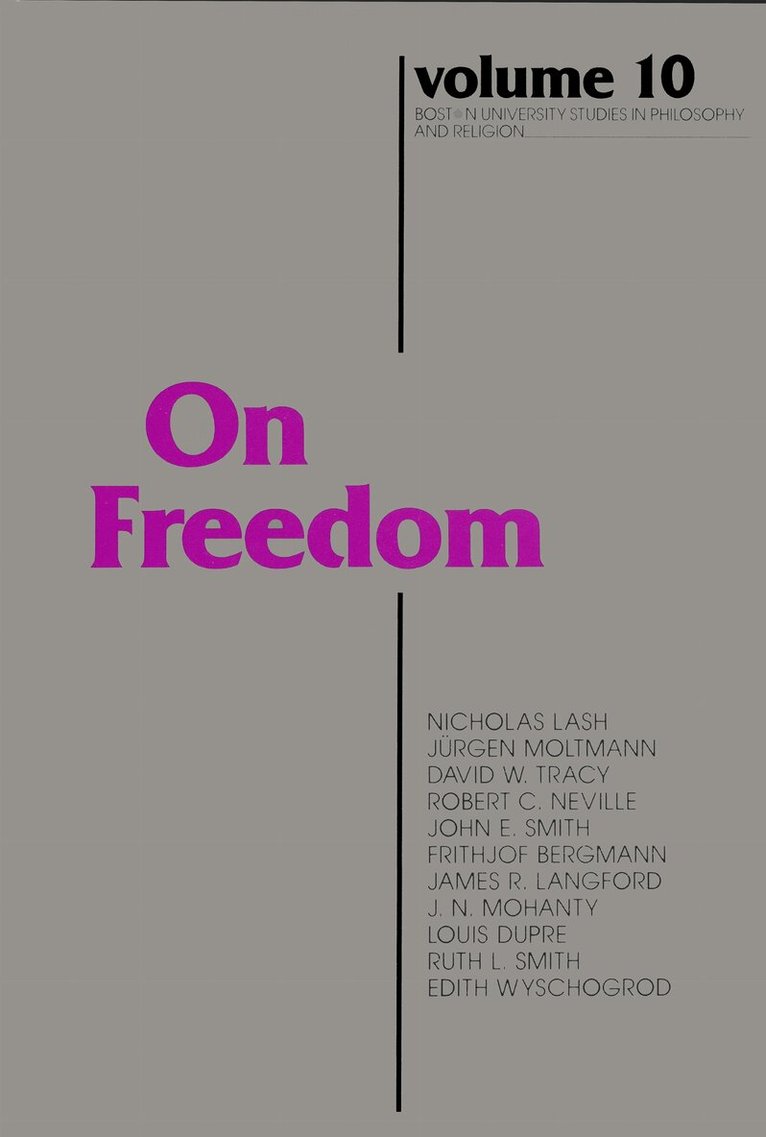
In this tenth volume of the highly respected Boston University Studies in Philosophy and Religion series, contributors explore new approaches to the role of freedom in the contemporary world. It is clear that the idea of freedom has progressed with autonomous selfhood. But it is not yet evident how freedom is to be understood or promoted in a context where economic, political, cultural, and religious issues demand both pluralism and globalization.The essays consider three major areas of the debate. The first group of essays is concerned with the relation of Christian thought to freedom in the post-Christian age. Philosophical reconstructions of the idea of freedom are the focus of Part II, which investigates how the past and present can be used to create a new idea of freedom. Part III explores the possibility that individual selves are no more autonomous that they are social and asks the question: "What can we learn about the freedom of the self from contemporary social philosophies like Marxism and feminism and the unprecedented phenomenon of manmade mass death?"Contributors: Nicholas Lash, Jürgen Moltmann, David W. Tracy, and Robert C. Neville on Theologies of Freedom; John E. Smith, Frithof Bergmann, James R. Langford, and J.N. Mohanty on Philosophies of Freedom; Louis Dupré, Ruth L. Smith, and Edith Wyschogrod on Freedom in Society.
Inbunden, Engelska, 1992
871 kr
Skickas inom 5-8 vardagar
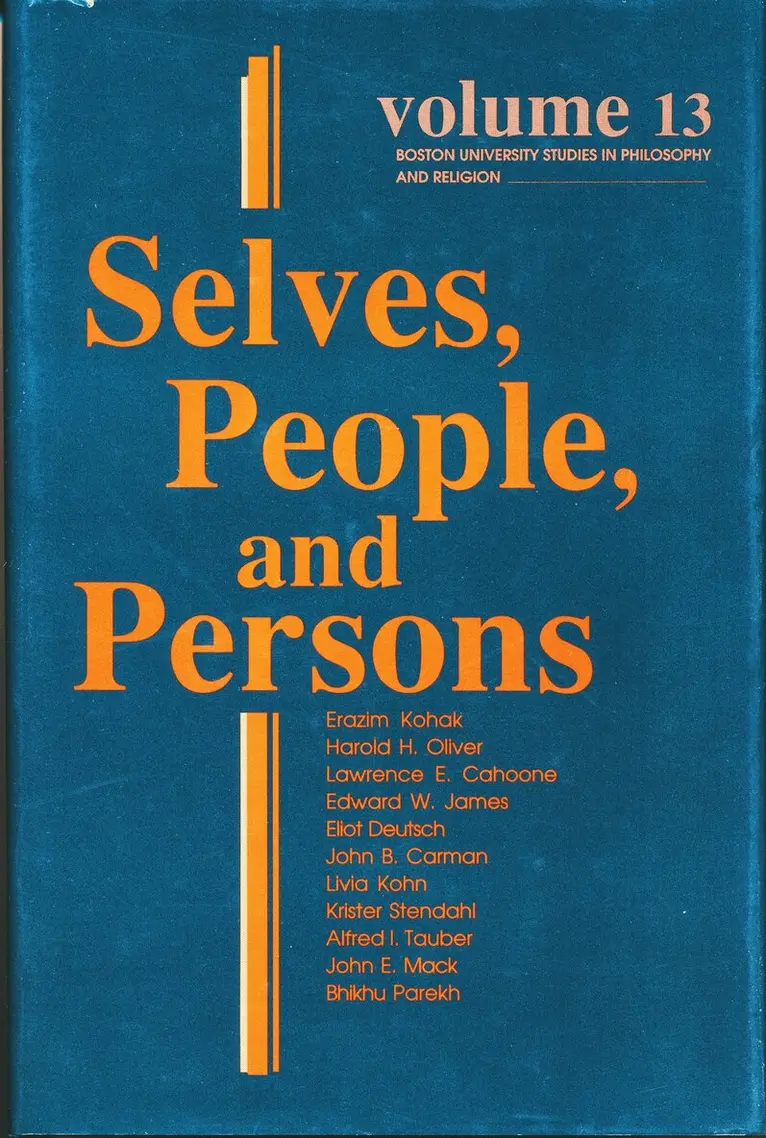
This volume of the Boston University Studies in Philosophy and Religion addresses the meaning of selfhood. The eleven contributors explore this urgent question by reshaping fundamental ideas of the self in such varied fields as theology, biology, psychoanalysis, and political philosophy.The meaning of selfhood has become an urgent question, largely in reaction to the radical individualism in which many modern Western notions of selfhood have been cast. The eleven contributors to Selves, People, and Persons reshape fundamental ideas of the self in such varied fields as theology, biology, psychoanalysis, and political philosophy. Nearly all of them agree that selves are always to be understood in relation to the communities of which they are a part.
Häftad, Engelska, 1992
297 kr
Skickas inom 5-8 vardagar
This volume of the Boston University Studies in Philosophy and Religion addresses the meaning of selfhood. The eleven contributors explore this urgent question by reshaping fundamental ideas of the self in such varied fields as theology, biology, psychoanalysis, and political philosophy.The meaning of selfhood has become an urgent question, largely in reaction to the radical individualism in which many modern Western notions of selfhood have been cast. The eleven contributors to Selves, People, and Persons reshape fundamental ideas of the self in such varied fields as theology, biology, psychoanalysis, and political philosophy. Nearly all of them agree that selves are always to be understood in relation to the communities of which they are a part.
Inbunden, Engelska, 2000
860 kr
Skickas inom 5-8 vardagar
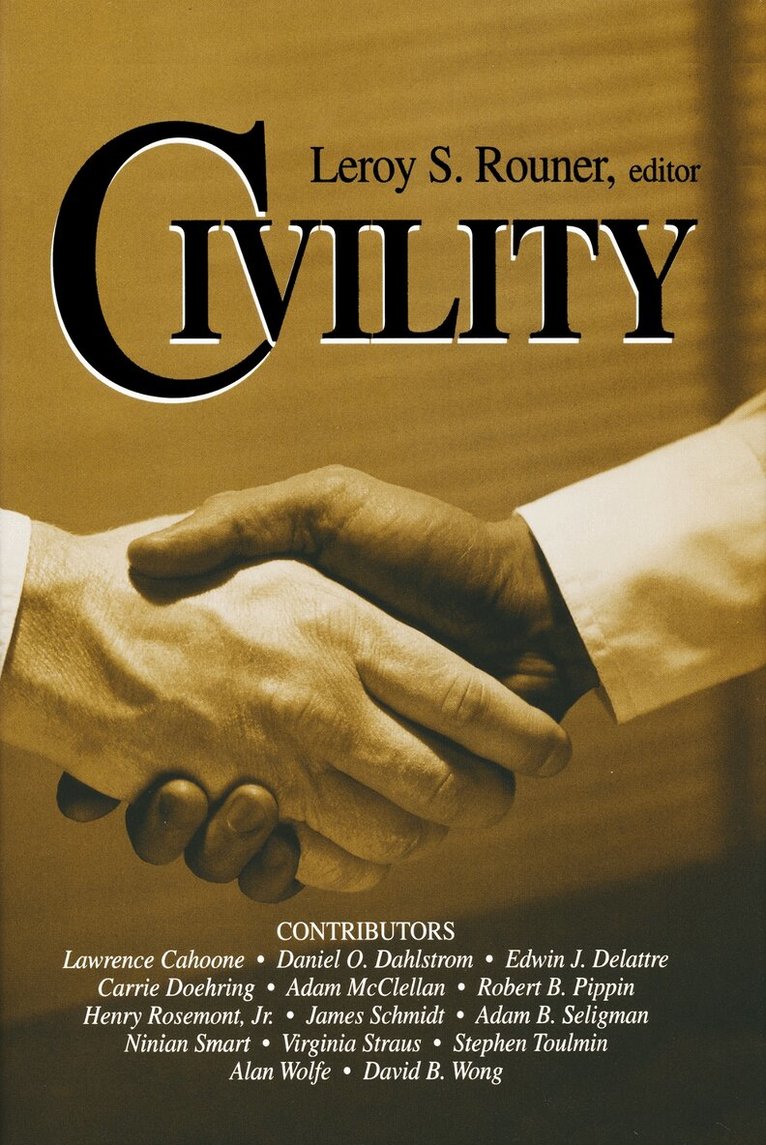
In this lively conversation on an increasingly significant theme, major philosophers and religious scholars argue the issue on three levels. The first is manners: Henry Rosemont argues the Confucian case that manners are the substance of social relations, while Edwin Delattre and Adam Seligman believe that the issue is deeper than that; and the sociologist Alan Wolfe is persuaded that we are not less civil or ill-mannered than our predecessors. Secondly, as a social issue, James Schmidt, Lawrence Cahoone, and Adam Seligman turn to questions of structure and meaning in a civil society; Ninian Smart, David Wong, and Virginia Straus put the issue in a cross-cultural context; Stephen Toulmin describes the corruption of civility by dogmatism; and Carrie Doehring warns that civility may be a barrier to honest communication in family life. Finally, the metaphysical and religious dimensions of civility are explored by Robert Pippin, Adam McClellan, and Daniel Dahlstrom.There seems to be a consensus that the lack of civility is, indeed, an increasing problem, that it is more than a class issue of manners; and that its current loss is troubling for contemporary society.
Häftad, Engelska, 2000
319 kr
Skickas inom 5-8 vardagar
In this lively conversation on an increasingly significant theme, major philosophers and religious scholars argue the issue on three levels. The first is manners: Henry Rosemont argues the Confucian case that manners are the substance of social relations, while Edwin Delattre and Adam Seligman believe that the issue is deeper than that; and the sociologist Alan Wolfe is persuaded that we are not less civil or ill-mannered than our predecessors. Secondly, as a social issue, James Schmidt, Lawrence Cahoone, and Adam Seligman turn to questions of structure and meaning in a civil society; Ninian Smart, David Wong, and Virginia Straus put the issue in a cross-cultural context; Stephen Toulmin describes the corruption of civility by dogmatism; and Carrie Doehring warns that civility may be a barrier to honest communication in family life. Finally, the metaphysical and religious dimensions of civility are explored by Robert Pippin, Adam McClellan, and Daniel Dahlstrom.There seems to be a consensus that the lack of civility is, indeed, an increasing problem, that it is more than a class issue of manners; and that its current loss is troubling for contemporary society.
Häftad, Engelska, 1990
335 kr
Skickas inom 5-8 vardagar
Coming in the wake of momentous changes in Eastern Europe, the Soviet Union, Germany and the movement for democracy in China, Celebrating Peace presents original essays by thinkers and writers to provide reflections on peace that go beyond current events and point towards extending and building peace. This volume intends not only to celebrate peace but to contribute to an understanding of it through philosophical, theological and literary explorations.Contributors include:Part I: Just War, Perpetual Peace, and the Nation-StateJohn J. Gilligan, John H. Yoder, Sissela Bok, and Stephen ToulminPart II: Christian Conceptions of PeaceTrutz Rendtorff, Jurgen Moltmann, and Paul S. MinearPart II: Hindu and Buddhist Views of PeaceGerlad J. Larson, Ninian Smart, and Bhukhu ParekPart IV: Making Peace: Prophecy, protest and poetryDaniel Berrigan, S.J., and Denise Levertov
Häftad, Engelska, 1983
319 kr
Skickas inom 5-8 vardagar
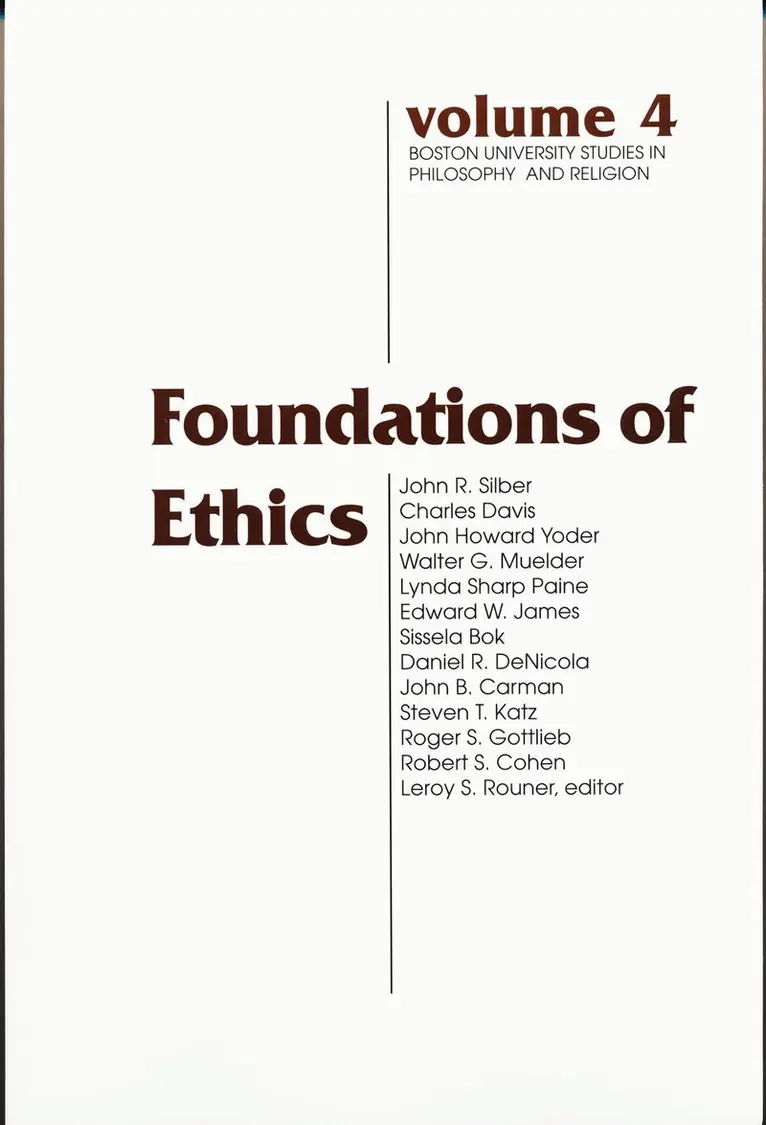
Just when we need them the most, our ethical resources seem least clear and reliable. Hence our search for foundations of ethics. Our intent in this volume has not been to solve any specific moral problem, but to explore basic issues: the prospects for a rational ethic; the relation between ethics and a religious mythos; the challenge of non-Western ethical values; problems raised by the practice of confession, the evaluation of privacy, the ubiquity of science, and more. We obviously have not explored all the foundation issues. We cannot even claim that the ones we have explored are always the most significant. We do claim, however, that these explorations give a vivid picture of our ethical dilemma, and present some of the best thinking currently being done. —from the Introduction
Häftad, Engelska, 1995
319 kr
Skickas inom 5-8 vardagar
In the first section of this volume, the essayists begin by discussing happiness as a form of tranquility, desire, and blessedness. The second section deals with happiness in three major religious traditions: Jewish, Buddhist, and Confucian. The final section of In Pursuit of Happiness not only discusses happiness as a necessary component for knowledge, but includes a light-hearted philosophical essay that focuses on the long-ago baseball rivalry between the Cubs and the Red Sox.Happiness is a paradoxical thing. In our heart of hearts we all want to be happy, but we do not talk much about it, lest we seem sentimental or too optimistic. But what would happiness be like if we could find it? In the first section of this volume, the essayists begin by discussing happiness as a form of tranquility, desire, and blessedness. Charles L. Griswold provides a brief survey of the Western literature and concludes that tranquility is the definition of happiness. Margaret R. Miles emphasizes the role of the body in human happiness, turning to Augustine for an understanding of happiness as desire, and Huston Smith reflects on blessedness, beginning with a philosophical analysis of human experience and concluding with a theological affirmation about transcendence.The second section deals with happiness in three major religious traditions. Michael Fishbane articulates the dynamic tensions between law and spirit in which the Jewish sense of spiritual joy is generated. Robert A. F. Thurman's essay on "The Buddha's Smile" claims that enlightenment is happiness in the Buddhist tradition. Tu Wei-ming discusses the Confucian view of happiness, noting that "the fundamental concern of the Confucian tradition is learning to be human."The third section deals with various issues regarding the meaning and even the uses of happiness. Leroy S. Rouner explores the thesis that ecstasy, the ultimate form of human happiness, is the necessary context for a certain type of knowledge. Ruth L. Smith presents a dialogue with Reinhold Niebuhr, exploring the relationship between happiness and what Niebuhr called "the uneasy conscience." William M. Sullivan examines the possibility of happiness inherent in the promise of professionalism. And James R. Langford provides a light-hearted philosophical piece on happiness that focuses on the long-ago baseball rivalry between the Cubs and the Red Sox.
Häftad, Engelska, 1997
274 kr
Skickas inom 5-8 vardagar
We humans are deeply convinced that there is something distinct about us as a species, but we have never been able to agree on what it is. In the West, the religion of Israel argued that the will is the fundamental vehicle of our relation to God and therefore the determining characteristic of our humanity. Greek philosophy countered with the view that reason is the definitively human characteristic, since humans are the only self-aware animal. Today that unresolved argument is further complicated by the pluralism of contemporary culture and the surprisingly different ways in which different groups understand themselves. These essays approach the question in two different ways. The first is a philosophical attempt at definition. Bhikhu Parekh agrees that there is a universal human nature but that there is also a nature which is culture-specific and a third which is self-reflective. Daniel O. Dahlstrom argues that we know our nature only when it is recognized by our culture and that the liberal democratic idea of the state both celebrates and threatens the notion of fundamental human equality. Stanley H. Rosen gives a contemporary interpretation of the classical Greek view in proposing that philosophy is an expression of our humanity, an openness to the human love of wisdom. Knud Haakonssen is not ready to endorse any given orthodoxy regarding human nature but argues rather for openness to experimental views and promising hypothesis. Lisa Sowle Cahill defends a feminist interpretation of Catholic moral theology; we must be able to say that the battering of women is everywhere and always wrong. And Robert Cummings Neville notes that being human means having the obligation to take responsibility for our history.The second group of essays recognizes that we are what we do as well as what we say we are and asks what it means to be genuinely humane. Glenn C. Loury criticizes Murray and Herrnstein's The Bell Curve as advocacy for a particular elitist view of human nature, which he rejects. Ray L. Hart explores the moral "fault" and "fallenness" in human nature. Graham Parkes insists that human nature is not morally privileged but must be seen as part of nature taken as a whole. Tu Wei-ming explores the Confucian idea of filial piety as a key to global ethics. Leroy S. Rouner examines Kierkegaard's psychology of sin, and Sissela Bok uses the metaphor of the lifeboat to see what extreme situations reveal about our nature as human beings.These essays tend to view true humanity as partly given but largely an achievement. Human nature is now more varied than in the past.
Inbunden, Engelska, 2001
860 kr
Skickas inom 5-8 vardagar
What does "death" really mean? Is there life after death? Is that idea even intelligible?Despite our constant confrontation with death there has been little serious philosophical reflection on the meaning of death and even less on the classical question of immortality. Popular books on "death and dying" abound, but they are largely manuals for dying with composure, or individual "near death" experiences of light at the end of the tunnel.This lively conversation includes various views on these matters, from John Lachs's gentle but firm insistence that the notion of immortality is philosophically unintelligible, to Jürgen Moltmann's brave and careful examination of various arguments for what happens to us when we die. David Roochnik searches the Platonic dialogues for a metaphorical immortality which might satisfy the human longing for some meaning which does not die with us. Aaron Garrett traces the naturalization of the idea of immortality from Scotus to Locke in the history of Western philosophy, and David Schmidtz offers autobiographical reflections in shaping his philosophy of life's meaning. David Eckel takes us through a synopsis of Buddhist ideas on these issues, and Brian Jorgensen offers a response. Rita Rouner uses the poems she wrote after the death of her son to chronicle a survivor's struggle with life and death. Peter Gomes casts a critical eye on our death rituals, and defends a classical Christian view of death and immortality, while Wendy Doniger examines the literature on those who were offered immortality by the gods and chose instead to remain mortal.
Häftad, Engelska, 2001
297 kr
Skickas inom 5-8 vardagar
What does "death" really mean? Is there life after death? Is that idea even intelligible?Despite our constant confrontation with death there has been little serious philosophical reflection on the meaning of death and even less on the classical question of immortality. Popular books on "death and dying" abound, but they are largely manuals for dying with composure, or individual "near death" experiences of light at the end of the tunnel.This lively conversation includes various views on these matters, from John Lachs's gentle but firm insistence that the notion of immortality is philosophically unintelligible, to Jürgen Moltmann's brave and careful examination of various arguments for what happens to us when we die. David Roochnik searches the Platonic dialogues for a metaphorical immortality which might satisfy the human longing for some meaning which does not die with us. Aaron Garrett traces the naturalization of the idea of immortality from Scotus to Locke in the history of Western philosophy, and David Schmidtz offers autobiographical reflections in shaping his philosophy of life's meaning. David Eckel takes us through a synopsis of Buddhist ideas on these issues, and Brian Jorgensen offers a response. Rita Rouner uses the poems she wrote after the death of her son to chronicle a survivor's struggle with life and death. Peter Gomes casts a critical eye on our death rituals, and defends a classical Christian view of death and immortality, while Wendy Doniger examines the literature on those who were offered immortality by the gods and chose instead to remain mortal.
Häftad, Engelska, 1989
319 kr
Skickas inom 5-8 vardagar
In this tenth volume of the highly respected Boston University Studies in Philosophy and Religion series, contributors explore new approaches to the role of freedom in the contemporary world. It is clear that the idea of freedom has progressed with autonomous selfhood. But it is not yet evident how freedom is to be understood or promoted in a context where economic, political, cultural, and religious issues demand both pluralism and globalization.The essays consider three major areas of the debate. The first group of essays is concerned with the relation of Christian thought to freedom in the post-Christian age. Philosophical reconstructions of the idea of freedom are the focus of Part II, which investigates how the past and present can be used to create a new idea of freedom. Part III explores the possibility that individual selves are no more autonomous that they are social and asks the question: "What can we learn about the freedom of the self from contemporary social philosophies like Marxism and feminism and the unprecedented phenomenon of manmade mass death?"Contributors: Nicholas Lash, Jürgen Moltmann, David W. Tracy, and Robert C. Neville on Theologies of Freedom; John E. Smith, Frithof Bergmann, James R. Langford, and J.N. Mohanty on Philosophies of Freedom; Louis Dupré, Ruth L. Smith, and Edith Wyschogrod on Freedom in Society.