Les Ruddock - Böcker
Visar alla böcker från författaren Les Ruddock. Handla med fri frakt och snabb leverans.
3 produkter
3 produkter
2 666 kr
Skickas inom 10-15 vardagar
Recent decades have seen a major social and economic changes across the developed world and consequent changes in the construction and property industries. The discipline of construction economics needs to respond to this. For instance, the importance of sustainable development has become recognised, as has the need to increasingly master the medium and long-term consequences of construction, not only in the production but also in the management of buildings across their whole life-cycle. And the new focus on the service rendered by buildings, as distinct from the buildings themselves, has prompted a new approach to the construction and property industries. Any economic analysis of these sectors has to take account of all the participants involved in the life-cycle of building structures – not only in the design and construction, but also in the operation, maintenance, refurbishment and demolition of property.This innovative new book draws on the work of the Task Group of the CIB (International Council for Research and Innovation) on Macroeconomics for Construction. It pulls together discussions of mesoeconomic and macroeconomic models and methodologies in construction economics and presents an exciting approach to the analysis of the operation and function of the construction and property sector within the economy. Graduate students and researchers will find it an invaluable work.
959 kr
Skickas inom 10-15 vardagar
Recent decades have seen a major social and economic changes across the developed world and consequent changes in the construction and property industries. The discipline of construction economics needs to respond to this. For instance, the importance of sustainable development has become recognised, as has the need to increasingly master the medium and long-term consequences of construction, not only in the production but also in the management of buildings across their whole life-cycle. And the new focus on the service rendered by buildings, as distinct from the buildings themselves, has prompted a new approach to the construction and property industries. Any economic analysis of these sectors has to take account of all the participants involved in the life-cycle of building structures – not only in the design and construction, but also in the operation, maintenance, refurbishment and demolition of property.This innovative new book draws on the work of the Task Group of the CIB (International Council for Research and Innovation) on Macroeconomics for Construction. It pulls together discussions of mesoeconomic and macroeconomic models and methodologies in construction economics and presents an exciting approach to the analysis of the operation and function of the construction and property sector within the economy. Graduate students and researchers will find it an invaluable work.
809 kr
Skickas inom 7-10 vardagar
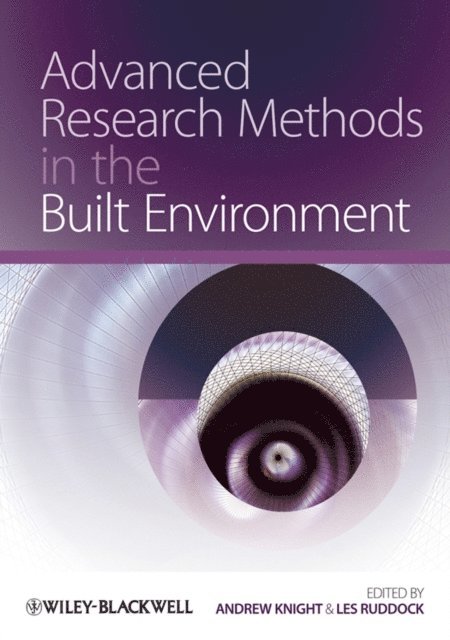
This book provides a bridge between the introductory research methods books and the discipline-specific, higher level texts. Its unique feature is the coverage of the detailed process of research rather than the findings of research projects. Chapter authors have been carefully selected by their expertise, discipline and location to give an eclectic range of perspectives. Particular care has been taken to balance positivist with interpretivist approaches throughout. The authors focus is on the practical consequences of research philosophies, strategies and techniques by using their own research and by evaluating the work of others. Advanced Research Methods in the Built Environment addresses common topics raised by postgraduate level researchers rather than dealing with all aspects of the research process. Issues covered range from the practicalities of producing a journal article to the role of theory in research. The material brought together here provides a valuable resource for the training and development of doctoral and young researchers and will contribute to a new sense of shared methodological understanding across built environment research.