Leslie Fowden – författare
Visar alla böcker från författaren Leslie Fowden. Handla med fri frakt och snabb leverans.
2 produkter
2 produkter
Inbunden, Engelska, 1998
734 kr
Skickas inom 3-6 vardagar
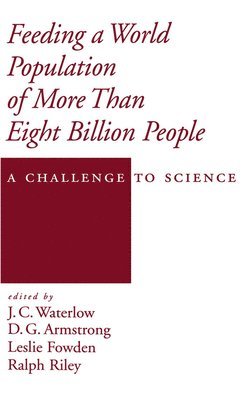
Since the 1960s the steadily increasing availability of food, arising from the application of new agricultural science, has exceeded the demands created by the growth in size of the human population of the world. However, the 1990 world population of 5.5 billion is projected to grow to 10 billion by 2050. Can the future demand for food be satisfied? This question is particularly difficult given that even in 1990 1.1 billion people in developing countries were living in poverty and more than 500 million in extreme poverty. This book, based on the proceedings of the 10th International Symposium sponsored by the Nutrition Committee and the Trustees of the Rank Prize Funds, in 1996, addresses the question of how to feed the projected population a generation from now and discusses the challenges this presents. The topics covered include land and crop nutrients and sustainability, natural resource management, water usage, applications of science to increase yield, the role of animal products in feeding people, and social aspects such as introducing new technology and the processes through which greater food security may be attained. The contributors are world authorities in their fields, and the book will benefit a wide range of professional workers in the agricultural sciences and in government agencies.
E-bok
PDF, Engelska, 1998344 kr
Läs direkt efter köp
Since the 1960s, breakthroughs in agriculture have made it possible to satisfy the world''s increasing requirements for food. Can this trend continue over the next thirty years when the world population is projected to exceed eight billion? This book takes a critical look at the immediate challenges for feeding the population just a generation from now. Based on the 10th International Symposium sponsored by the Nutrition Committee and the Trustees of the Rank Prize Funds, the volume examines the full range of related issues, from food economics to resource allocation and crop yields. Beginning with an analysis of future food needs, the articles cover basic resources and constraints, applications of science to increase yield, the role of animal products in feeding eight billion people, and diverse social issues. The book provides insights into some of the most important questions we will be faced with in the coming years, making it an invaluable resource for a wide range of researchers in agriculture, the environment, and public policy.