Leslie Hannah - Böcker
Visar alla böcker från författaren Leslie Hannah. Handla med fri frakt och snabb leverans.
5 produkter
5 produkter
2 793 kr
Skickas inom 10-15 vardagar
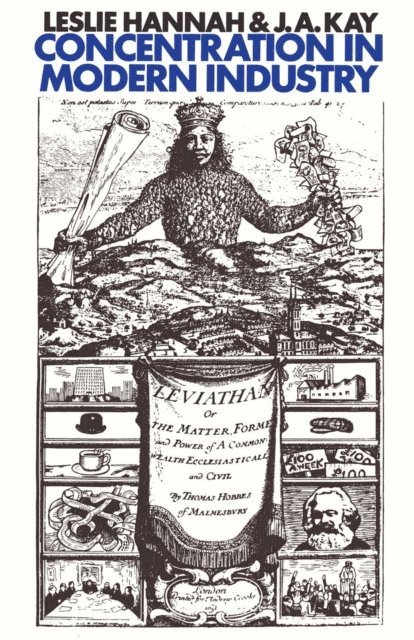
First published in 1976, this much acclaimed book looks at the story of how today's large corporations have superseded the small competing firms of the nineteenth century. The long-run analysis confirms that the crucial periods in the formulation of the modern corporate system were the 1920's and 1960's. The merger wave of these decades was associated with a desire to improve the efficiency of Britain’s industrial organization, and the author shows that it was in a large measure responsible for the trend improvement (by historical if not international standards) in Britain's growth performance.Students of business, economic history and industrial economics will all welcome the return to print of a notable contribution to the continuing debate on the evolution and control of the corporate manufacturing sector.

690 kr
Skickas inom 10-15 vardagar
First published in 1976, this much acclaimed book looks at the story of how today's large corporations have superseded the small competing firms of the nineteenth century. The long-run analysis confirms that the crucial periods in the formulation of the modern corporate system were the 1920's and 1960's. The merger wave of these decades was associated with a desire to improve the efficiency of Britain’s industrial organization, and the author shows that it was in a large measure responsible for the trend improvement (by historical if not international standards) in Britain's growth performance.Students of business, economic history and industrial economics will all welcome the return to print of a notable contribution to the continuing debate on the evolution and control of the corporate manufacturing sector.
726 kr
Skickas inom 7-10 vardagar
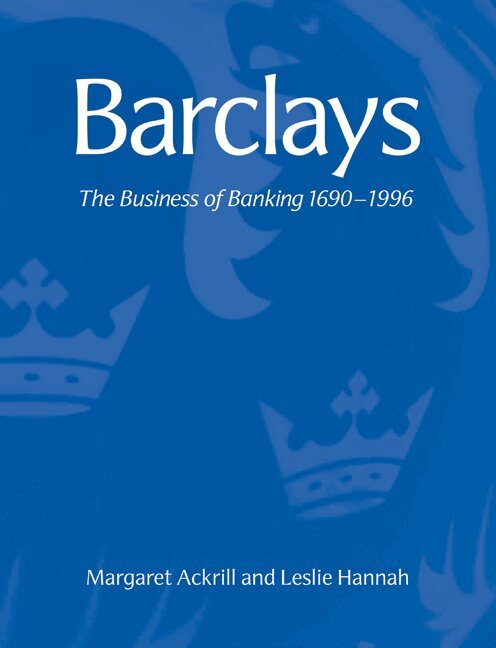
This is a history of one of the world's most famous financial institutions from its foundation as a private Quaker partnership in 1690 to 1996. Over the course of its history, Barclays has been the largest bank in the world, in Africa, and in Britain. A pioneer in international trade finance and large-scale branch banking, Barclays was responsible for the first automated teller machine in the world. This history of innovation and expansion is a microcosm of the successes and failures of corporate strategies in banking and is especially illuminating on the twentieth century. Extensively illustrated and accessibly written, the book is deliberately designed to appeal to readers beyond those with a specialist professional interest in financial history. It makes a major contribution to the economic and social history of modern Britain and the contemporary business world.
523 kr
Skickas inom 7-10 vardagar
Pension funds now account for a large portion of old-age incomes, of capital ownership, and of employee fringe benefits. A hundred years ago they hardly existed. This book, first published in 1986 by one of Britain's leading business historians, examines the interplay of business, political and social forces in this profound transformation, showing why old-age saving became rooted in the employment contract. The analysis is based on historical materials on pension funds, most of which have never previously been analysed, but this new interpretation is skilfully interwoven with the more familiar story of the development of state welfare and of personnel management. The original perspective of the book will be of interest not only to economists, historians and sociologists, but to practitioners in the field of pensions management and old-age welfare who wish to understand the constraints and opportunities provided for modern pension design by the legacy of the past.
862 kr
Skickas inom 7-10 vardagar
Pension funds now account for a large portion of old-age incomes, of capital ownership, and of employee fringe benefits. A hundred years ago they hardly existed. This book, first published in 1986 by one of Britain's leading business historians, examines the interplay of business, political and social forces in this profound transformation, showing why old-age saving became rooted in the employment contract. The analysis is based on historical materials on pension funds, most of which have never previously been analysed, but this new interpretation is skilfully interwoven with the more familiar story of the development of state welfare and of personnel management. The original perspective of the book will be of interest not only to economists, historians and sociologists, but to practitioners in the field of pensions management and old-age welfare who wish to understand the constraints and opportunities provided for modern pension design by the legacy of the past.