L.G. LeSage – författare
Visar alla böcker från författaren L.G. LeSage. Handla med fri frakt och snabb leverans.
6 produkter
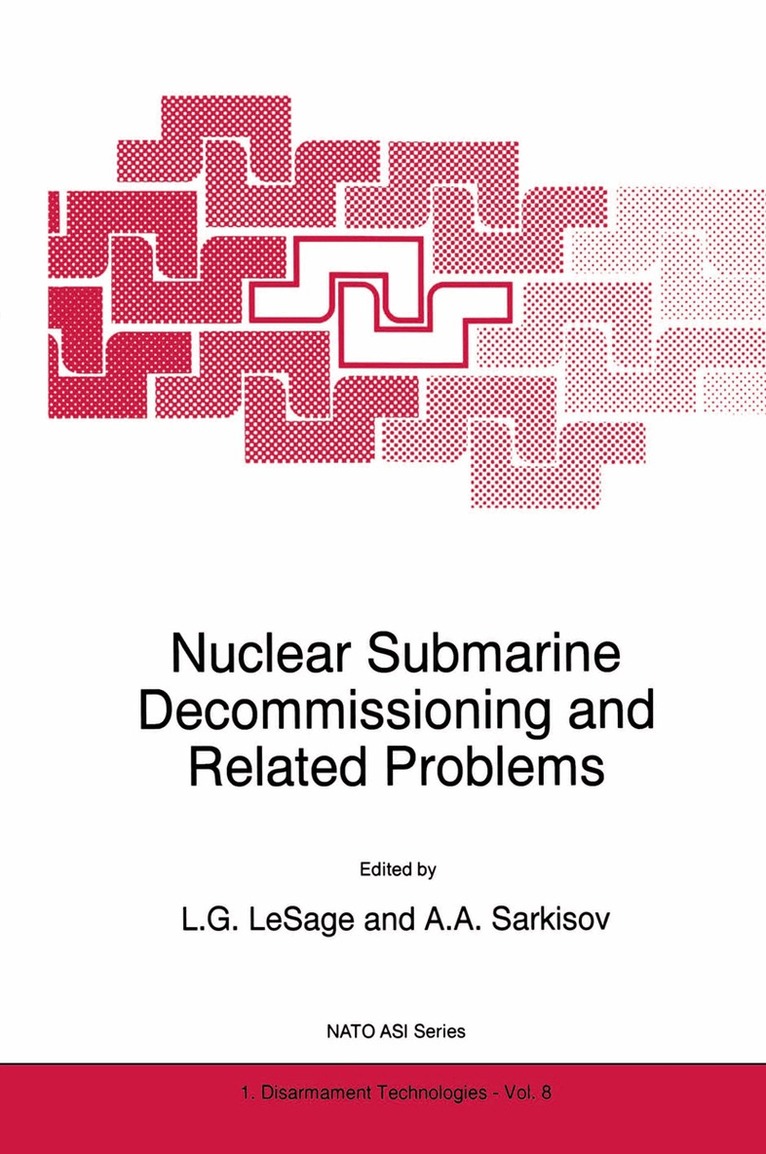
Nuclear Submarine Decommissioning and Related Problems
Av L.G. LeSage, Ashot A. Sarkisov
Inbunden, 1996
2183 kr
Lägg i varukorg
The end of the Cold War has led to an acceleration in the decommissioning of the world's nuclear submarine fleet. Russian vessels, in particular, are being taken rapidly out of service and this surge of vessels has in many cases far exceeded the capacity of the available decommissioning facilities …
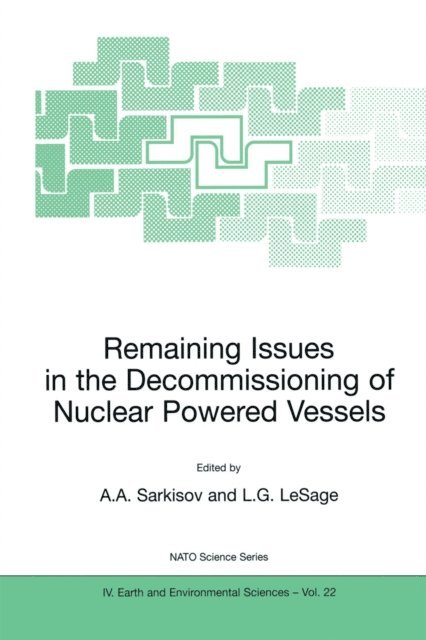
Remaining Issues in the Decommissioning of Nuclear Powered Vessels
Including Issues Related to the Environmental Remediation of the Supporting Infrastructure
Av Ashot A. Sarkisov, L.G. LeSage
Inbunden, 2003
2183 kr
Lägg i varukorg
The Russian NATO Advanced Research Workshop on "Scientific Problems and Unresolved Issues Remaining in the Decommissioning of Nuclear Powered Vessels and in the Environmental Remediation ofTheir Supporting Infrastructure," was held in Moscow, Russia at the Presidium of the Russian Academy of …
Remaining Issues in the Decommissioning of Nuclear Powered Vessels
Including Issues Related to the Environmental Remediation of the Supporting Infrastructure
Av Ashot A. Sarkisov, L.G. LeSage
Häftad, 2003
2183 kr
Lägg i varukorg
The Russian NATO Advanced Research Workshop on "Scientific Problems and Unresolved Issues Remaining in the Decommissioning of Nuclear Powered Vessels and in the Environmental Remediation ofTheir Supporting Infrastructure," was held in Moscow, Russia at the Presidium of the Russian Academy of …
Nuclear Submarine Decommissioning and Related Problems
Av Ashot A. Sarkisov, L.G. LeSage
E-bok, 2012
2925 kr
Lägg i varukorg
The Advanced Research Workshop on "Nuclear Submarine Decommissioning and Related Problems" was held at the Russian Academy of Sciences in Moscow, Russia on June 19-22, 1995. On June 17 and 18, 1995 some of the workshop participants visited the Zwezdochka Shipyard at Severodvinsk which is a repair …
Remaining Issues in the Decommissioning of Nuclear Powered Vessels
Including Issues Related to the Environmental Remediation of the Supporting Infrastructure
Av L.G. LeSage, Ashot A. Sarkisov
E-bok, 2012
2833 kr
Lägg i varukorg
The Russian NATO Advanced Research Workshop on "Scientific Problems and Unresolved Issues Remaining in the Decommissioning of Nuclear Powered Vessels and in the Environmental Remediation ofTheir Supporting Infrastructure," was held in Moscow, Russia at the Presidium of the Russian Academy of …
Nuclear Submarine Decommissioning and Related Problems
Av L.G. LeSage, Ashot A. Sarkisov
Häftad, 2011
2183 kr
Lägg i varukorg
The Advanced Research Workshop on "Nuclear Submarine Decommissioning and Related Problems" was held at the Russian Academy of Sciences in Moscow, Russia on June 19-22, 1995. On June 17 and 18, 1995 some of the workshop participants visited the Zwezdochka Shipyard at Severodvinsk which is a repair …