Lhadi Merhari - Böcker
Visar alla böcker från författaren Lhadi Merhari. Handla med fri frakt och snabb leverans.
3 produkter
3 produkter
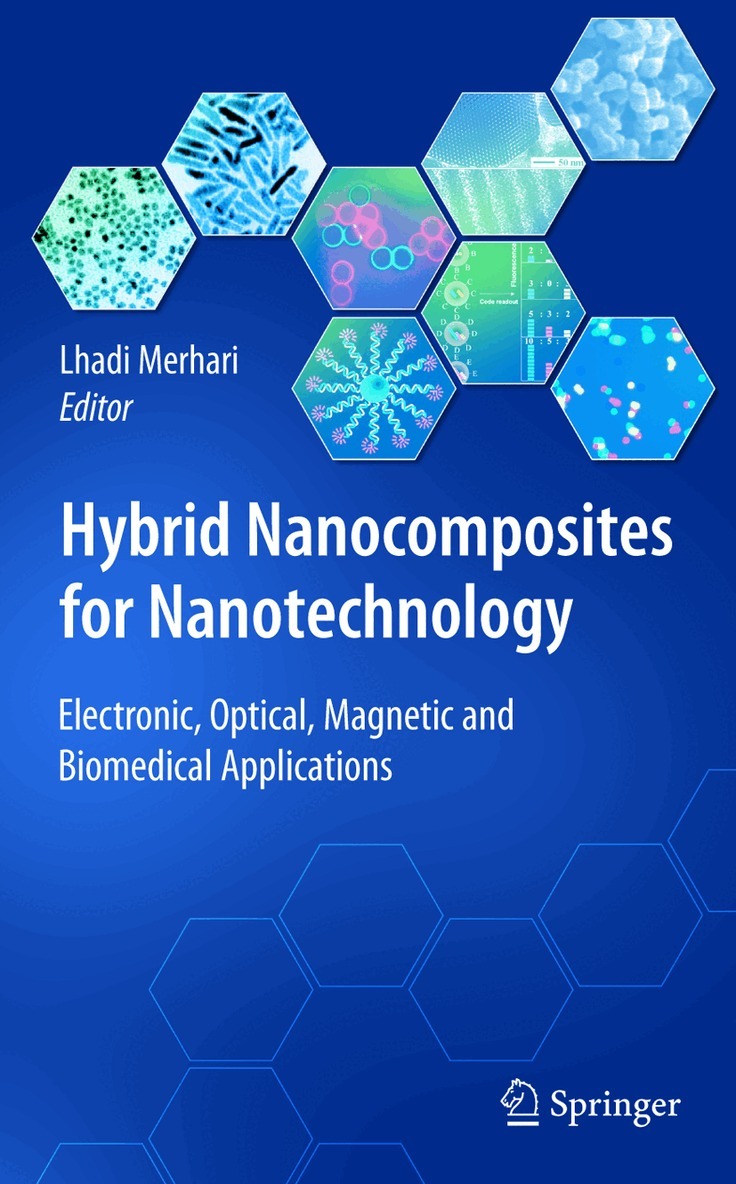
Hybrid Nanocomposites for Nanotechnology
Electronic, Optical, Magnetic and Biomedical Applications
Inbunden, Engelska, 2009
2 110 kr
Skickas inom 10-15 vardagar
With the advent of nanoscience and nanotechnology, the dream of scientists to engineer new functional materials combining the best specific properties of organic and inorganic materials is closer to reality. The traditional targeted application has been the reinforcement of plastics with the addition of inorganic fillers. Accelerated research over the past two decades, as evidenced by the large bulk of literature on mechanical properties of organic–inorganic composites, focused on systems such as clay/polymer nanocomposites, which are now exploited by the automotive industry worldwide. Although, in the low filler loading range, clay/polymer na- composites can replace traditional fiber-reinforced composites, there is still a long way to go before understanding the mechanisms of enhancement of major en- neering properties of polymers and to tailor their nanostructure. The driving force to edit the present comprehensive book has been to show that the applications of organic–inorganic nanocomposites extend far beyond the above-mentioned traditional mechanical applications and that hybrid nanoc- posites should be considered as an attractive, versatile, technological platform for future electronic, optical, magnetic, and biomedical applications. Indeed, taking up challenges such as homogeneous dispersion of inorganic nanoobjects into a polymer matrix or tailoring of the multiscale nano-to-macro structure of the c- posites will contribute to the establishment of a solid unified hybrid nanocomp- ite technological platform for commercially-viable products revolutionizing various industrial sectors. The generally-accepted definition of a hybrid nanocomposite is a material created by dispersing inorganic nanoparticulates into a macroscopic organic matrix.
Business and Safety Issues in the Commercialization of Nanotechnology: Volume 1209
Häftad, Engelska, 2014
363 kr
Skickas inom 7-10 vardagar
This book combines the proceedings of Symposium P, The Business of Nanotechnology, and Symposium YY, Compatibility of Nanomaterials , both from the 2009 MRS Fall Meeting in Boston. Papers from Symposium P highlight the constructive disruption caused by the introduction of innovative and value-generating products based on nanotechnology, and underscore the intersections of scientific research and business considerations in the nanotechnology space. The section begins with papers on commercialization challenges in nanotechnology, and specific technologies are also discussed. The final papers in this section include applications of nanosensors for neonatal care, new oxygen sensors and nanocatalysts. Papers from Symposium YY focus on the impact on nanomaterials on health and safety topics that are also critical in the commercialization of nanotechnologies. Presentations bridge the gap between fundamental material science in nanomaterial design, fabrication,and characterization, and cover diversity in the field, from using nanomaterials to fight cancer, infection and regenerate tissues. Several papers also address nanoparticle toxicity. The beginnings of 'green nanotechnology' are also featured.
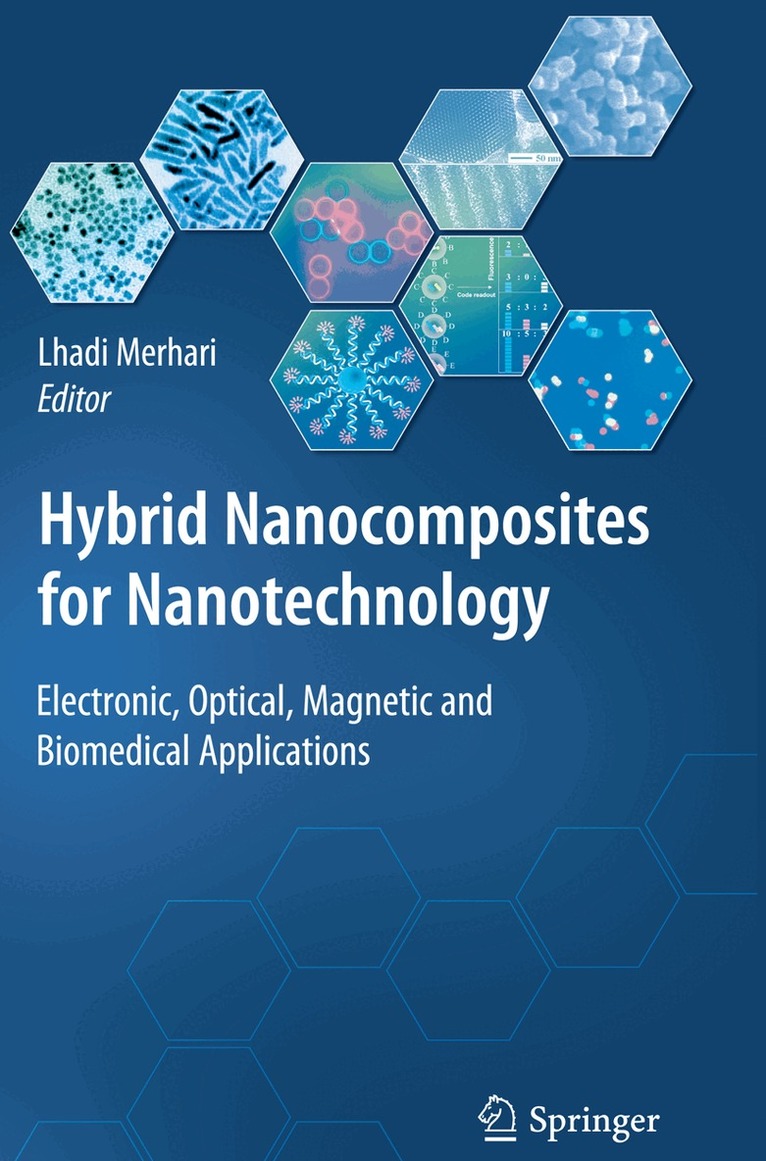
Hybrid Nanocomposites for Nanotechnology
Electronic, Optical, Magnetic and Biomedical Applications
Häftad, Engelska, 2016
2 110 kr
Skickas inom 10-15 vardagar
With the advent of nanoscience and nanotechnology, the dream of scientists to engineer new functional materials combining the best specific properties of organic and inorganic materials is closer to reality. The traditional targeted application has been the reinforcement of plastics with the addition of inorganic fillers. Accelerated research over the past two decades, as evidenced by the large bulk of literature on mechanical properties of organic–inorganic composites, focused on systems such as clay/polymer nanocomposites, which are now exploited by the automotive industry worldwide. Although, in the low filler loading range, clay/polymer na- composites can replace traditional fiber-reinforced composites, there is still a long way to go before understanding the mechanisms of enhancement of major en- neering properties of polymers and to tailor their nanostructure. The driving force to edit the present comprehensive book has been to show that the applications of organic–inorganic nanocomposites extend far beyond the above-mentioned traditional mechanical applications and that hybrid nanoc- posites should be considered as an attractive, versatile, technological platform for future electronic, optical, magnetic, and biomedical applications. Indeed, taking up challenges such as homogeneous dispersion of inorganic nanoobjects into a polymer matrix or tailoring of the multiscale nano-to-macro structure of the c- posites will contribute to the establishment of a solid unified hybrid nanocomp- ite technological platform for commercially-viable products revolutionizing various industrial sectors. The generally-accepted definition of a hybrid nanocomposite is a material created by dispersing inorganic nanoparticulates into a macroscopic organic matrix.