L'Hocine Yahia - Böcker
Visar alla böcker från författaren L'Hocine Yahia. Handla med fri frakt och snabb leverans.
4 produkter
4 produkter
1 092 kr
Skickas inom 10-15 vardagar
In recent years, the fabrication of nanomaterials and exploration of their properties have attracted the attention of various scientific disciplines such as biology, physics, chemistry, and engineering. Although nanoparticulate systems are of significant interest in various scientific and technological areas, there is little known about the safety of these nanoscale objects. It has now been established that the surfaces of nanoparticles are immediately covered by biomolecules (e.g. proteins, ions, and enzymes) upon their entrance into a biological medium. This interaction with the biological medium modulates the surface of the nanoparticles, conferring a “biological identity” to their surfaces (referred to as a “corona”), which determines the subsequent cellular/tissue responses. The new interface between the nanoparticles and the biological medium/proteins, called “bio-nano interface,” has been very rarely studied in detail to date, though the interest in this topic is rapidly growing.In this book, the importance of the physiochemical characteristics of nanoparticles for the properties of the protein corona is discussed in detail, followed by comprehensive descriptions of the methods for assessing the protein-nanoparticle interactions. The advantages and limitations of available corona evaluation methods (e.g. spectroscopy methods, mass spectrometry, nuclear magnetic resonance, electron microscopy, X-ray crystallography, and differential centrifugal sedimentation) are examined in detail, followed by a discussion of the possibilities for enhancing the current methods and a call for new techniques. Moreover, the advantages and disadvantages of protein-nanoparticle interaction phenomena are explored and discussed, with a focus on the biological impacts.
1 092 kr
Skickas inom 10-15 vardagar
In recent years, the fabrication of nanomaterials and exploration of their properties have attracted the attention of various scientific disciplines such as biology, physics, chemistry, and engineering. Although nanoparticulate systems are of significant interest in various scientific and technological areas, there is little known about the safety of these nanoscale objects. It has now been established that the surfaces of nanoparticles are immediately covered by biomolecules (e.g. proteins, ions, and enzymes) upon their entrance into a biological medium. This interaction with the biological medium modulates the surface of the nanoparticles, conferring a “biological identity” to their surfaces (referred to as a “corona”), which determines the subsequent cellular/tissue responses. The new interface between the nanoparticles and the biological medium/proteins, called “bio-nano interface,” has been very rarely studied in detail to date, though the interest in this topic is rapidly growing.In this book, the importance of the physiochemical characteristics of nanoparticles for the properties of the protein corona is discussed in detail, followed by comprehensive descriptions of the methods for assessing the protein-nanoparticle interactions. The advantages and limitations of available corona evaluation methods (e.g. spectroscopy methods, mass spectrometry, nuclear magnetic resonance, electron microscopy, X-ray crystallography, and differential centrifugal sedimentation) are examined in detail, followed by a discussion of the possibilities for enhancing the current methods and a call for new techniques. Moreover, the advantages and disadvantages of protein-nanoparticle interaction phenomena are explored and discussed, with a focus on the biological impacts.
1 201 kr
Skickas inom 10-15 vardagar
Prosthetic replacement of ligaments is a problem which still has not been solved. Despite the development of different synthetic implants and better knowledge of the ligament biomechanics, there is currently no prosthesis that shows satisfactory results. The purpose of this book is to provide an overview of the growing knowledge of natural ligaments and to review, using a biomimetical approach, the different concepts and designs of artificial ligaments developed during the last decades. This approach is undertaken in an effort to better understand why artificial ligaments fail, to redefine design criteria, and stimulate the development of a new generation of more effective replacement devices.
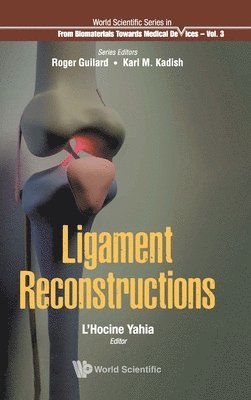
Del 3 - World Scientific Series: From Biomaterials Towards Medical Devices
Ligament Reconstructions
Inbunden, Engelska, 2021
2 171 kr
Skickas
The ACL or anterior cruciate ligament is the most important ligament in the knee. When it is completely torn, it can lead to instability or buckling of the knee. There are several options to choose from when selecting a graft for ACL reconstruction such as using autografts including patellar tendon, hamstring tendon, and quadriceps tendon, and allografts (also known as donor tissue or cadaver tissue). Artificial ligaments are also discussed since they are still used in Europe and Asia. This book summarizes the pros and cons of each graft option in detail.