Lhundub Sopa – författare
Visar alla böcker från författaren Lhundub Sopa. Handla med fri frakt och snabb leverans.
9 produkter
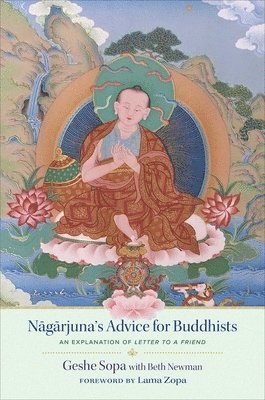
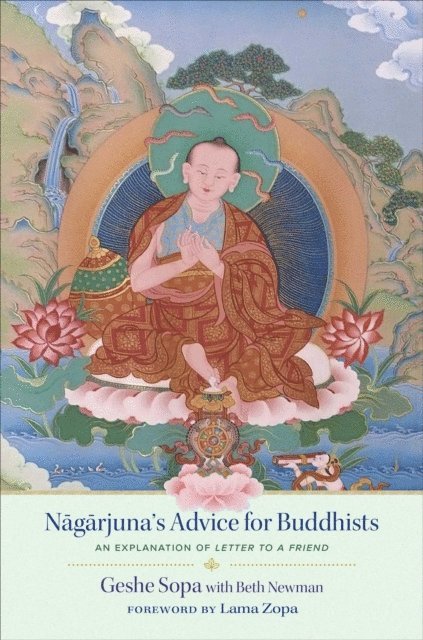
Nagarjuna's Advice for Buddhists
Geshe Sopa's Explanation of Letter to a Friend
Inbunden, 2023
409 kr
Lägg i varukorg
A modern commentary by a beloved Tibetan teacher on a classical Indian Buddhist text and an introduction to Buddhism by one of the tradition’s most famous authors. A teaching on how to live a Buddhist life in contemporary society. Letter to A Friend , by the great Indian philosopher Nagarjuna, is …
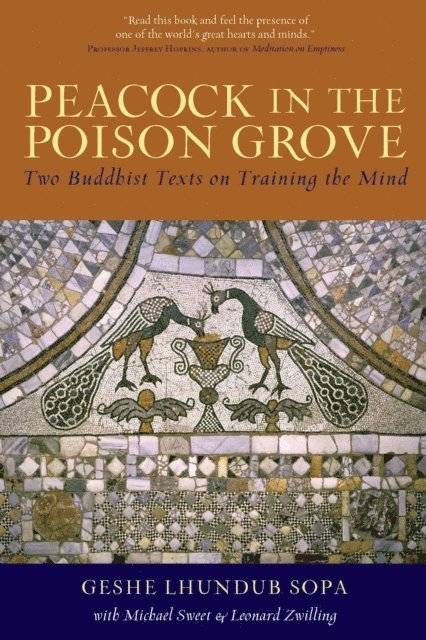
Peacock in the Poison Grove
Two Buddhist Texts on Training the Mind
Av Leonard Zwilling, Lhundub Sopa
E-bok, 2016
159 kr
Lägg i varukorg
Geshe Sopa offers insightful commentary on two of the earliest Tibetan texts that focus on mental training. Peacock in the Poison Grove presents powerful yogic methods of dispelling the selfish delusions of the ego and maintaining purity in our motives. Geshe Sopa's lucid explanations teach how we …
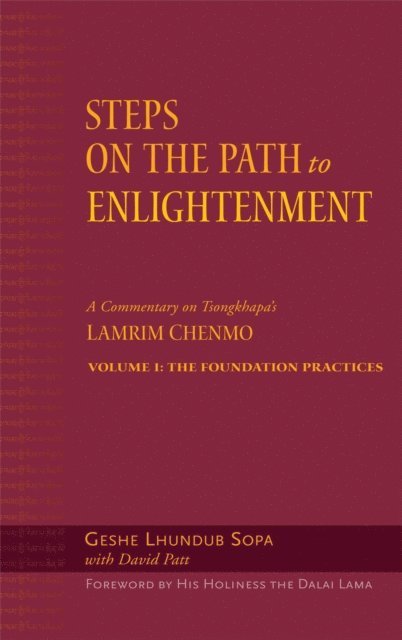
Steps on the Path to Enlightenment
A Commentary on Tsongkhapa''s Lamrim Chenmo, Volume 1: The Foundation Practices
Av Lhundub Sopa, Beth Newman m. fl.
E-bok, 2004
326 kr
Lägg i varukorg
Steps on the Path to Englightenment: The Foundation Practices marks the first volume of a much-anticipated, comprehensive commentary on the Lamrim Chenmo by the renowned Buddhist scholar, Geshe Sopa. This landmark commentary on what is perhaps the most elegant Tibetan presentation of the Buddhist …
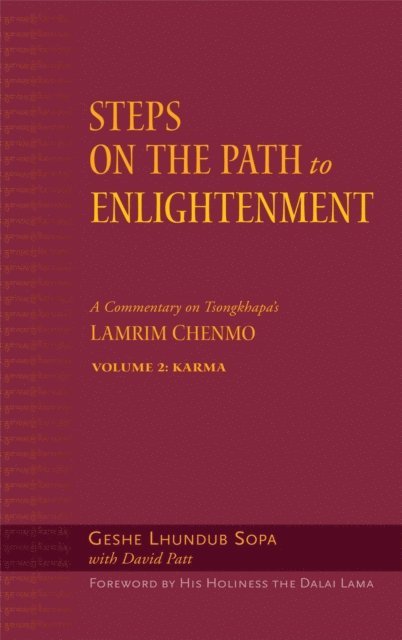
Steps on the Path to Enlightenment
A Commentary on Tsongkhapa''s Lamrim Chenmo, Volume 2: Karma
E-bok, 2005
199 kr
Lägg i varukorg
This second volume of the five-volume commentary by the renowned Buddhist scholar Geshe Lhundub Sopa focuses on the key Buddhist concepts of karma, or cause and effect, and dependent origination. Considered one of the finest living Buddhist scholars, Geshe Sopa provides commentaries essential for …
Steps on the Path to Enlightenment
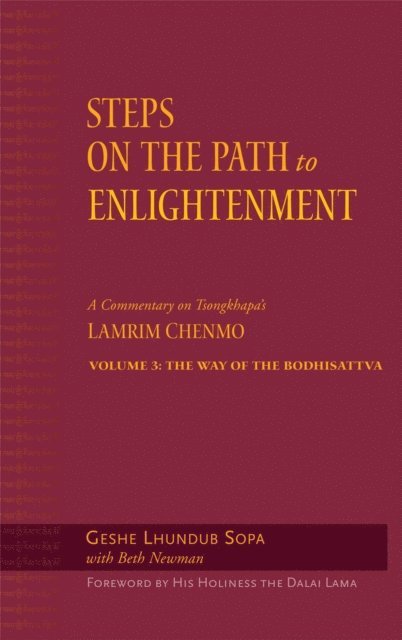
A Commentary on Tsongkhapa''s Lamrim Chenmo, Volume 3: The Way of the Bodhisattva
Av Lhundub Sopa, Beth Newman m. fl.
E-bok, 2007
266 kr
Lägg i varukorg
Geshe Lhundub Sopa''s Steps on the Path to Enlightenment is a landmark commentary on what is perhaps the most elaborate and elegant Tibetan presentation of the Buddhist path, Tsongkhapa''s monumental Lamrim Chenmo . In this third volume of five, readers are acquainted with the bodhisattva''s path …
Like a Waking Dream
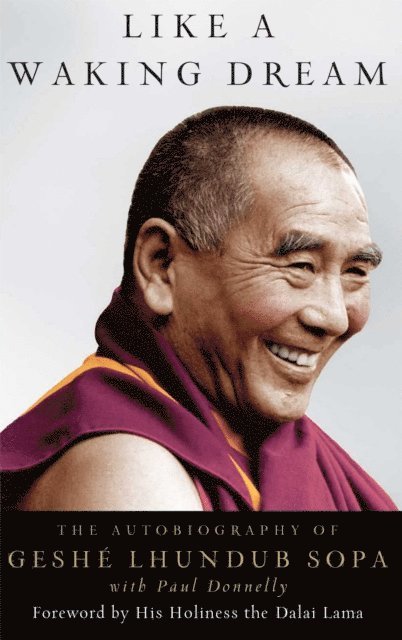
The Autobiography of Geshe Lhundub Sopa
Av Lhundub Sopa, Paul Donnelly
E-bok, 2012
222 kr
Lägg i varukorg
Among the generation of elder Tibetan lamas who brought Tibetan Buddhism west in the latter half of the twentieth century, perhaps none has had a greater impact on the academic study of Buddhism than Geshe Lhundub Sopa. He has striven to preserve Tibetan religious culture through tireless work as a …
Steps on the Path to Enlightenment
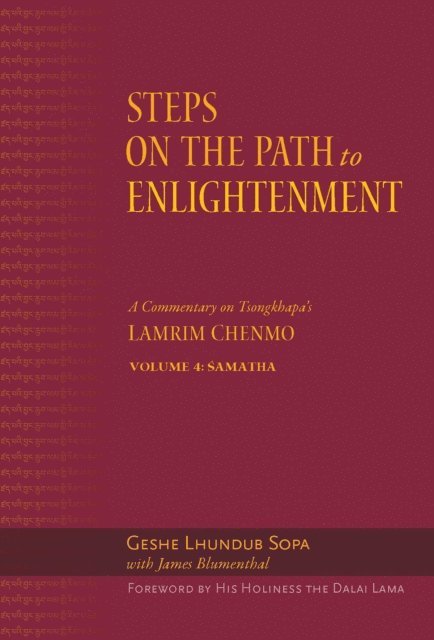
A Commentary on Tsongkhapa''s Lamrim Chenmo, Volume 4: Samatha
Av Lhundub Sopa
E-bok, 2016
239 kr
Lägg i varukorg
An exploration of the practice of samatha, the style of meditation devoted to focus and attention Geshe Sopa continues his elucidation of Lama Tsongkhapa's masterwork on the Buddhist path with an explanation of the core meditative practice of samatha , or calm abiding. Showing how it is absolutely …
Steps on the Path to Enlightenment
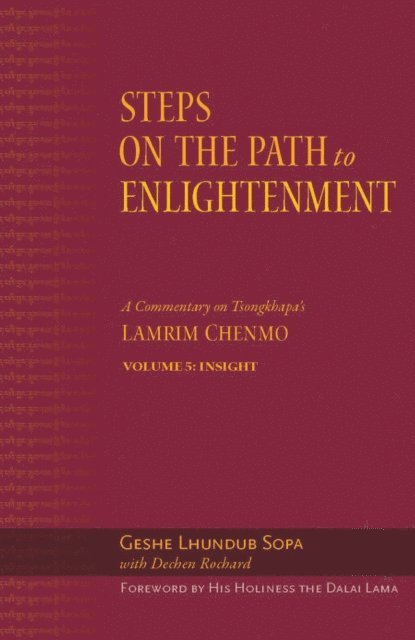
A Commentary on Tsongkhapa''s Lamrim Chenmo. Volume 5: Insight
Av Lhundub Sopa
E-bok, 2017
261 kr
Lägg i varukorg
The final installment of the Steps on the Path to Enlightenment series examines the nature of reality with a master class in Buddhist Middle Way philosophy and meditation. The late Geshe Sopa was a refugee monk from Tibet sent to the United States by the Dalai Lama in 1963. He became a professor at …
Nagarjuna's Advice for Buddhists
Geshe Sopa''s Explanation of Letter to a Friend
Av Lhundub Sopa
E-bok, 2023
452 kr
Lägg i varukorg
A modern commentary by a beloved Tibetan teacher on a classical Indian Buddhist text and an introduction to Buddhism by one of the tradition’s most famous authors. A teaching on how to live a Buddhist life in contemporary society. Letter to A Friend , by the great Indian philosopher Nagarjuna, is …