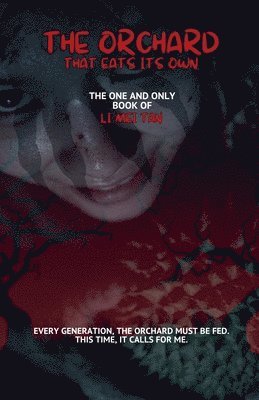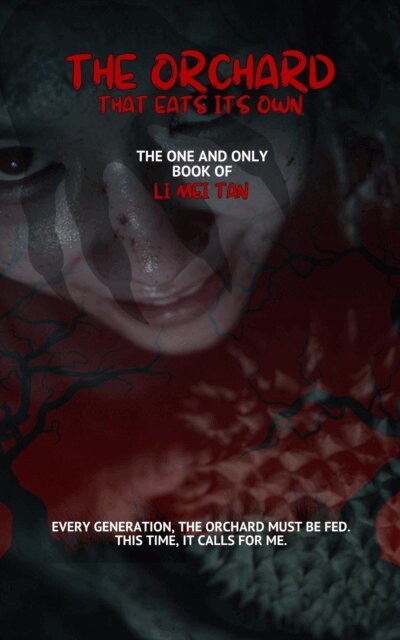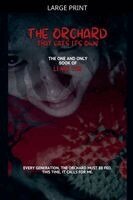
The Orchard That Eats Its Own is not a simple tale of haunted ground. It is a record of inheritance, written by a woman who never meant to become part of the story she was trying to preserve. What begins as a return to family land in rural Malaysia becomes a descent into the oldest form of debt, one measured not in money but in blood.Li Mei Tan inherits her mother's orchard after the funeral rites have ended and the mourners have scattered. To outsiders, the orchard looks like any other. Rows of trees heavy with fruit, a small house worn by rain, and the steady rhythm of harvests that shape the seasons. Yet those who grew up within its reach know better. They speak of trees that lean closer than they should, of storms that turn up bones from soil that refuses to stay settled, of voices that call from the rows long after night has fallen. Li Mei tells herself these are only memories of childhood fears. She is wrong.The manuscript that follows is her testimony. Written in bursts, interrupted by stains and torn paper, it carries the tone of confession and warning. She catalogs the rules she discovers, rules that her family had hidden behind silence. The orchard must be fed. Each generation has answered its call. Some offered animals. Others offered their own kin. Li Mei finds records of names crossed from old tally books. She begins to feel the pressure of that count in her own marrow.Her body changes as she writes. Seeds wedge between her teeth. Her saliva thickens to pulp. The scent of iron lingers on her fingers no matter how often she scrubs them. She tastes sweetness that does not come from fruit. Shadows stretch across her pages. She records them anyway, refusing to let her words be swallowed without trace.Relatives vanish into the trees. Cousins stop returning her letters. The orchard shifts its ground and closes its paths behind her. At night she hears her mother's voice in the rafters, whispering rules that are older than prayer. Her resistance falters. She writes faster, as if speed might save her. Yet each line sinks deeper into the orchard's pull, until it is unclear if she is author or scribe, victim or accomplice.This book presents her words as they were left, with stains intact and questions unresolved. To read them is to step into her silence, to walk the rows she describes, and to feel the orchard's reach press against your own skin.Enter at your risk. The orchard has always claimed those who listen too closely. The page itself may be its newest root.
At 3:33 a.m., a fetal monitor begins to sing.Maternity nurse Nadia Rahim knows how to handle fear. She knows how to read a trace, time a contraction, and check for bleeding before panic can become diagnosis. But when a patient hears a woman singing through the monitor, and the machine briefly shows a second, adult heartbeat, Nadia can no longer pretend every horror has a clinical name.Then her sister Mira calls.Mira is thirty-three weeks pregnant and living in Block 13, the HDB estate where their mother vanished decades ago. She has seen a woman beneath her window. A woman in white, with long wet hair, standing nine floors below and smiling up at her.The signs spread. Black fluid leaks from Mira's body. A neighbour bleeds in the lift. The block opens onto a floor that should not exist.Then Mira's ultrasound shows something curled behind the baby.Nadia's search leads her through old hospital records, sealed complaints, and the stories her neighbours have spent years refusing to tell. Beneath Block 13 is a buried name, a sealed wrong, and a Pontianak bound into the foundations.The dead women inside her want to be witnessed.The living women above her are still being managed, dismissed, and prepared.Mira is not the first.Nadia will make sure she is the last.The Confinement House is a brutal, atmospheric Singaporean folk-horror novel about pregnancy, medical disbelief, sisterhood, and the terrible cost of not believing women while they are still alive.