
Li Xiaoli Li – författare
Visar alla böcker från författaren . Handla med fri frakt och snabb leverans.
2 produkter
2 produkter
E-bok
Engelska, 20211 143 kr
Läs direkt efter köp
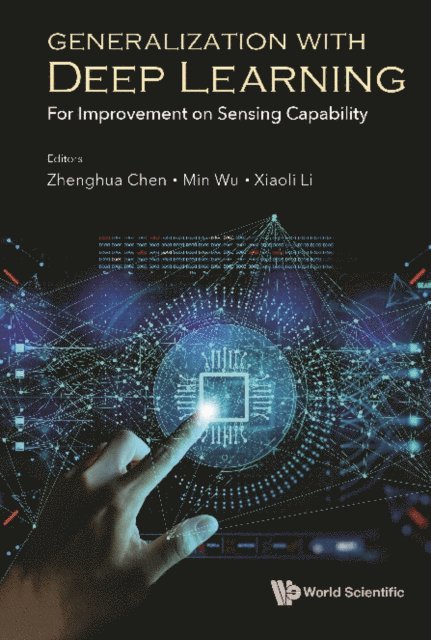
Deep Learning has achieved great success in many challenging research areas, such as image recognition and natural language processing. The key merit of deep learning is to automatically learn good feature representation from massive data conceptually. In this book, we will show that the deep learning technology can be a very good candidate for improving sensing capabilities.In this edited volume, we aim to narrow the gap between humans and machines by showcasing various deep learning applications in the area of sensing. The book will cover the fundamentals of deep learning techniques and their applications in real-world problems including activity sensing, remote sensing and medical sensing. It will demonstrate how different deep learning techniques help to improve the sensing capabilities and enable scientists and practitioners to make insightful observations and generate invaluable discoveries from different types of data.
E-bok
Engelska, 2013681 kr
Läs direkt efter köp
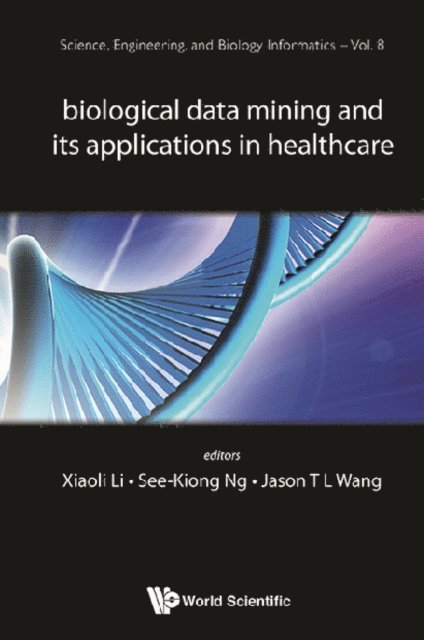
Biologists are stepping up their efforts in understanding the biological processes that underlie disease pathways in the clinical contexts. This has resulted in a flood of biological and clinical data from genomic and protein sequences, DNA microarrays, protein interactions, biomedical images, to disease pathways and electronic health records. To exploit these data for discovering new knowledge that can be translated into clinical applications, there are fundamental data analysis difficulties that have to be overcome. Practical issues such as handling noisy and incomplete data, processing compute-intensive tasks, and integrating various data sources, are new challenges faced by biologists in the post-genome era. This book will cover the fundamentals of state-of-the-art data mining techniques which have been designed to handle such challenging data analysis problems, and demonstrate with real applications how biologists and clinical scientists can employ data mining to enable them to make meaningful observations and discoveries from a wide array of heterogeneous data from molecular biology to pharmaceutical and clinical domains.