Liat Levanon – författare
Visar alla böcker från författaren . Handla med fri frakt och snabb leverans.
5 produkter
5 produkter
Inbunden, Engelska, 2022
1 211 kr
Skickas inom 10-15 vardagar
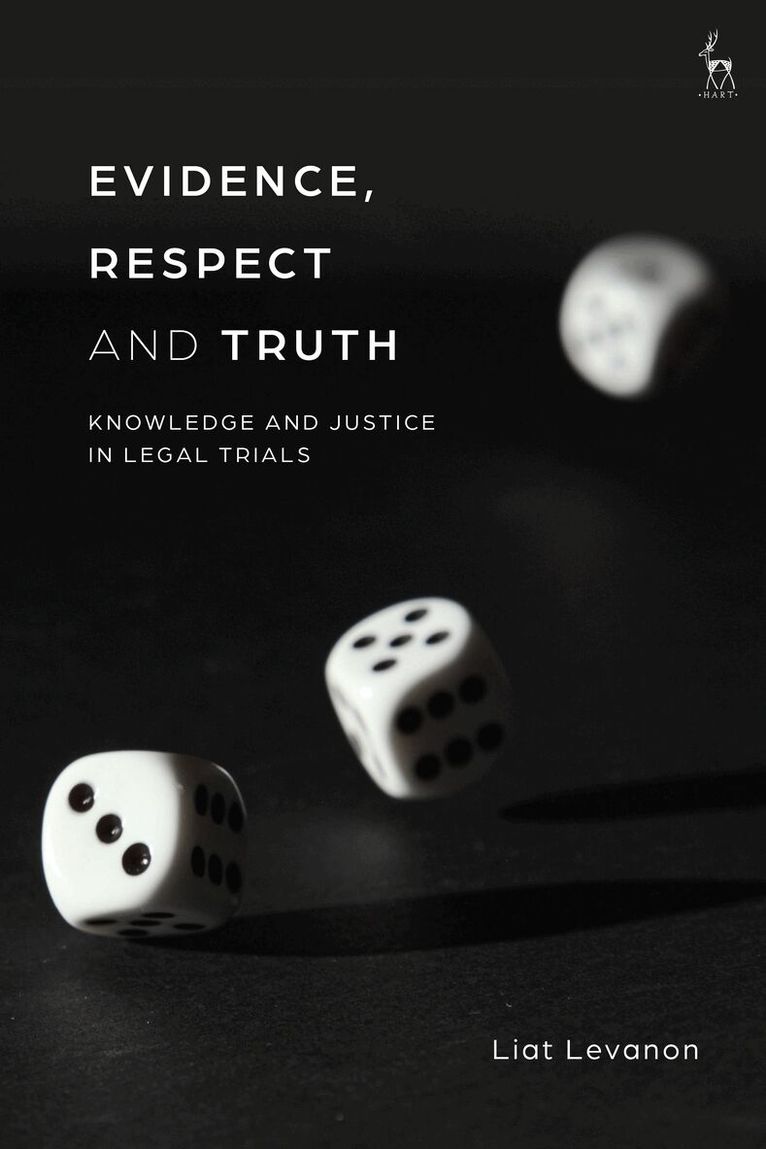
Can we rely solely on statistics when we judge what is true and just? This book takes a holistic approach to addressing this question. It considers the legal trial as its paradigmatic case study before analysing a wide range of different cases, including profiling, the use of algorithms to predict students' grades, and the authorisation of automated cars. The book suggests that when we make judgements about the truth or about justice, approximations are not good enough. Truth and justice are uncompromising. They must be so, because the value that underlies them both is respect; and respect takes no compromise. Thus, in the search for truth as in the search for justice, a body of evidence that imposes a statistical compromise will not do. Only evidence that in principle allows reaching the truth and doing justice is good evidence. Once such evidence has been traced, the burden is on us to make good use of the evidence and reach truth and justice. We might or might not succeed, but once we have done our best on evidence that allows success, our judgements are justified; and as such, they can resolve conflicts over the truth and over justice.
E-bok
Engelska, 2022613 kr
Läs direkt efter köp
Can we rely solely on statistics when we judge what is true and just? This book takes a holistic approach to addressing this question. It considers the legal trial as its paradigmatic case study before analysing a wide range of different cases, including profiling, the use of algorithms to predict students'' grades, and the authorisation of automated cars. The book suggests that when we make judgements about the truth or about justice, approximations are not good enough. Truth and justice are uncompromising. They must be so, because the value that underlies them both is respect; and respect takes no compromise. Thus, in the search for truth as in the search for justice, a body of evidence that imposes a statistical compromise will not do. Only evidence that in principle allows reaching the truth and doing justice is good evidence. Once such evidence has been traced, the burden is on us to make good use of the evidence and reach truth and justice. We might or might not succeed, but once we have done our best on evidence that allows success, our judgements are justified; and as such, they can resolve conflicts over the truth and over justice.
E-bok
PDF, Engelska, 2022613 kr
Läs direkt efter köp
Can we rely solely on statistics when we judge what is true and just? This book takes a holistic approach to addressing this question. It considers the legal trial as its paradigmatic case study before analysing a wide range of different cases, including profiling, the use of algorithms to predict students'' grades, and the authorisation of automated cars. The book suggests that when we make judgements about the truth or about justice, approximations are not good enough. Truth and justice are uncompromising. They must be so, because the value that underlies them both is respect; and respect takes no compromise. Thus, in the search for truth as in the search for justice, a body of evidence that imposes a statistical compromise will not do. Only evidence that in principle allows reaching the truth and doing justice is good evidence. Once such evidence has been traced, the burden is on us to make good use of the evidence and reach truth and justice. We might or might not succeed, but once we have done our best on evidence that allows success, our judgements are justified; and as such, they can resolve conflicts over the truth and over justice.
Häftad, Engelska, 2024
564 kr
Skickas inom 10-15 vardagar
Can we rely solely on statistics when we judge what is true and just? This book takes a holistic approach to addressing this question. It considers the legal trial as its paradigmatic case study before analysing a wide range of different cases, including profiling, the use of algorithms to predict students' grades, and the authorisation of automated cars. The book suggests that when we make judgements about the truth or about justice, approximations are not good enough. Truth and justice are uncompromising. They must be so, because the value that underlies them both is respect; and respect takes no compromise. Thus, in the search for truth as in the search for justice, a body of evidence that imposes a statistical compromise will not do. Only evidence that in principle allows reaching the truth and doing justice is good evidence. Once such evidence has been traced, the burden is on us to make good use of the evidence and reach truth and justice. We might or might not succeed, but once we have done our best on evidence that allows success, our judgements are justified; and as such, they can resolve conflicts over the truth and over justice.
Inbunden, Engelska, 2027
1 395 kr
Kommande
What are reasons? What are duties? What are values? This book presents a fresh account of these concepts and the interplay between them.It defends a modest notion of a reason. It opens space for a notion of a duty that is fundamental and irreducible to that of a reason. And it proposes that engagement with value can be assessed as good, and that good engagement often involves the development of correct beliefs and fitting emotions. The result brings to light the normative significance of cognitive and affective attitudes, and reshapes the relationship between practical and epistemic normativity. In this redrawing of the normative map, Rethinking Normativity engages with wide ranging resources, including Razian theory, care ethics, and accounts of pragmatic encroachment on knowledge.