Lidia Sas Paszt - Böcker
Visar alla böcker från författaren Lidia Sas Paszt. Handla med fri frakt och snabb leverans.
3 produkter
3 produkter
Del 41 - Burleigh Dodds Science: Instant Insights
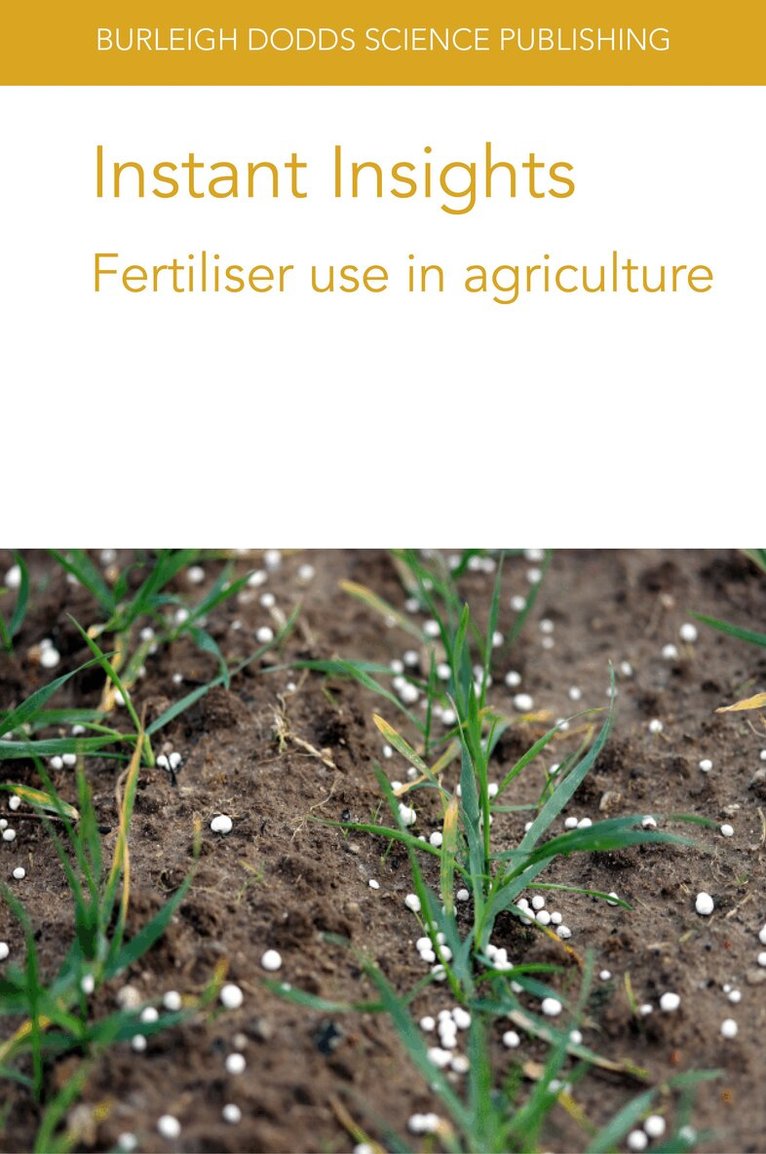
Instant Insights: Fertiliser Use in Agriculture
Häftad, Engelska, 2021
677 kr
Skickas inom 5-8 vardagar
This collection features five peer-reviewed literature reviews on fertiliser use in agriculture.The first chapter examines the role of biofertilizers and consortia of microorganisms to improve the effectiveness of organic fertilization, before moving on to consider the use of animal excrement, including manures, slurry and guano.The second chapter assesses the management of mineral fertilisers and organic manures in relation to its effects on soil health in terms of soil organic carbon and nitrogen, soil acidification and soil microbiology.The third chapter discusses the history, current status, and future needs of fertilizer developments in light of the goal of achieving global sustainability. It reviews developments in using efficient fertilizer sources to meet the needs of advancing yields of modern crop cultivars/hybrids.The fourth chapter reviews some of the approaches used by decision support systems to determine fertiliser application decisions. The chapter highlights direct methods and indirect techniques: simulation models, yield forecasts using data-driven approaches and yield forecasts based on water supply.The final chapter explores the implementation of foliar fertilizer sprays in agriculture for improving crop yield and quality, as well as improving plant performance under abiotic and/or biotic stress threats.
Del 101 - Burleigh Dodds Science: Instant Insights
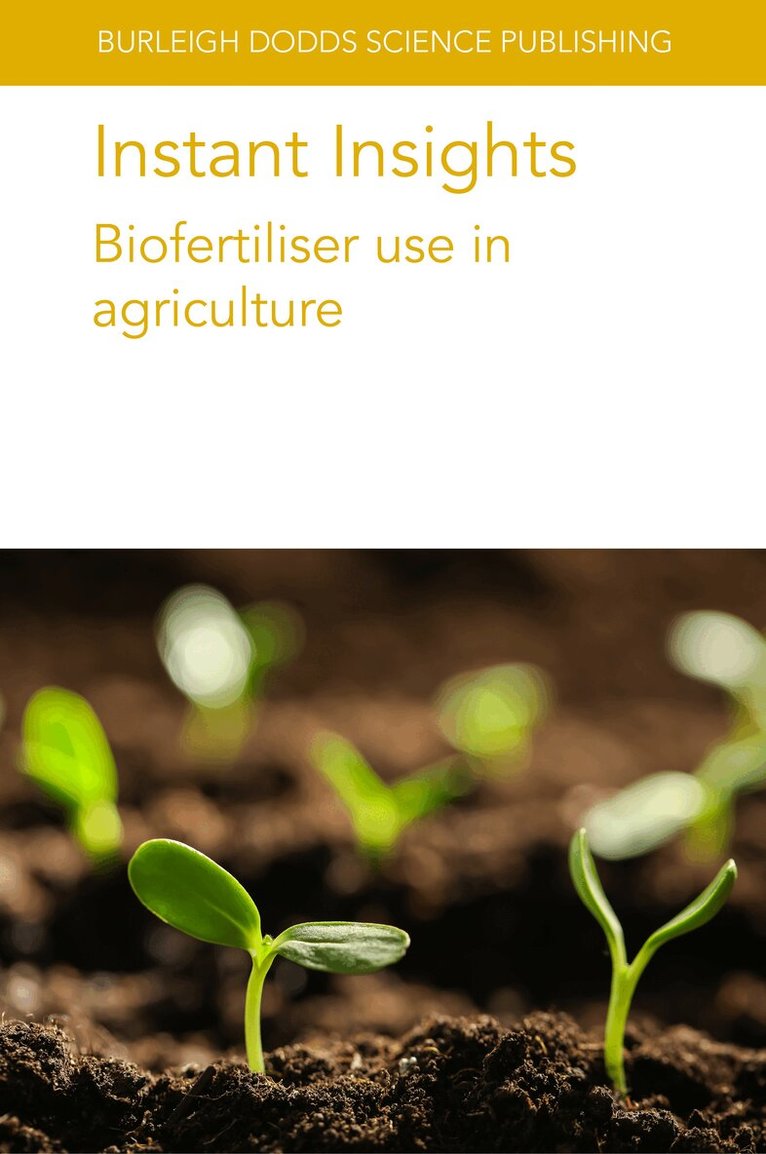
Instant Insights: Biofertiliser Use in Agriculture
Häftad, Engelska, 2024
677 kr
Skickas inom 5-8 vardagar
This book features five peer-reviewed reviews on biofertiliser use in agriculture.The first chapter examines the role of biofertilisers and consortia of microorganisms to improve the effectiveness of organic fertilisation, before moving on to consider the use of animal excrement, including manures, slurry and guano.The second chapter presents the key issues in the optimum use of treated wastes in crop nutrition. The chapter also discusses technical processes such as precipitation of salts, incineration and post-treatment of ashes, as well as production of carbonaceous materials.The third chapter discusses some common issues regarding the use of bio-based fertilisers, such as the concentration of nutrients leading to losses of reactive nitrogen and phosphorus into the environment.The fourth chapter addresses the key issues of arbuscular mycorrhizal fungi (AMF) and soil health, specifically focussing on improved soil structure and stability, soil contamination, carbon sequestration and nutrient retention.The final chapter provides an overview on the use of plant growth-promoting bacteria/rhizobacteria (PGPB/PGPR) and its consequent effects on plant and soil health. The chapter also explores interactions between PGPB/PGPR and other components of the rhizosphere, such as AMF.
Del 113 - Burleigh Dodds Science: Instant Insights
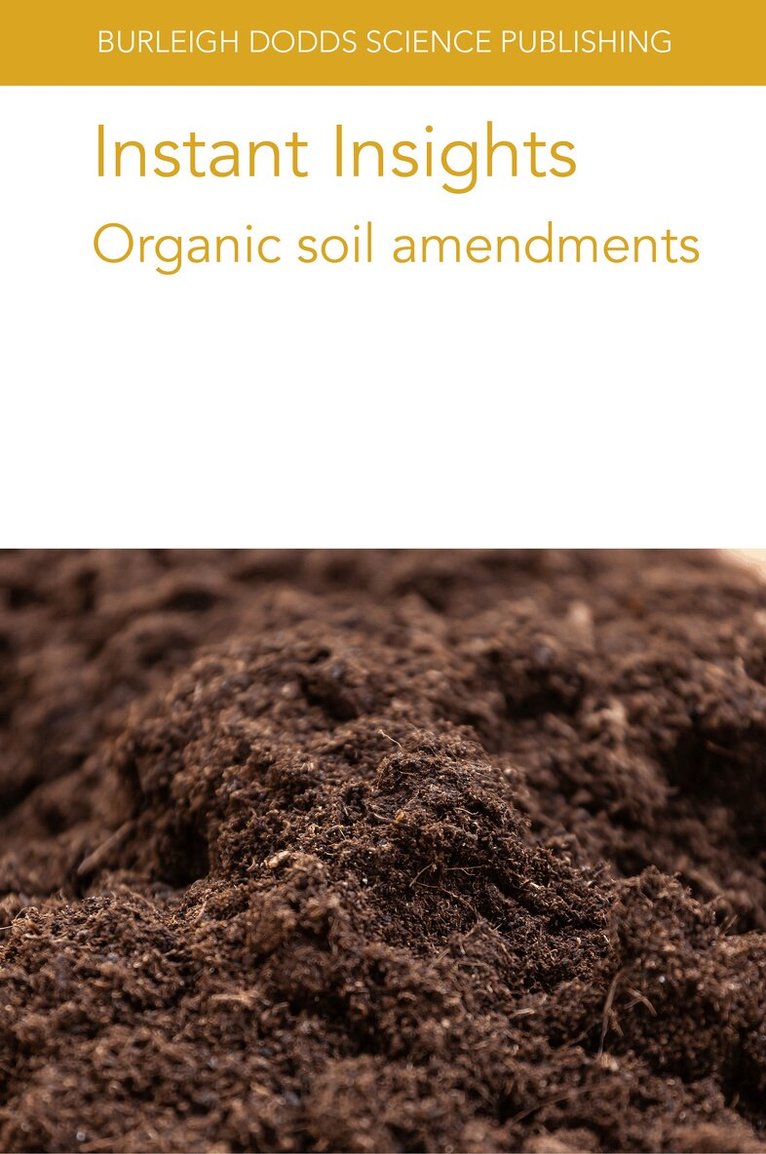
Instant Insights: Organic Soil Amendments
Häftad, Engelska, 2025
677 kr
Skickas inom 5-8 vardagar
This book features four peer-reviewed reviews on organic soil amendments.The first chapter examines the role of biofertilisers and consortia of microorganisms in improving the effectiveness of organic fertilisation, before moving on to consider the use of animal excrement, including manures, slurry and guano. The chapter also considers the use of products or by-products of both animal and plant origin as fertilisers.The second chapter provides a critical evaluation of the potential of compost to improve soil health, as well as the sources of variability and potential risks of compost for environmental quality. Two case studies evaluate the trade-offs between benefit and risks in the use of compost in perennial and annual crops.The third chapter discusses optimising slurry management in agricultural practices and highlights current decision tools for optimising manure management. It also reviews modifying animal slurry pH to enhance its value as a biobased fertiliser through methods such as bio acidification and alkalinisation.The final chapter provides an overview of the main technologies for manure valorisation into bioenergy and biofertiliser products. It discusses developments in more established technologies such as solid-liquid (S/L) separation, anaerobic digestion and composting, as well as more innovative techniques, including struvite precipitation.