Liesl Yamaguchi - Böcker
Visar alla böcker från författaren Liesl Yamaguchi. Handla med fri frakt och snabb leverans.
4 produkter
4 produkter
1 358 kr
Skickas inom 10-15 vardagar
Treatments of synesthesia in the arts and humanities generally assume a clear distinction between the neurological condition and the literary device. Synesthetes' descriptions of colors seen in connection with music, for example, are thought to differ fundamentally from common expressions that rely on transpositions across sensory dimensions ("bright vowels"). This has not always been the case. The distinction emerged over the course of the twentieth century, as scientists sought to constitute "synesthesia" as a legitimate object of modern science.On the Colors of Vowels investigates the ambiguity of visual descriptions of vowels across a wide range of disciplines, casting several landmark texts in a wholly new light. The book traces the migration of sound-color correspondence from its ancient host (music) to its modern one (vowels), investigating the vocalic Klangfarben of Hermann von Helmholtz's monumental Sensations of Tone, the vowel colors reported in early psychology surveys into audition colorée (colored hearing), the mis-matched timbres that form poetry's condition of possibility in Stéphane Mallarmé's "Crisis of Verse," and the vowel-color analogy central to both the universal alphabets of the nineteenth century and the phonological universals of the twentieth. The book's final chapter turns to an intricately detailed account of vowel-color correspondence by Ferdinand de Saussure, suggesting how the linguist's sensitivity to vowel coloration may have guided his groundbreaking study of Indo-European vocalism.Bringing out the diverse ways in which visual conceptions of vowels have inflected the arts and sciences of modernity, On the Colors of Vowels makes it possible to see how discourses of the nineteenth and twentieth centuries crafted the enigma we now readily recognize as "synesthesia."
370 kr
Skickas
Treatments of synesthesia in the arts and humanities generally assume a clear distinction between the neurological condition and the literary device. Synesthetes' descriptions of colors seen in connection with music, for example, are thought to differ fundamentally from common expressions that rely on transpositions across sensory dimensions ("bright vowels"). This has not always been the case. The distinction emerged over the course of the twentieth century, as scientists sought to constitute "synesthesia" as a legitimate object of modern science.On the Colors of Vowels investigates the ambiguity of visual descriptions of vowels across a wide range of disciplines, casting several landmark texts in a wholly new light. The book traces the migration of sound-color correspondence from its ancient host (music) to its modern one (vowels), investigating the vocalic Klangfarben of Hermann von Helmholtz's monumental Sensations of Tone, the vowel colors reported in early psychology surveys into audition colorée (colored hearing), the mis-matched timbres that form poetry's condition of possibility in Stéphane Mallarmé's "Crisis of Verse," and the vowel-color analogy central to both the universal alphabets of the nineteenth century and the phonological universals of the twentieth. The book's final chapter turns to an intricately detailed account of vowel-color correspondence by Ferdinand de Saussure, suggesting how the linguist's sensitivity to vowel coloration may have guided his groundbreaking study of Indo-European vocalism.Bringing out the diverse ways in which visual conceptions of vowels have inflected the arts and sciences of modernity, On the Colors of Vowels makes it possible to see how discourses of the nineteenth and twentieth centuries crafted the enigma we now readily recognize as "synesthesia."
1 324 kr
Skickas inom 10-15 vardagar
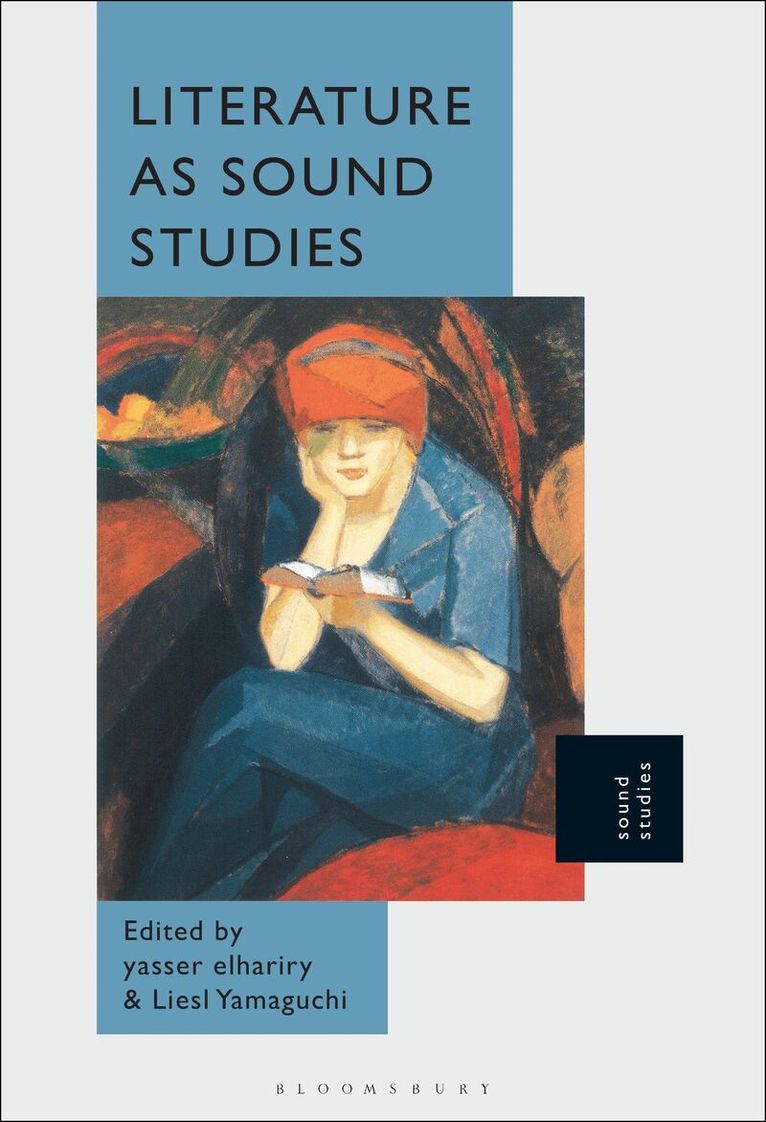
Literature as Sound Studies identifies literature as a site of sonic invention and reconfiguration, contributing a range of terms, models, and methods for attending to sound.Considering literary works drawn from a range of traditions—from twentieth-century Moroccan poems to early-modern English plays—Literature as Sound Studies brings out the sophisticated ways that literary writers and commentators have used and studied sound. Moving beyond the use of literature as mere ear witness to history, this collection brings out the complexity of sonic figuration in literature and literary studies, suggesting how this attentiveness to sound might anticipate, illuminate, and enrich the contemporary field of sound studies.The very category of the literary, considered as a subset of language writ large, has often hinged on the particular attention that literary works draw to their own sound, whether that sound be psychologically rehearsed, as in silent reading, or acoustically realized, as in a theatrical performance. Weaving together methods and concepts drawn from both literary and sound studies, these essays make legible literature’s complex role in shaping and writing a history of sound.
696 kr
Kommande