Lilah Grace Canevaro - Böcker
Visar alla böcker från författaren Lilah Grace Canevaro. Handla med fri frakt och snabb leverans.
7 produkter
7 produkter
1 800 kr
Skickas inom 7-10 vardagar
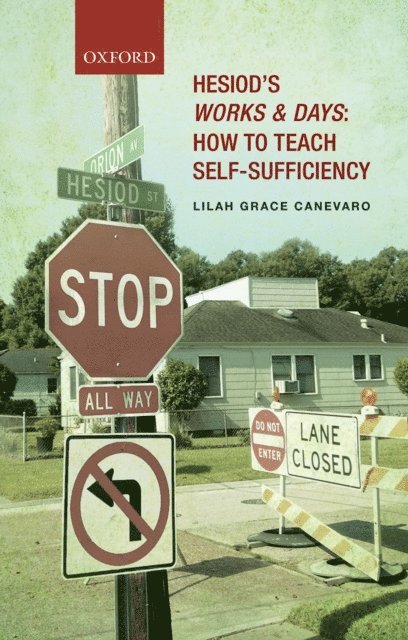
Greek poet Hesiod's canonical archaic text, the Works and Days, was performed in its entirety, but was also relentlessly excerpted, quoted, and reapplied. In this volume, Lilah Grace Canevaro situates the poem within these two modes of reading and argues that the text itself, through Hesiod's complex mechanism of rendering elements detachable while tethering them to their context for the purposes of the poem, sustains both treatments. One of the poem's difficulties is that Hesiod gives remarkably little advice on how to negotiate these different modes of reading. Canevaro considers the didactic methods employed by Hesiod from two perspectives: in terms of the gaps he leaves, and of how he challenges his audience to fill them. She argues that Hesiod's reticence is linked to the high value he places on self-sufficiency, which creates a productive tension with the didactic thrust of the poem as teaching always involves a relationship of exchange and, at least up to a point, reliance and trust. Hesiod negotiates this potential contradiction by advocating not blind adherence to his teachings but thinking for oneself and working for one's lesson. Exploring key issues such as gender and genre, and persona and performance, this volume places this important poem within a wider context, revealing how it draws on and contributes to a tradition of usefulness.
1 723 kr
Skickas inom 7-10 vardagar
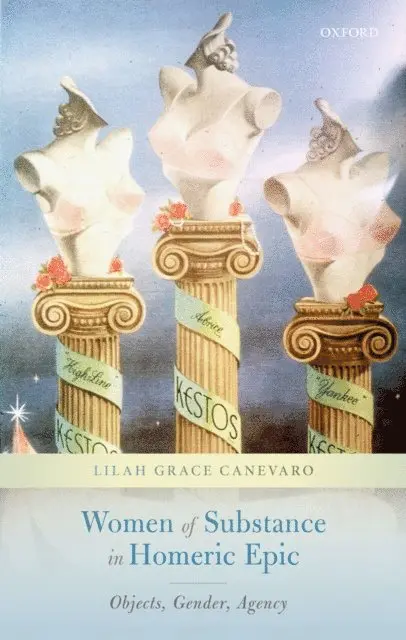
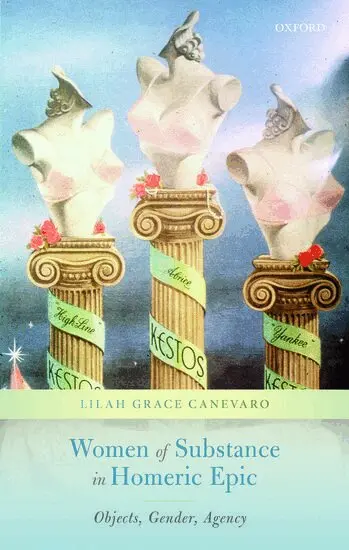
Women in Greek epic are treated as objects, as commodities to be exchanged in marriage or as the spoils of warfare. However, women in Homeric epic also use objects to negotiate their own agency, subverting the male viewpoint by utilizing on their own terms the very form they themselves are thought by men to embody. Such female objects can transcend their physical limitations and be both symbolically significant and powerfully characterizing. They can be tools of recognition and identification. They can pause narrative and be used agonistically. They can send messages and be vessels for memory.Women of Substance in Homeric Epic offers a new and insightful approach to the Iliad and Odyssey, bringing together Gender Theory and the burgeoning field of New Materialisms, new to classical studies, and thereby combining an approach predicated on the idea of the woman as object with one which questions the very distinction between subject and object. This productive tension leads us to decentre the male subject and to put centre stage not only the woman as object but also the agency of women and objects. The volume comes at a turning point in the gendering of Homeric studies, with the publication of the first English translations by women of the Iliad in 2015 and the Odyssey in 2017, by Caroline Alexander and Emily Wilson respectively. It makes a significant contribution to scholarship by demonstrating that women in Homeric epic are not only objectified, but are also well-versed users of objects; this is something that Homer portrays clearly, that Odysseus understands, but that has often escaped many other men, from Odysseus' alter ego Aethon in Odyssey 19 to modern experts on Homeric epic.
1 416 kr
Skickas inom 7-10 vardagar
Achilles inflicts countless agonies on the Achaeans, although he is supposed to be fighting on their side. Odysseus' return causes civil strife on Ithaca. The Iliad and the Odyssey depict conflict where consensus should reign, as do the other major poems of the early Greek hexameter tradition: Hesiod's Theogony and the Homeric Hymns describe divine clashes that unbalance the cosmos; Hesiod's Works and Days stems from a quarrel between brothers. These early Greek poems generated consensus among audiences: the reason why they reached us is that people agreed on their value. This volume, accordingly, explores conflict and consensus from a dual perspective: as thematic concerns in the poems, and as forces shaping their early reception. It sheds new light on poetics and metapoetics, internal and external audiences, competition inside the narrative and competing narratives, local and Panhellenic traditions, narrative closure and the making of canonical literature.
493 kr
Skickas inom 7-10 vardagar
Achilles inflicts countless agonies on the Achaeans, although he is supposed to be fighting on their side. Odysseus' return causes civil strife on Ithaca. The Iliad and the Odyssey depict conflict where consensus should reign, as do the other major poems of the early Greek hexameter tradition: Hesiod's Theogony and the Homeric Hymns describe divine clashes that unbalance the cosmos; Hesiod's Works and Days stems from a quarrel between brothers. These early Greek poems generated consensus among audiences: the reason why they reached us is that people agreed on their value. This volume, accordingly, explores conflict and consensus from a dual perspective: as thematic concerns in the poems, and as forces shaping their early reception. It sheds new light on poetics and metapoetics, internal and external audiences, competition inside the narrative and competing narratives, local and Panhellenic traditions, narrative closure and the making of canonical literature.
1 277 kr
Skickas
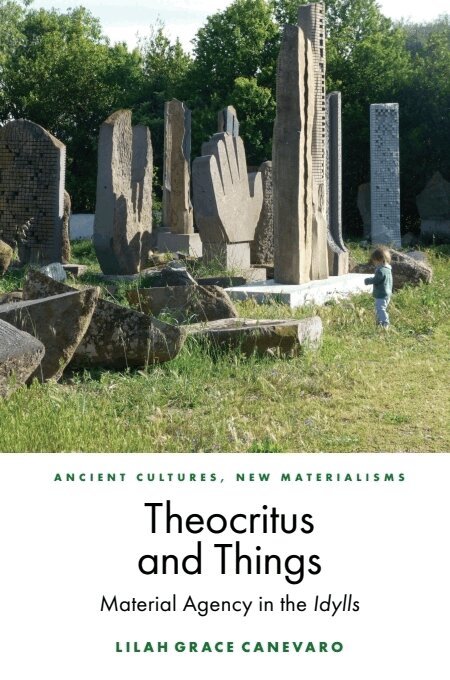
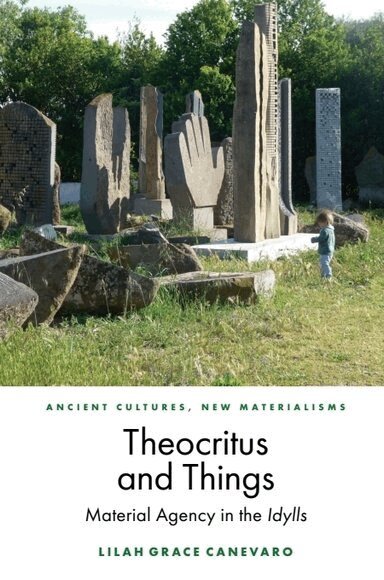
Foregrounds underrepresented agents (women, nature and the nonhuman) in and through the poetry of TheocritusProvides a new approach to canonical Greek poetryBrings Classics into conversation with burgeoning theoretical frameworksSpeaks to current political concerns about the relationship between humans and nature Decentres the male human subject and listens to a wider cast of characters, offering a 'from below' readingThis book contributes to the literary-theoretical field of Material Ecocriticism, expanding its chronological remit, and is the first to apply it to Classics. Material Ecocriticism has been described as an exercise in listening and it is to a series of underrepresented agents (women, nature, the nonhuman) in the poetry of Theocritus that this book urges us to listen. This 'from below' reading that allows nature and materiality their agency, that sees objects and the labour behind them, gives a new way in to the paradoxes of Hellenistic pastoral poetry: the urban backdrop to bucolic poetry, the artifice of the locus amoenus. This book reveals a detailed picture of material agency and a diverse cast of characters human and nonhuman in Theocritus' Idylls, showing that while the poetry might be paradoxical it is not rarefied. And through a dark-ecological reading it highlights the darkness that undercuts the idyll.
491 kr
Skickas inom 3-6 vardagar
This book contributes to the literary-theoretical field of Material Ecocriticism, expanding its chronological remit, and is the first to apply it to Classics. Material Ecocriticism has been described as an exercise in listening and it is to a series of underrepresented agents (women, nature, the nonhuman) in the poetry of Theocritus that this book urges us to listen. This 'from below' reading that allows nature and materiality their agency, that sees objects and the labour behind them, gives a new way in to the paradoxes of Hellenistic pastoral poetry: the urban backdrop to bucolic poetry, the artifice of the locus amoenus. This book reveals a detailed picture of material agency and a diverse cast of characters human and nonhuman in Theocritus' Idylls, showing that while the poetry might be paradoxical it is not rarefied. And through a dark-ecological reading it highlights the darkness that undercuts the idyll.
991 kr
Skickas inom 7-10 vardagar
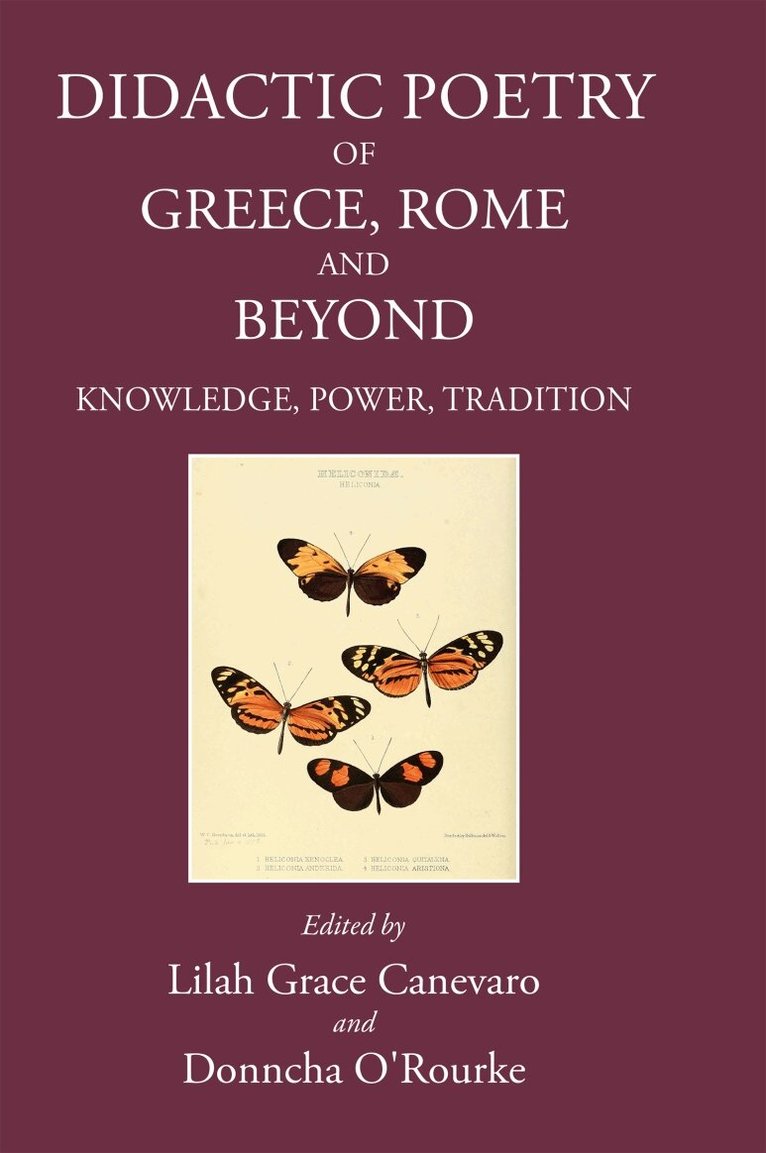
Here ten scholars examine poetic texts of wisdom and teaching related to the line of Greek and Latin poems descended from Hesiod. Previous scholarship has grappled with the near-total absence in ancient literary criticism of explicit discussion of didactic as a discrete genre and as a result has often focused on defining and classifying didactic poetry. The present volume approaches didactic texts from different perspectives: the diachronic, mapping the development of didactic through changing social and political landscapes (from Homer and Hesiod to Neo-Latin didactic); and the comparative, setting the Graeco-Roman tradition against a wider backdrop (including ancient Near-Eastern and contemporary African traditions). Issues include knowledge in its relation to power; cognitive strategies of the didactic text; ethics and poetics; interplay of obscurity and clarity, playfulness and solemnity; authority of the teacher.