Lili Di Puppo – författare
Visar alla böcker från författaren Lili Di Puppo. Handla med fri frakt och snabb leverans.
7 produkter
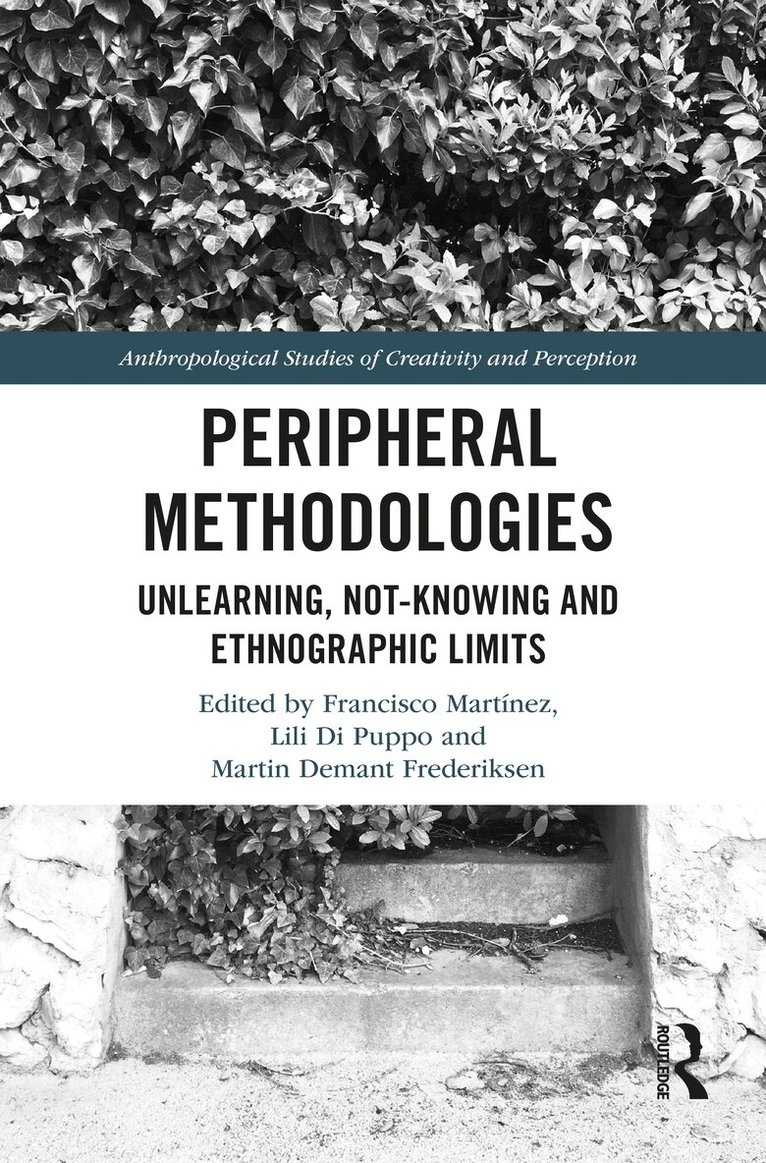
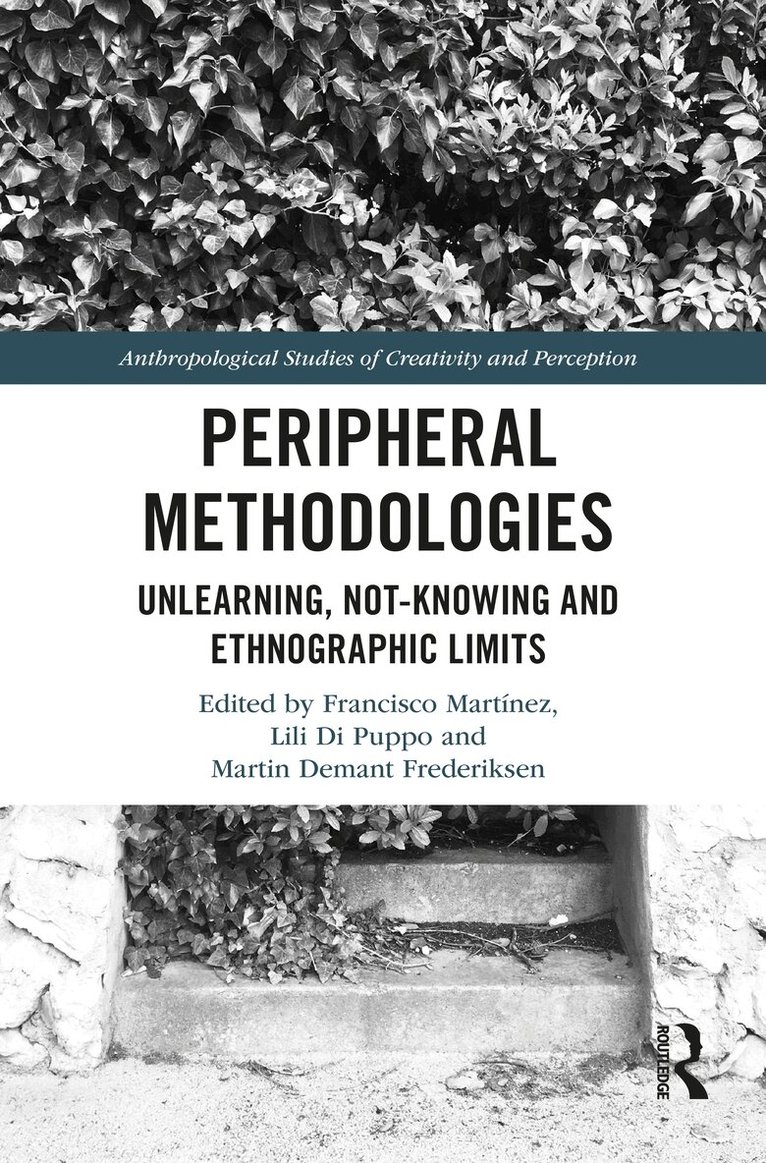
Peripheral Methodologies
Unlearning, Not-knowing and Ethnographic Limits
Av Francisco Martínez, Lili Di Puppo m. fl.
Häftad, 2023
646 kr
Lägg i varukorg
How does peripherality challenge methodology and theory-making? This book examines how the peripheral can be incorporated into ethnographic research, and reflects on what it means to be on the periphery – ontologically and epistemologically. Starting from the premise that clarity and fixity as …
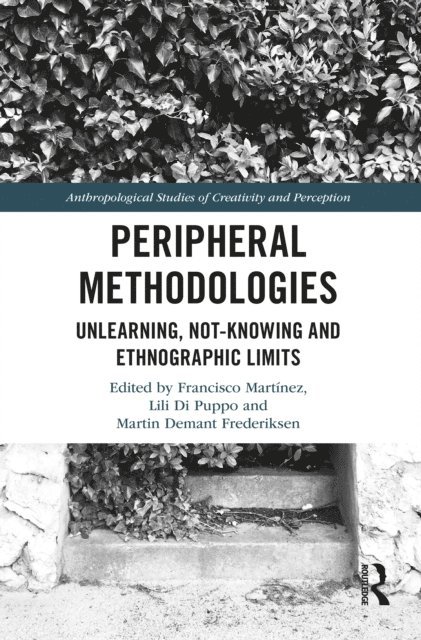
Peripheral Methodologies
Unlearning, Not-knowing and Ethnographic Limits
Av Martin Demant Frederiksen, Lili Di Puppo m. fl.
E-bok, 2021
746 kr
Lägg i varukorg
How does peripherality challenge methodology and theory-making? This book examines how the peripheral can be incorporated into ethnographic research, and reflects on what it means to be on the periphery – ontologically and epistemologically. Starting from the premise that clarity and fixity as …
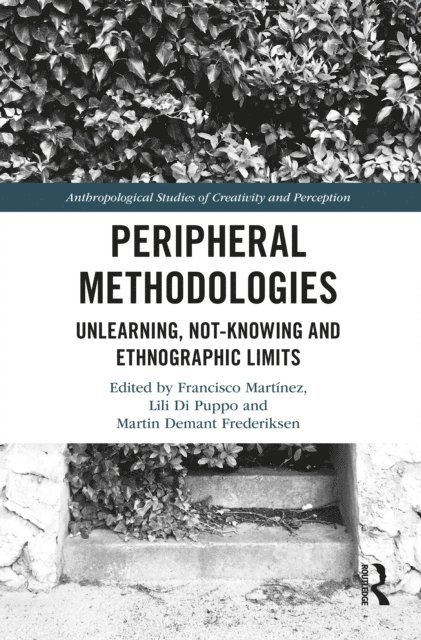
Peripheral Methodologies
Unlearning, Not-knowing and Ethnographic Limits
Av Martin Demant Frederiksen, Lili Di Puppo m. fl.
E-bok, 2021
762 kr
Lägg i varukorg
How does peripherality challenge methodology and theory-making? This book examines how the peripheral can be incorporated into ethnographic research, and reflects on what it means to be on the periphery – ontologically and epistemologically. Starting from the premise that clarity and fixity as …
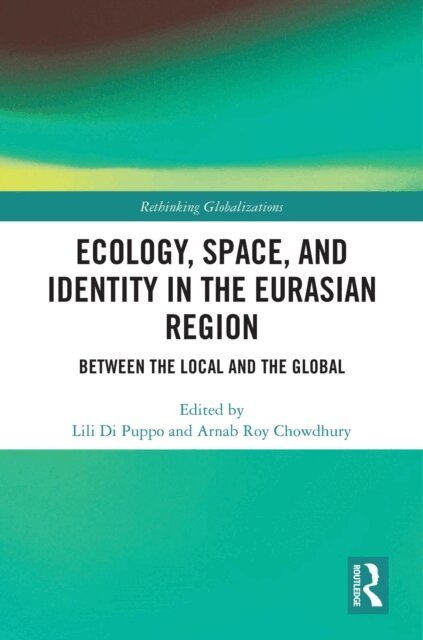
Ecology, Space, and Identity in the Eurasian Region
Between the Local and the Global
Av Arnab Roy Chowdhury, Lili Di Puppo
E-bok, 2026
813 kr
Lägg i varukorg
This book brings together the postcolonial and postsocialist conditions of the post-Soviet space and the Indian subcontinent through the study of human-nature relationships. These two regions are not only geographically entangled through Eurasia but are also characterized by hybrid modernization …
Ecology, Space, and Identity in the Eurasian Region
Between the Local and the Global
Av Arnab Roy Chowdhury, Lili Di Puppo
E-bok, 2026
831 kr
Lägg i varukorg
This book brings together the postcolonial and postsocialist conditions of the post-Soviet space and the Indian subcontinent through the study of human-nature relationships. These two regions are not only geographically entangled through Eurasia but are also characterized by hybrid modernization …
Ecology, Space, and Identity in the Eurasian Region
Between the Local and the Global
Av Lili Di Puppo, Arnab Roy Chowdhury
Inbunden, 2026
2578 kr
Lägg i varukorg
This book brings together the postcolonial and postsocialist conditions of the post-Soviet space and the Indian subcontinent through the study of human–nature relationships. These two regions are not only geographically entangled through Eurasia but are also characterized by hybrid modernization …
Peripheral Methodologies
Unlearning, Not-knowing and Ethnographic Limits
Av Francisco Martínez, Lili Di Puppo m. fl.
Inbunden, 2021
1821 kr
Lägg i varukorg
How does peripherality challenge methodology and theory-making? This book examines how the peripheral can be incorporated into ethnographic research, and reflects on what it means to be on the periphery – ontologically and epistemologically. Starting from the premise that clarity and fixity as …