Liliana B. Andonova - Böcker
Visar alla böcker från författaren Liliana B. Andonova. Handla med fri frakt och snabb leverans.
7 produkter
7 produkter
616 kr
Skickas inom 10-15 vardagar
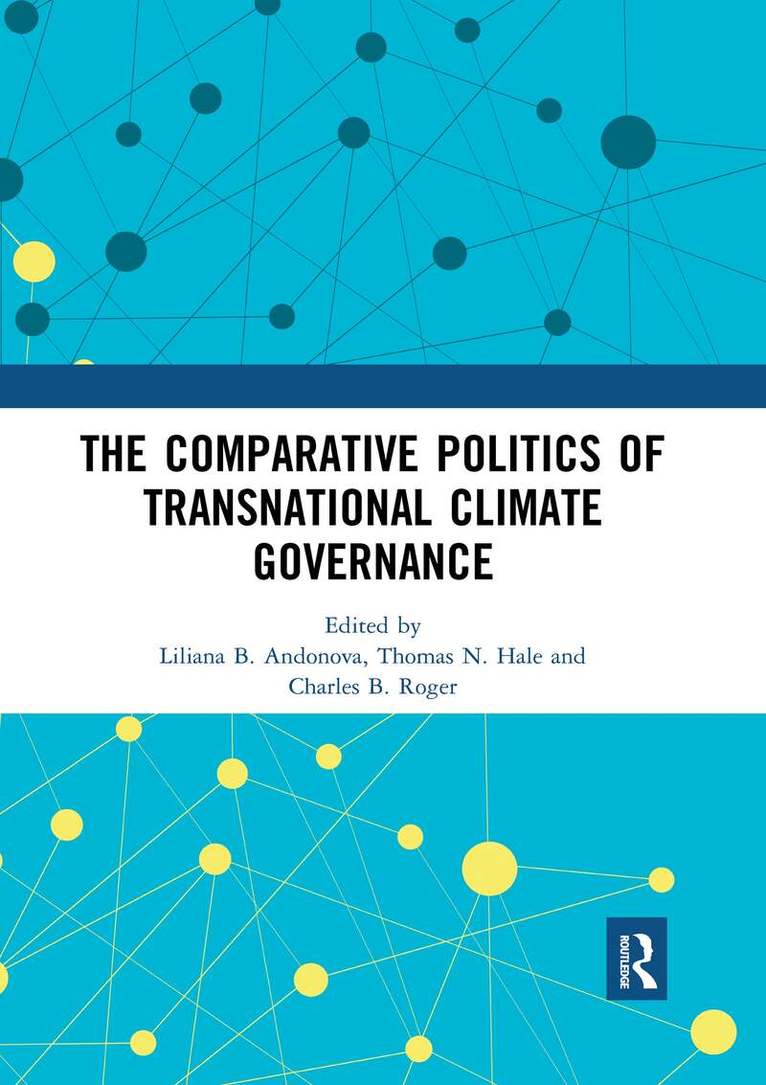
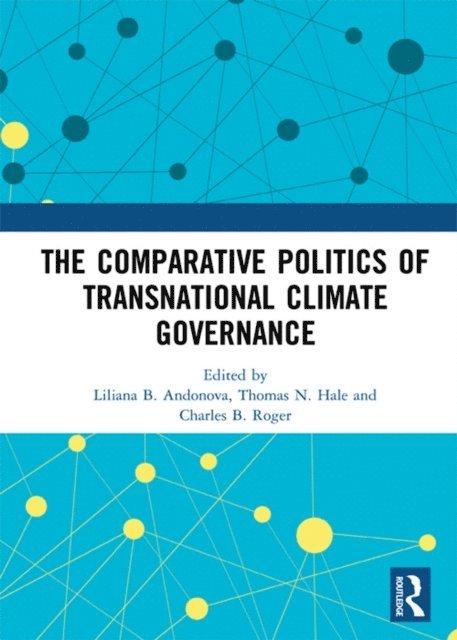
Following the 2015 Paris climate agreement, the global politics of climate change depends more than ever on national climate policies and the actions of cities, businesses, and other non-state actors, as well as the transnational governance networks that link them. The Comparative Politics of Transnational Climate Governance sheds new light on these critical trends by exploring how domestic political, economic, and social forces systematically shape patterns of non-state actor participation in transnational climate initiatives. The book develops a common conceptual framework and uses a unique data set to explore the interplay between transnational and domestic politics and how these interactions shape the incentives and modalities of participation in transnational governance. The contributing chapters explore the role of cities, non-governmental organizations, companies, carbon markets, and regulations, as well as broader questions of effectiveness and global governance. Bringing together some of the foremost experts in the field of global governance and environmental politics, this book significantly advances our understanding of transnational governance and provides new insights for policymakers seeking to address the problem of climate change.This book was originally published as a special issue of International Interactions.
Partnerships for Sustainability in Contemporary Global Governance
Pathways to Effectiveness
Inbunden, Engelska, 2022
2 103 kr
Skickas inom 10-15 vardagar
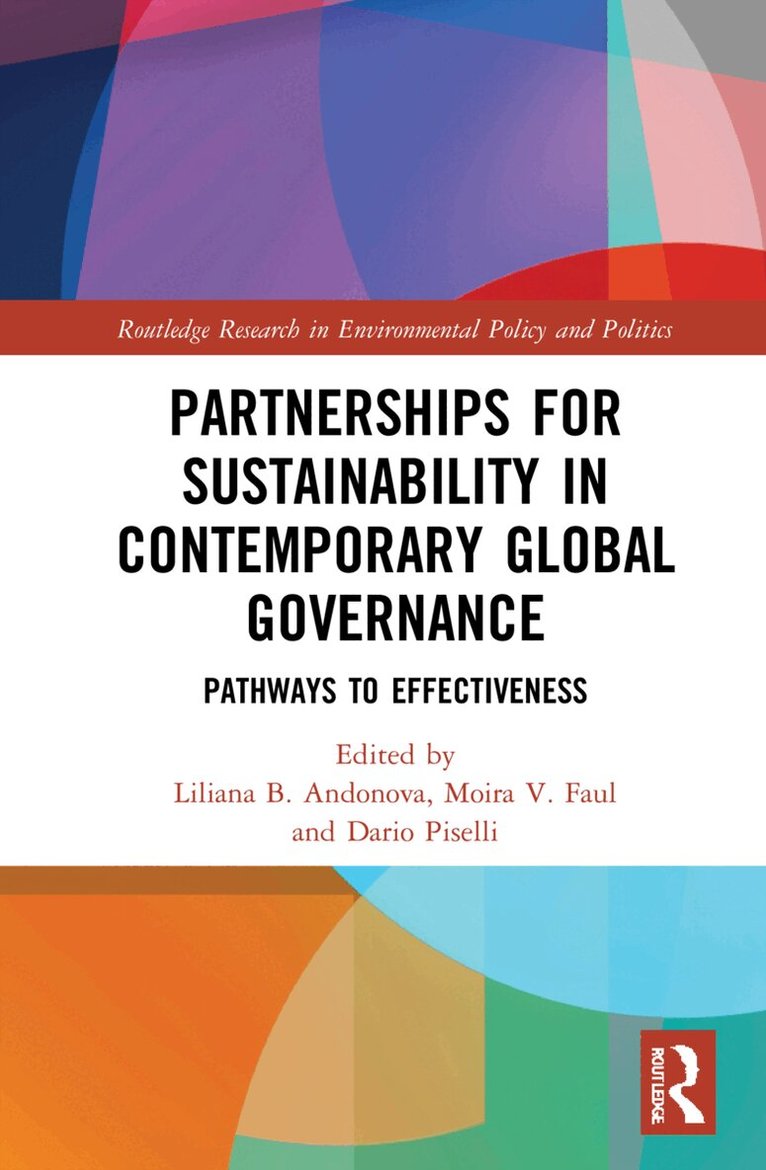
Partnerships for Sustainability in Contemporary Global Governance investigates the goals, ideals, and realities of sustainability partnerships and offers a theoretical framework to help disentangle the multiple and interrelated pathways that shape their effectiveness.Partnerships are ubiquitous in research and policy discussions about sustainability and are important governance instruments for the provision of public goods. While partnerships promise a great deal, there is little clarity as to what they deliver. If partnerships are to break free from this paradox, more nuance and rigor are required for understanding and assessing their actual effects. This volume applies its original framework to diverse empirical cases in a way that could be extended to broader data sets and case studies of partnerships. The dual contribution of this volume, theoretical and empirical, holds promise for a more thorough and innovative understanding of the pathways to partnership effectiveness and the conditions that can shape their performance. The broad range of crosscutting analyses suggest important practical implications for the design of new partnerships and the updating of existing initiatives.This interdisciplinary book will be of great interest to researchers, students, and practitioners within international relations, political science, sociology, environmental studies and global studies, as well as the growing number of scholars in public policy, global health and organizational and business studies who are keen to gain a deeper understanding of the pathways and mechanisms that influence the outcomes and effectiveness of cross-sector collaboration and transnational governance more broadly.The Open Access version of this book, available at www .taylorfrancis.com, has been made available under a Creative Commons Attribution-Non Commercial-No Derivatives 4.0 license.
Partnerships for Sustainability in Contemporary Global Governance
Pathways to Effectiveness
Häftad, Engelska, 2023
616 kr
Skickas inom 10-15 vardagar
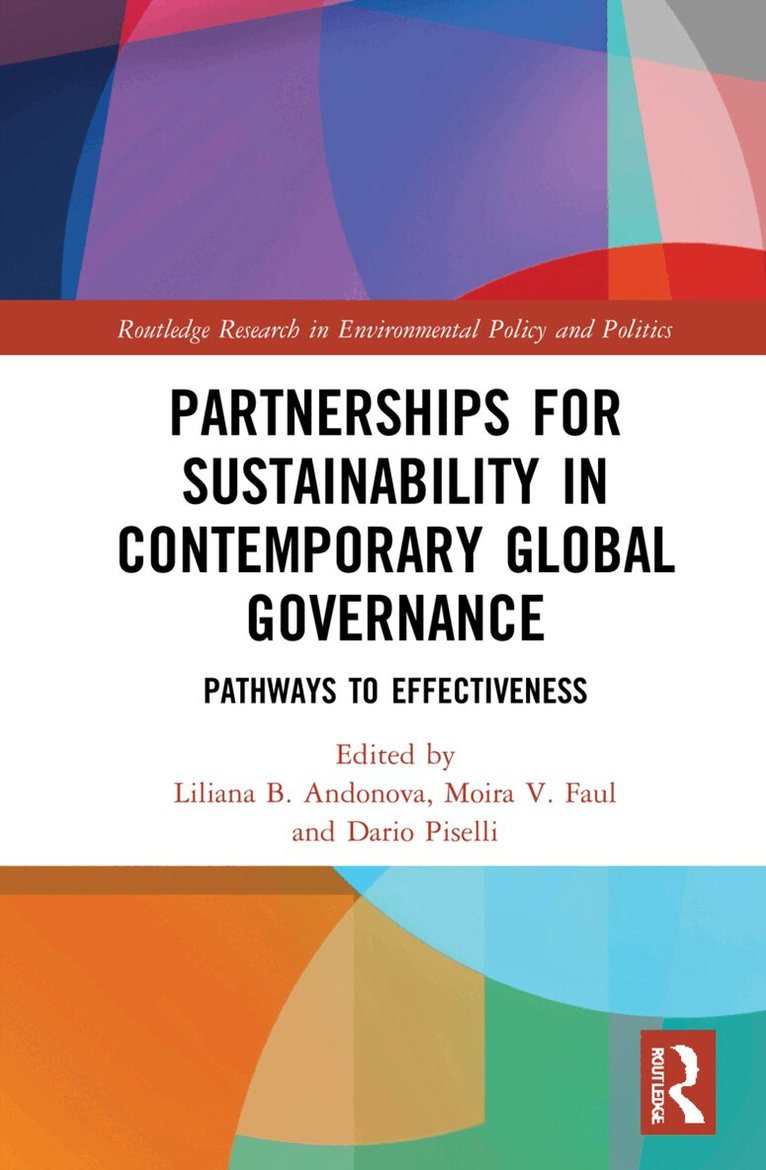
Partnerships for Sustainability in Contemporary Global Governance investigates the goals, ideals, and realities of sustainability partnerships and offers a theoretical framework to help disentangle the multiple and interrelated pathways that shape their effectiveness.Partnerships are ubiquitous in research and policy discussions about sustainability and are important governance instruments for the provision of public goods. While partnerships promise a great deal, there is little clarity as to what they deliver. If partnerships are to break free from this paradox, more nuance and rigor are required for understanding and assessing their actual effects. This volume applies its original framework to diverse empirical cases in a way that could be extended to broader data sets and case studies of partnerships. The dual contribution of this volume, theoretical and empirical, holds promise for a more thorough and innovative understanding of the pathways to partnership effectiveness and the conditions that can shape their performance. The broad range of crosscutting analyses suggest important practical implications for the design of new partnerships and the updating of existing initiatives.This interdisciplinary book will be of great interest to researchers, students, and practitioners within international relations, political science, sociology, environmental studies and global studies, as well as the growing number of scholars in public policy, global health and organizational and business studies who are keen to gain a deeper understanding of the pathways and mechanisms that influence the outcomes and effectiveness of cross-sector collaboration and transnational governance more broadly.The Open Access version of this book, available at www .taylorfrancis.com, has been made available under a Creative Commons Attribution-Non Commercial-No Derivatives 4.0 license.
2 100 kr
Skickas inom 10-15 vardagar
Following the 2015 Paris climate agreement, the global politics of climate change depends more than ever on national climate policies and the actions of cities, businesses, and other non-state actors, as well as the transnational governance networks that link them. The Comparative Politics of Transnational Climate Governance sheds new light on these critical trends by exploring how domestic political, economic, and social forces systematically shape patterns of non-state actor participation in transnational climate initiatives. The book develops a common conceptual framework and uses a unique data set to explore the interplay between transnational and domestic politics and how these interactions shape the incentives and modalities of participation in transnational governance. The contributing chapters explore the role of cities, non-governmental organizations, companies, carbon markets, and regulations, as well as broader questions of effectiveness and global governance. Bringing together some of the foremost experts in the field of global governance and environmental politics, this book significantly advances our understanding of transnational governance and provides new insights for policymakers seeking to address the problem of climate change.This book was originally published as a special issue of International Interactions.
Governance Entrepreneurs
International Organizations and the Rise of Global Public-Private Partnerships
Inbunden, Engelska, 2017
1 218 kr
Skickas inom 7-10 vardagar
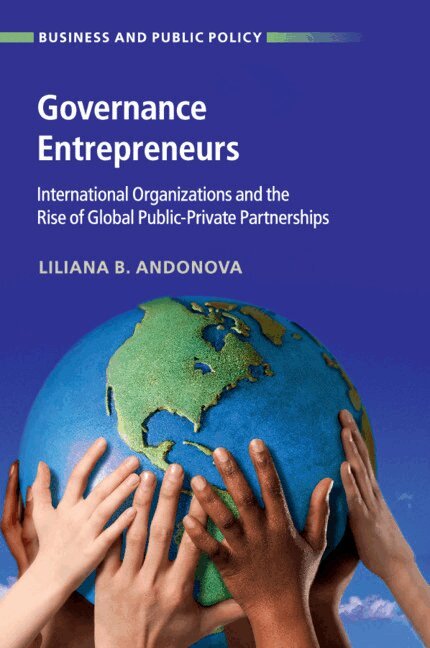
Global partnerships have transformed international institutions by creating platforms for direct collaboration with NGOs, foundations, companies and local actors. They introduce a model of governance that is decentralized, networked and voluntary, and which melds public purpose with private practice. How can we account for such substantial institutional change in a system made by states and for states? Governance Entrepreneurs examines the rise and outcomes of global partnerships across multiple policy domains: human rights, health, environment, sustainable development and children. It argues that international organizations have played a central role as entrepreneurs of such governance innovation in coalition with pro-active states and non-state actors, yet this entrepreneurship is risky and success is not assured. This is the first study to leverage comprehensive quantitative and qualitative analysis that illuminates the variable politics and outcomes of public-private partnerships across multilateral institutions, including the UN Secretariat, the World Bank, United Nations Environment Programme (UNEP), the World Health Organization (WHO) and the United Nations Children's Fund (UNICEF).
354 kr
Skickas inom 7-10 vardagar
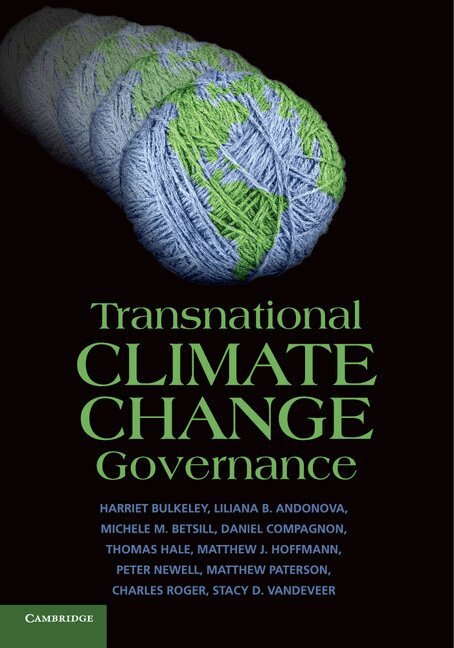
The world of climate politics is increasingly no longer confined to the activities of national governments and international negotiations. Critical to this transformation of the politics of climate change has been the emergence of new forms of transnational governance that cut across traditional state-based jurisdictions and operate across public and private divides. This book provides the first comprehensive, cutting-edge account of the world of transnational climate change governance. Co-authored by a team of the world's leading experts in the field and based on a survey of sixty case studies, the book traces the emergence, nature and consequences of this phenomenon, and assesses the implications for the field of global environmental politics. It will prove invaluable for researchers, graduate students and policy makers in climate change, political science, international relations, human geography, sociology and ecological economics.
Governance Entrepreneurs
International Organizations and the Rise of Global Public-Private Partnerships
Häftad, Engelska, 2019
428 kr
Skickas inom 7-10 vardagar
Global partnerships have transformed international institutions by creating platforms for direct collaboration with NGOs, foundations, companies and local actors. They introduce a model of governance that is decentralized, networked and voluntary, and which melds public purpose with private practice. How can we account for such substantial institutional change in a system made by states and for states? Governance Entrepreneurs examines the rise and outcomes of global partnerships across multiple policy domains: human rights, health, environment, sustainable development and children. It argues that international organizations have played a central role as entrepreneurs of such governance innovation in coalition with pro-active states and non-state actors, yet this entrepreneurship is risky and success is not assured. This is the first study to leverage comprehensive quantitative and qualitative analysis that illuminates the variable politics and outcomes of public-private partnerships across multilateral institutions, including the UN Secretariat, the World Bank, United Nations Environment Programme (UNEP), the World Health Organization (WHO) and the United Nations Children's Fund (UNICEF).