Lin Gao – författare
Visar alla böcker från författaren Lin Gao. Handla med fri frakt och snabb leverans.
8 produkter
8 produkter
Häftad, Engelska, 2013
384 kr
Skickas inom 10-15 vardagar
Today's wireless communications and networking practices are tightly coupled with economic considerations, to the extent that it is almost impossible to make a sound technology choice without understanding the corresponding economic implications. This book aims at providing a foundational introduction on how microeconomics, and pricing theory in particular, can help us to understand and build better wireless networks. The book can be used as lecture notes for a course in the field of network economics, or a reference book for wireless engineers and applied economists to understand how pricing mechanisms influence the fast growing modern wireless industry.This book first covers the basics of wireless communication technologies and microeconomics, before going in-depth about several pricing models and their wireless applications. The pricing models include social optimal pricing, monopoly pricing, price differentiation, oligopoly pricing, and network externalities, supported by introductory discussions of convex optimization and game theory. The wireless applications include wireless video streaming, service provider competitions, cellular usage-based pricing, network partial price differentiation, wireless spectrum leasing, distributed power control, and cellular technology upgrade. More information related to the book (including references, slides, and videos) can be found at ncel.ie.cuhk.edu.hk/content/wireless-network-pricing.
E-bok
PDF, Engelska, 2022475 kr
Läs direkt efter köp
Today''s wireless communications and networking practices are tightly coupled with economic considerations, to the extent that it is almost impossible to make a sound technology choice without understanding the corresponding economic implications. This book aims at providing a foundational introduction on how microeconomics, and pricing theory in particular, can help us to understand and build better wireless networks. The book can be used as lecture notes for a course in the field of network economics, or a reference book for wireless engineers and applied economists to understand how pricing mechanisms influence the fast growing modern wireless industry.This book first covers the basics of wireless communication technologies and microeconomics, before going in-depth about several pricing models and their wireless applications. The pricing models include social optimal pricing, monopoly pricing, price differentiation, oligopoly pricing, and network externalities, supported by introductory discussions of convex optimization and game theory. The wireless applications include wireless video streaming, service provider competitions, cellular usage-based pricing, network partial price differentiation, wireless spectrum leasing, distributed power control, and cellular technology upgrade. More information related to the book (including references, slides, and videos) can be found at ncel.ie.cuhk.edu.hk/content/wireless-network-pricing.
Inbunden, Engelska, 2016
546 kr
Skickas inom 10-15 vardagar
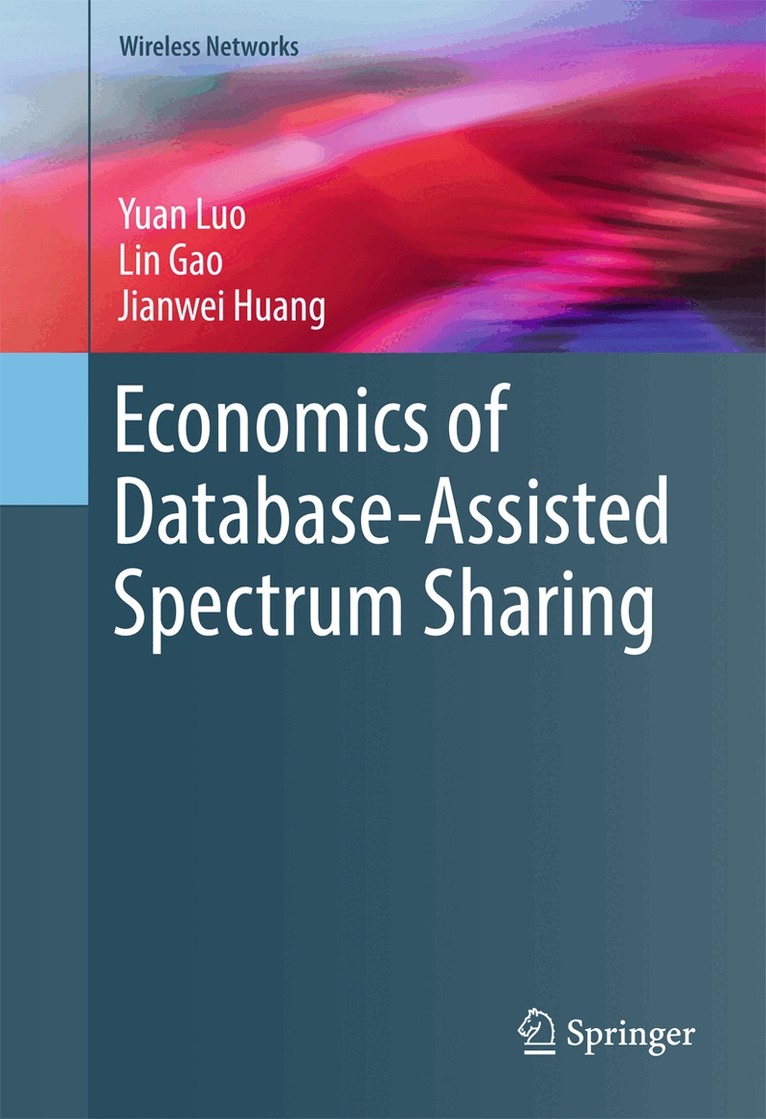
This book examines the interaction between the technical and economic issues in database-assisted dynamic spectrum networks. It explains various business models for different network settings, analyzing the user behaviors and system equilibrium under each model. With the explosive growth of mobile devices and bandwidth-hungry applications, radio spectrum is becoming increasingly congested and scarce. Database-assisted dynamic spectrum sharing is a promising technology for solving the problem of spectrum scarcity and congestion by allowing unlicensed mobile devices to dynamically access the under-utilized licensed spectrum resources through the assistance of a database. Database-assisted spectrum sharing network architecture has received wide and enthusiastic support from spectrum regulators, standards bodies, and industrial organizations.This book serves as a resource for researchers in white space communications and networking, for regulators in the wireless industry, and for graduate students and senior undergraduate students taking a course on network economics.
E-bok
PDF, Engelska, 2016712 kr
Läs direkt efter köp
This book examines the interaction between the technical and economic issues in database-assisted dynamic spectrum networks. It explains various business models for different network settings, analyzing the user behaviors and system equilibrium under each model. With the explosive growth of mobile devices and bandwidth-hungry applications, radio spectrum is becoming increasingly congested and scarce. Database-assisted dynamic spectrum sharing is a promising technology for solving the problem of spectrum scarcity and congestion by allowing unlicensed mobile devices to dynamically access the under-utilized licensed spectrum resources through the assistance of a database. Database-assisted spectrum sharing network architecture has received wide and enthusiastic support from spectrum regulators, standards bodies, and industrial organizations.This book serves as a resource for researchers in white space communications and networking, for regulators in the wireless industry, and for graduate students and senior undergraduate students taking a course on network economics.
Häftad, Engelska, 2018
546 kr
Skickas inom 10-15 vardagar
This book examines the interaction between the technical and economic issues in database-assisted dynamic spectrum networks. It explains various business models for different network settings, analyzing the user behaviors and system equilibrium under each model. With the explosive growth of mobile devices and bandwidth-hungry applications, radio spectrum is becoming increasingly congested and scarce. Database-assisted dynamic spectrum sharing is a promising technology for solving the problem of spectrum scarcity and congestion by allowing unlicensed mobile devices to dynamically access the under-utilized licensed spectrum resources through the assistance of a database. Database-assisted spectrum sharing network architecture has received wide and enthusiastic support from spectrum regulators, standards bodies, and industrial organizations.This book serves as a resource for researchers in white space communications and networking, for regulators in the wireless industry, and for graduate students and senior undergraduate students taking a course on network economics.
Häftad, Engelska, 2026
546 kr
Skickas inom 10-15 vardagar
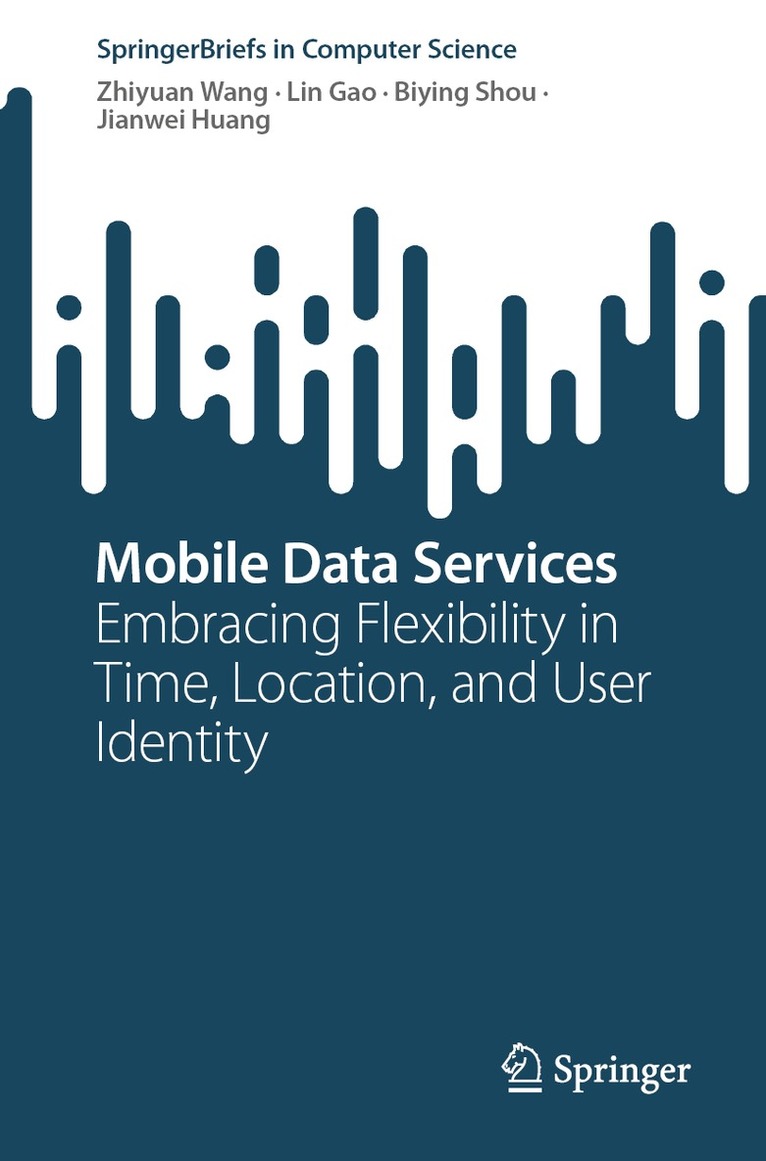
This book is on mobile networks with the emphasis on mobile data services.Mobile Network Operators (MNOs) monetize the scarce wireless spectrum resource, generating revenue through the provision of mobile data services to their customers. The traditional mobile data service is a three-part tariff involving a monthly data quota. This kind of service lacks for flexibility seriously, since it rigidly dictates the usage of data based on time, location, and user identity, limiting when, where, and by whom the data can be consumed. The severer market competition has recently forced the MNOs to explore more flexible data services from different dimensions. For instance, the rollover data service enables time flexibility by permitting unused data in the current month to be carried over for usage in the subsequent month. The day-pass data service enables location flexibility by granting users the ability to utilize domestic data while traveling overseas. The data trading service enables user-identity flexibility by creating a marketplace where users can either offload their surplus data or purchase additional data from one another.This book will delve into the economic issues of flexible mobile data services. The authors leverage game theory to analyze users’ optimal behaviour, and design economic mechanisms for MNOs’ data service optimization. This book will introduce who ultimately reaps the benefits from flexible mobile data services—whether it will be the mobile users or the MNOs themselves.
697 kr
Läs direkt efter köp
This book is on mobile networks with the emphasis on mobile data services.Mobile Network Operators (MNOs) monetize the scarce wireless spectrum resource, generating revenue through the provision of mobile data services to their customers. The traditional mobile data service is a three-part tariff involving a monthly data quota. This kind of service lacks for flexibility seriously, since it rigidly dictates the usage of data based on time, location, and user identity, limiting when, where, and by whom the data can be consumed. The severer market competition has recently forced the MNOs to explore more flexible data services from different dimensions. For instance, the rollover data service enables time flexibility by permitting unused data in the current month to be carried over for usage in the subsequent month. The day-pass data service enables location flexibility by granting users the ability to utilize domestic data while traveling overseas. The data trading service enables user-identity flexibility by creating a marketplace where users can either offload their surplus data or purchase additional data from one another.This book will delve into the economic issues of flexible mobile data services. The authors leverage game theory to analyze users optimal behaviour, and design economic mechanisms for MNOs data service optimization. This book will introduce who ultimately reaps the benefits from flexible mobile data services whether it will be the mobile users or the MNOs themselves.
Häftad, Engelska, 2023
209 kr
Tillfälligt slut