Linda C. Wing - Böcker
Visar alla böcker från författaren Linda C. Wing. Handla med fri frakt och snabb leverans.
4 produkter
4 produkter
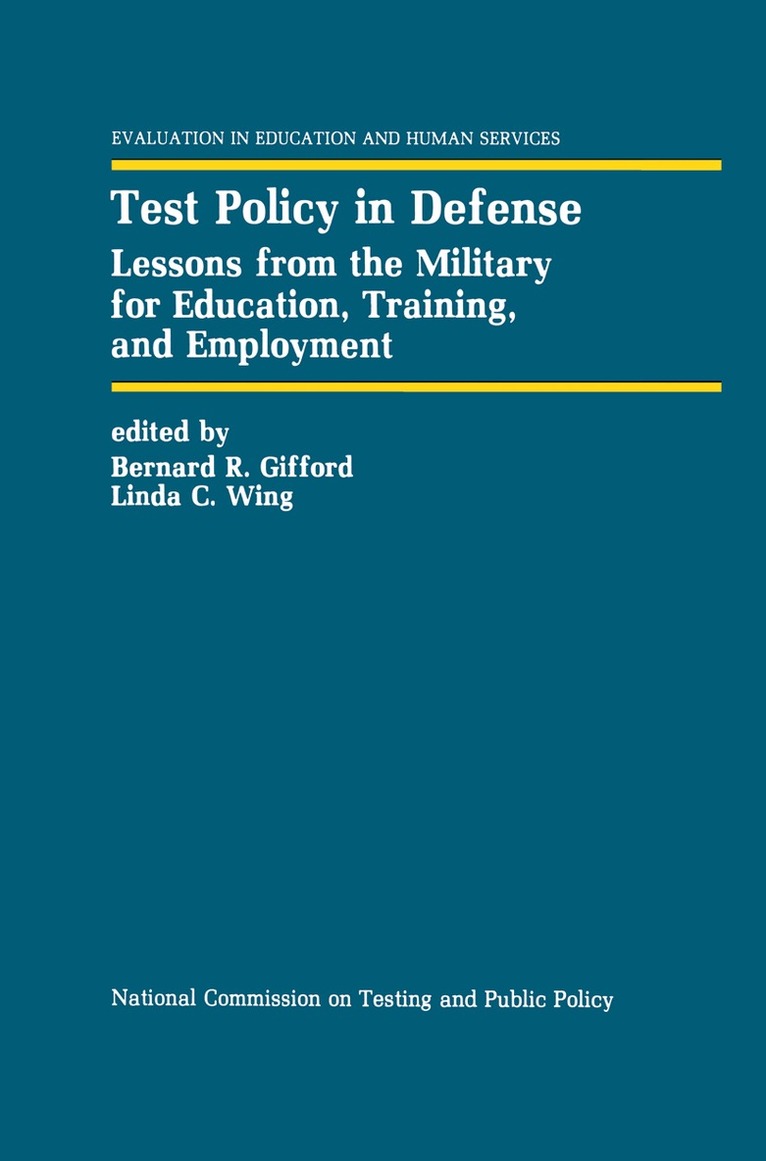
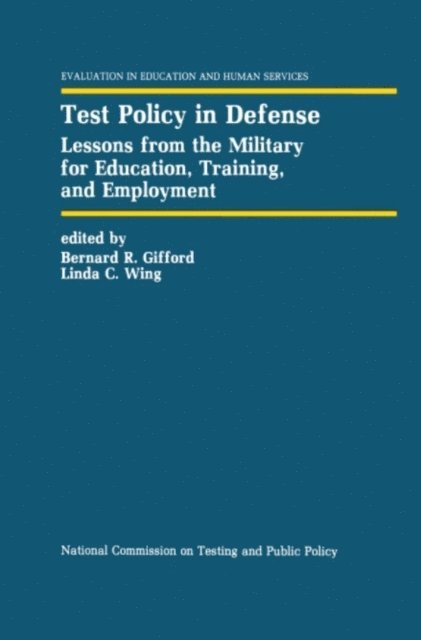
Test Policy in Defense
Lessons from the Military for Education, Training, and Employment
Inbunden, Engelska, 1991
1 034 kr
Skickas inom 10-15 vardagar
Bernard R. Gifford and Linda C. Wing Standardized testing has become a ubiquitous feature of American life. As a major source of information for reducing uncertainty in the alJocation of merit based educational, training, and employment opportunities, testing affects the life chances of individuals. Moreover, testing inOuences the way in which our societyjudgesitselfandprovides for ourcollective future. Test scores may determine a child's admission to lcindergarten and promotion to the fIrst grade. Most states award the high school diploma only ifa student has passed a minimum competency test. Major institutions of higher education typically require applicants to supplement their records of academic achievement with scores on college admissions tests. In the labor market, as a condition of employment or assignment to training programs, more and more employers are requiring workers to sit for personnel selection tests. Additionally, it has become commonplace to use test scores to calibrate our national sociopolitical condition and our capacity to compete with other countries in the global economy. In short, with increasing frequency and intensity, scores on examinations that purport to be objective and precise measures of individual knowledge, abilities, and potential are playing a critical role in the opportunity marketplace. Similarly, test scores are exercising growing influence in assessments of our social and economic institutions and in policy decisions about the relative invesunents that should be made in each. In all these instantiations, test scores are at the center of high-stakes decision making about the future of individuals and of the nation itself.
1 331 kr
Tillfälligt slut
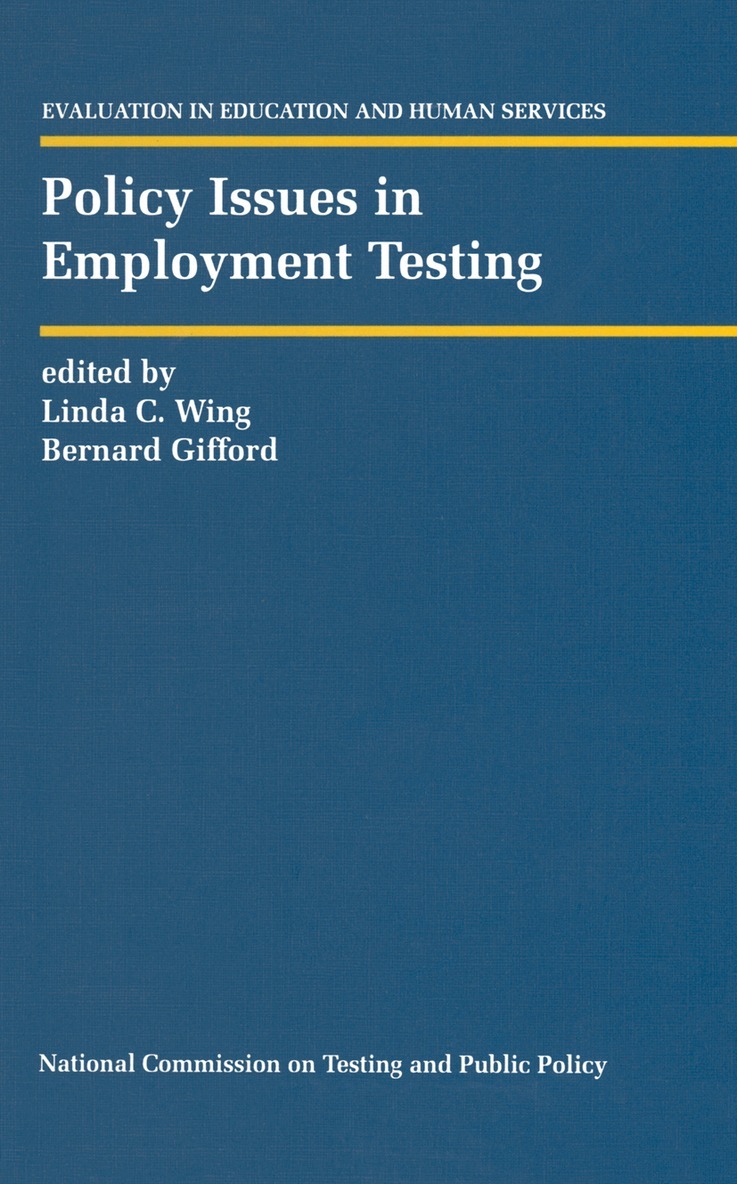
The validity and utility of employment tests have become entangled in the debate over the 1991 Civil Rights Bill. Worried about compliance with new federal guidelines for test validity, and concerned about possible lawsuits, the business world became wary of pre-employment testing in the early 1980s, but the use of employment testing increased throughout that decade. This book reflects a continuing focus on test validity and fairness, as psychometricians debate the logical, theoretical and empirical grounds for judging validity, and legal experts debate the appropriateness of various tests and testing practices. The book was prepared under the auspices of the National Commission on Testing and Public Policy.
Del 35 - Evaluation in Education and Human Services
Policy Issues in Employment Testing
Häftad, Engelska, 2012
520 kr
Skickas inom 10-15 vardagar
1) Each chapter focuses on an aspect of employment testing-a topic that could hardly 1 POLICY ISSUES IN EMPLOYMENT TESTING 2 be more in need of calm deliberation and reasoned discussion than it is today.
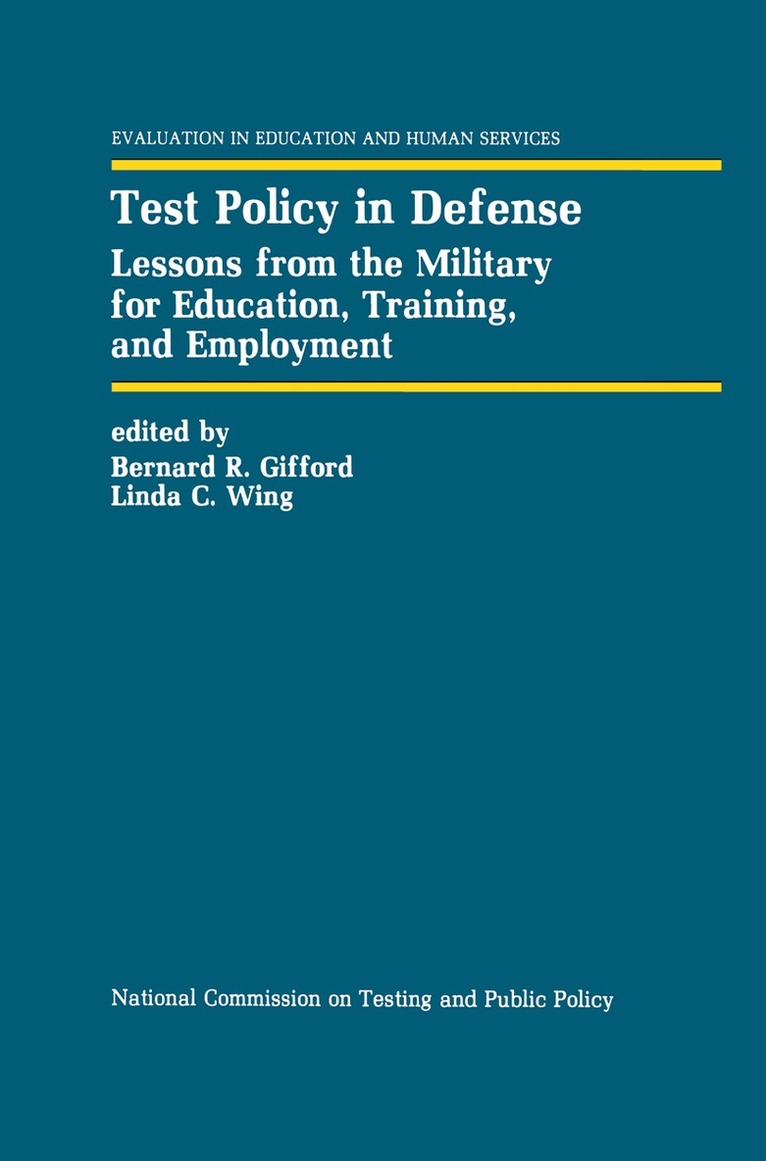
Test Policy in Defense
Lessons from the Military for Education, Training, and Employment
Häftad, Engelska, 2012
1 034 kr
Skickas inom 10-15 vardagar
Bernard R. Gifford and Linda C. Wing Standardized testing has become a ubiquitous feature of American life. As a major source of information for reducing uncertainty in the alJocation of merit based educational, training, and employment opportunities, testing affects the life chances of individuals. Moreover, testing inOuences the way in which our societyjudgesitselfandprovides for ourcollective future. Test scores may determine a child's admission to lcindergarten and promotion to the fIrst grade. Most states award the high school diploma only ifa student has passed a minimum competency test. Major institutions of higher education typically require applicants to supplement their records of academic achievement with scores on college admissions tests. In the labor market, as a condition of employment or assignment to training programs, more and more employers are requiring workers to sit for personnel selection tests. Additionally, it has become commonplace to use test scores to calibrate our national sociopolitical condition and our capacity to compete with other countries in the global economy. In short, with increasing frequency and intensity, scores on examinations that purport to be objective and precise measures of individual knowledge, abilities, and potential are playing a critical role in the opportunity marketplace. Similarly, test scores are exercising growing influence in assessments of our social and economic institutions and in policy decisions about the relative invesunents that should be made in each. In all these instantiations, test scores are at the center of high-stakes decision making about the future of individuals and of the nation itself.