Linda Chisholm – författare
Visar alla böcker från författaren Linda Chisholm. Handla med fri frakt och snabb leverans.
8 produkter
8 produkter
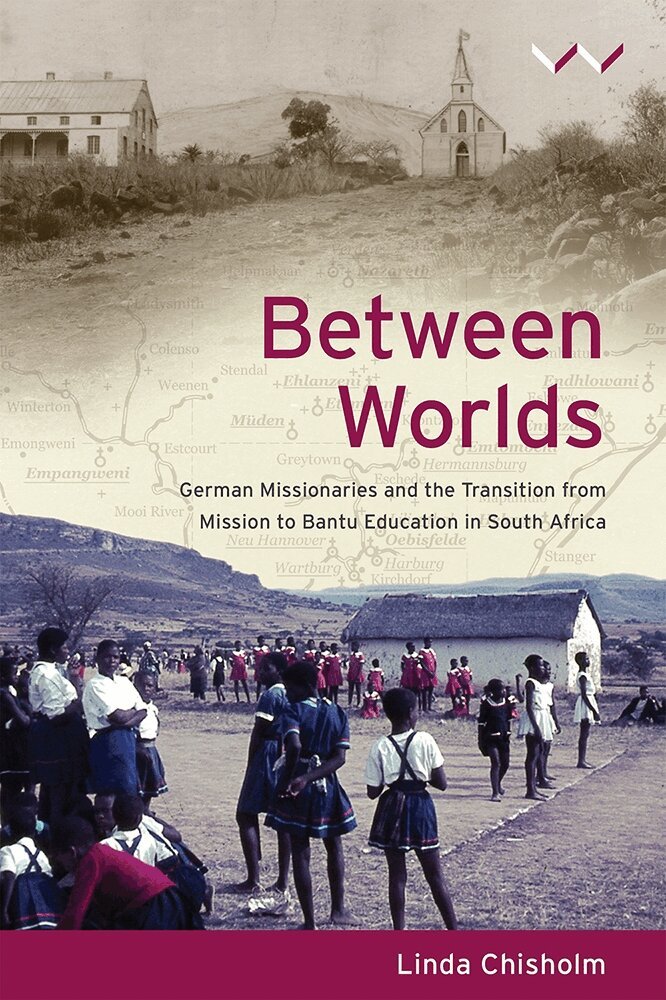
Between Worlds
German Missionaries and the Transition from Mission to Bantu Education in South Africa
Häftad, Engelska, 2017
374 kr
Skickas inom 5-8 vardagar
How the story of how missonary schools adopted the Bantu education reforms gives insight into the ongoing legacy of the apartheid in the South African educational systemThe transition from apartheid to the post-apartheid era has highlighted questions about the past and the persistence of its influence in present-day South Africa. This is particularly so in education, where the past continues to play a decisive role in relation to inequality. Between Worlds: German Missionaries and the Transition from Mission to Bantu Education in South Africa scrutinises the experience of a hitherto unexplored German mission society, probing the complexities and paradoxes of social change in education. It raises challenging questions about the nature of mission education legacies. Linda Chisholm shows that the transition from mission to Bantu Education was far from seamless. Instead, past and present interpenetrated one another, with resistance and compliance cohabiting in a complex new social order. At the same time as missionaries complied with the new Bantu Education dictates, they sought to secure a role for themselves in the face of demands of local communities for secular state-controlled education. When the latter was implemented in a perverted form from the mid-1950s, one of its tools was textbooks in local languages developed by mission societies as part of a transnational project, with African participation. Introduced under the guise of expunging European control, Bantu Education merely served to reinforce such control. The response of local communities was an attempt to domesticate – and master – the 'foreign' body of the mission so as to create access to a larger world. This book focuses on the ensuing struggle, fought on many fronts, including medium of instruction and textbook content, with concomitant sub-texts relating to gender roles and sexuality. South Africa's educational history is to this day informed by networks of people and ideas crossing geographic and racial boundaries. The colonial legacy has inevitably involved cultural mixing and hybridisation – with, paradoxically, parallel pleas for purity. Chisholm explores how these ideas found expression in colliding and coalescing worlds, one African, the other European, caught between mission and apartheid education.
Between Worlds
German missionaries and the transition from mission to Bantu Education in South Africa
E-bok
PDF, Engelska, 2017384 kr
Läs direkt efter köp
The transition from apartheid to the post-apartheid era has highlighted questions about the past and the persistence of its influence in present-day South Africa. This is particularly so in education, where the past continues to play a decisive role in relation to inequality. Between Worlds: German Missionaries and the Transition from Mission to Bantu Education in South Africa scrutinises the experience of a hitherto unexplored German mission society, probing the complexities and paradoxes of social change in education. It raises challenging questions about the nature of mission education legacies. Linda Chisholm shows that the transition from mission to Bantu Education was far from seamless. Instead, past and present interpenetrated one another, with resistance and compliance cohabiting in a complex new social order. At the same time as missionaries complied with the new Bantu Education dictates, they sought to secure a role for themselves in the face of demands of local communities for secular state-controlled education. When the latter was implemented in a perverted form from the mid-1950s, one of its tools was textbooks in local languages developed by mission societies as part of a transnational project, with African participation. Introduced under the guise of expunging European control, Bantu Education merely served to reinforce such control. The response of local communities was an attempt to domesticate – and master – the ‘foreign’ body of the mission so as to create access to a larger world. This book focuses on the ensuing struggle, fought on many fronts, including medium of instruction and textbook content, with concomitant sub-texts relating to gender roles and sexuality. South Africa’s educational history is to this day informed by networks of people and ideas crossing geographic and racial boundaries. The colonial legacy has inevitably involved cultural mixing and hybridisation – with, paradoxically, parallel pleas for purity. Chisholm explores how these ideas found expression in colliding and coalescing worlds, one African, the other European, caught between mission and apartheid education.
Between Worlds
German missionaries and the transition from mission to Bantu Education in South Africa
E-bok
Engelska, 2017384 kr
Läs direkt efter köp
The transition from apartheid to the post-apartheid era has highlighted questions about the past and the persistence of its influence in present-day South Africa. This is particularly so in education, where the past continues to play a decisive role in relation to inequality. Between Worlds: German Missionaries and the Transition from Mission to Bantu Education in South Africa scrutinises the experience of a hitherto unexplored German mission society, probing the complexities and paradoxes of social change in education. It raises challenging questions about the nature of mission education legacies. Linda Chisholm shows that the transition from mission to Bantu Education was far from seamless. Instead, past and present interpenetrated one another, with resistance and compliance cohabiting in a complex new social order. At the same time as missionaries complied with the new Bantu Education dictates, they sought to secure a role for themselves in the face of demands of local communities for secular state-controlled education. When the latter was implemented in a perverted form from the mid-1950s, one of its tools was textbooks in local languages developed by mission societies as part of a transnational project, with African participation. Introduced under the guise of expunging European control, Bantu Education merely served to reinforce such control. The response of local communities was an attempt to domesticate – and master – the ‘foreign’ body of the mission so as to create access to a larger world. This book focuses on the ensuing struggle, fought on many fronts, including medium of instruction and textbook content, with concomitant sub-texts relating to gender roles and sexuality. South Africa’s educational history is to this day informed by networks of people and ideas crossing geographic and racial boundaries. The colonial legacy has inevitably involved cultural mixing and hybridisation – with, paradoxically, parallel pleas for purity. Chisholm explores how these ideas found expression in colliding and coalescing worlds, one African, the other European, caught between mission and apartheid education.
E-bok
PDF, Engelska, 20191 085 kr
Läs direkt efter köp
South Africa''s transition to democracy has seen massive changes in the field of teacher education aimed at integrating its previously raced and gendered character. This book provides a comprehensive historical overview and relational understanding of the patterns of teacher preparation supporting South Africa''s unequal formal education system. It shows how emerging patterns, policies and pedagogies were deeply entangled with the country''s position within a broader international and colonial order as well as with dominant national political and economic social frameworks. Using rich archival and oral evidence, this book illuminates how successive policies restricted and enabled access to different institutions, while differentiated curricula prepared teachers to teach students intended to play different roles in a society marked by class, race and gender division. It explores the location and control of teacher provision for black and white teachers provided by mission societies and the state in colleges and universities. Post-apartheid governments sought to reverse entrenched racial legacies in education through closure of the colleges and incorporation of teacher preparation into universities, altered admission criteria and new curricula. These have resulted in new tensions which have arisen in relation to a world of competing pressures on universities and teachers. By shedding new light on these tensions from a historical perspective, this book will prove an invaluable resource for education leaders and researchers in the field of global and comparative education.
Inbunden, Engelska, 2019
1 037 kr
Skickas inom 5-8 vardagar
South Africa's transition to democracy has seen massive changes in the field of teacher education aimed at integrating its previously raced and gendered character. This book provides a comprehensive historical overview and relational understanding of the patterns of teacher preparation supporting South Africa's unequal formal education system. It shows how emerging patterns, policies and pedagogies were deeply entangled with the country's position within a broader international and colonial order as well as with dominant national political and economic social frameworks. Using rich archival and oral evidence, this book illuminates how successive policies restricted and enabled access to different institutions, while differentiated curricula prepared teachers to teach students intended to play different roles in a society marked by class, race and gender division. It explores the location and control of teacher provision for black and white teachers provided by mission societies and the state in colleges and universities. Post-apartheid governments sought to reverse entrenched racial legacies in education through closure of the colleges and incorporation of teacher preparation into universities, altered admission criteria and new curricula. These have resulted in new tensions which have arisen in relation to a world of competing pressures on universities and teachers. By shedding new light on these tensions from a historical perspective, this book will prove an invaluable resource for education leaders and researchers in the field of global and comparative education.
E-bok
Engelska, 20191 085 kr
Läs direkt efter köp
South Africa''s transition to democracy has seen massive changes in the field of teacher education aimed at integrating its previously raced and gendered character. This book provides a comprehensive historical overview and relational understanding of the patterns of teacher preparation supporting South Africa''s unequal formal education system. It shows how emerging patterns, policies and pedagogies were deeply entangled with the country''s position within a broader international and colonial order as well as with dominant national political and economic social frameworks. Using rich archival and oral evidence, this book illuminates how successive policies restricted and enabled access to different institutions, while differentiated curricula prepared teachers to teach students intended to play different roles in a society marked by class, race and gender division. It explores the location and control of teacher provision for black and white teachers provided by mission societies and the state in colleges and universities. Post-apartheid governments sought to reverse entrenched racial legacies in education through closure of the colleges and incorporation of teacher preparation into universities, altered admission criteria and new curricula. These have resulted in new tensions which have arisen in relation to a world of competing pressures on universities and teachers. By shedding new light on these tensions from a historical perspective, this book will prove an invaluable resource for education leaders and researchers in the field of global and comparative education.
E-bok
PDF, Engelska, 20081 545 kr
Läs direkt efter köp
Methodologies for Mapping a Southern African Girlhood in the Age of Aids is located within the new and broader area of Girlhood Studies. Girls have long been considered a rich feminist memory-site for examining the genesis of women's sense of self in the developed world. To date, however, only a few scholars have focused on Southern African girlhoods. Even fewer focus on methodologies for researching girlhood. This is despite the particular vulnerability of girls to gender-based violence and HIV and Aids, and the relative complexity of doing research with girls in diverse cultural contexts in this region. Thus, the book aims to take this agenda forward and to investigate a range of participatory methodological and theoretical approaches that can be adapted to study girls and girlhood in Southern Africa. These methodologies, which look at research with girls, about girls and for girls, include policy research, writing, fictional practice, and visual arts-based methods, to be used as analytical tools that should, can, and have been used to examine the lives of girls, particularly in the age of HIV and Aids in Southern Africa.
Häftad, Engelska, 2008
153 kr
Tillfälligt slut