Linda Flower – författare
Visar alla böcker från författaren Linda Flower. Handla med fri frakt och snabb leverans.
5 produkter
5 produkter
Inbunden, Engelska, 1990
2 182 kr
Skickas inom 5-8 vardagar
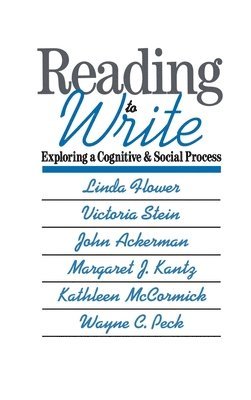
This book examines the process of reading (when one's purpose is to create a text of one's own) and writing (which includes a response to the work of others). This is a central process in most college work and at the heart of critical literacy. The study observed students in the transition from high school to college, and in the process of trying to enter the community of academic discourse. The study draws on the methods of textual analysis, teacher evaluation, and interviews to examine students' writing and revising.
E-bok
PDF, Engelska, 19901 822 kr
Läs direkt efter köp
The Social and Cognitive Studies in Writing and Literacy Series, is devoted to books that bridge research, theory, and practice, exploring social and cognitive processes in writing and expanding our knowledge of literacy as an active constructive process--as students move from high school to college. This descriptive study of reading-to-write examines a critical point in every college student''s academic performance: when he or she is faced with the task of reading a source, integrating personal ideas, and creating an individual text with a self-defined purpose. Offering an unusually comprehensive view of this process, the authors chart a group of freshmen as they study and write in their dormitories, recording their "think-aloud" strategies for reading, writing, and revising, their interpretation of the task, and their broader social, cultural, and contextual understanding of college writing. Flower, Stein, and colleagues convincingly conclude that the legacy of schooling in general makes the transition to college difficult and, more important, that the assumptions students hold and the strategies they use in undertaking this task play a significant role in their academic performance. Embracing a broad range of perspectives from rhetoric, composition, literacy research, literary and cultural theory, and cognitive psychology, this rigorous analysis treats reading-to-write as both a cognitive and social process. It will interest researchers and theoreticians in rhetoric and writing, teachers working with students in transition from high school to college, and educators involved in the links between cognition and the social process.
E-bok
Engelska, 2000316 kr
Läs direkt efter köp
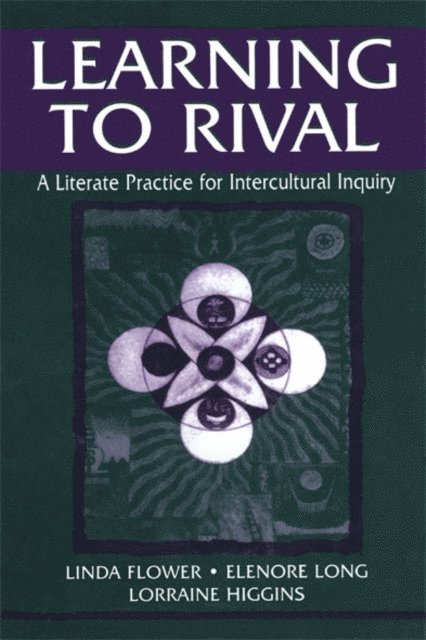
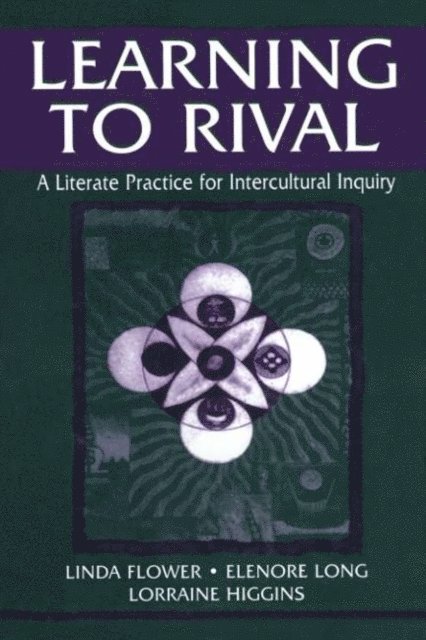
Learning to Rival tells the inside story of college and high school writers learning to "rival"--to actively seek rival hypotheses and negotiate alternative perspectives on charged questions. It shows how this interdisciplinary literate practice alters with the context of use and how, in learning to rival in school and out, students must often negotiate conflicts not apparent to instructors. This study of the rival hypothesis stance--a powerful literate practice claimed by both humanities and science--initially posed two questions: * how does the rival hypothesis stance define itself as a literate practice as we move across the boundaries of disciplines and genres, of school and community? * how do learners crossing these boundaries interpret and use the family of literate practices, especially in situations that pose problems of intercultural understanding? Over the course of this project with urban teenagers and minority college students, the rival hypothesis stance emerged as a generative and powerful tool for intercultural inquiry, posing in turn a new question: how can the practice of rivaling support the difficult and essential art of intercultural interpretation in education? The authors present the story of a literate practice that moves across communities, as well as the stories of students who are learning to rival across the curriculum. Learning to Rival offers an active, strategic approach to multiculturalism, addressing how people negotiate and use difference to solve problems. In the spirit of John Dewey''s experimental way of knowing, it presents a multifaceted approach to literacy research, combining contemporary research methods to show the complexity of rivaling as a literate practice and the way it is understood and used by a variety of writers. As a resource for scholars, teachers, and administrators in writing across the curriculum studies, writing program administration, service learning, and community based projects, as well as literacy, rhetoric, and composition, this volume reveals how learning a new literate practice can force students to encounter and negotiate conflicts. It also provides a model of an intercultural inquiry that uses difference to understand a shared problem.
E-bok
PDF, Engelska, 2000318 kr
Läs direkt efter köp
Learning to Rival tells the inside story of college and high school writers learning to "rival"--to actively seek rival hypotheses and negotiate alternative perspectives on charged questions. It shows how this interdisciplinary literate practice alters with the context of use and how, in learning to rival in school and out, students must often negotiate conflicts not apparent to instructors. This study of the rival hypothesis stance--a powerful literate practice claimed by both humanities and science--initially posed two questions: * how does the rival hypothesis stance define itself as a literate practice as we move across the boundaries of disciplines and genres, of school and community? * how do learners crossing these boundaries interpret and use the family of literate practices, especially in situations that pose problems of intercultural understanding? Over the course of this project with urban teenagers and minority college students, the rival hypothesis stance emerged as a generative and powerful tool for intercultural inquiry, posing in turn a new question: how can the practice of rivaling support the difficult and essential art of intercultural interpretation in education? The authors present the story of a literate practice that moves across communities, as well as the stories of students who are learning to rival across the curriculum. Learning to Rival offers an active, strategic approach to multiculturalism, addressing how people negotiate and use difference to solve problems. In the spirit of John Dewey''s experimental way of knowing, it presents a multifaceted approach to literacy research, combining contemporary research methods to show the complexity of rivaling as a literate practice and the way it is understood and used by a variety of writers. As a resource for scholars, teachers, and administrators in writing across the curriculum studies, writing program administration, service learning, and community based projects, as well as literacy, rhetoric, and composition, this volume reveals how learning a new literate practice can force students to encounter and negotiate conflicts. It also provides a model of an intercultural inquiry that uses difference to understand a shared problem.
Häftad, Engelska, 2025
296 kr
Skickas inom 5-8 vardagar