Linda Greenhouse – författare
Visar alla böcker från författaren Linda Greenhouse. Handla med fri frakt och snabb leverans.
9 produkter
9 produkter
Häftad, Engelska, 2020
110 kr
Skickas inom 5-8 vardagar
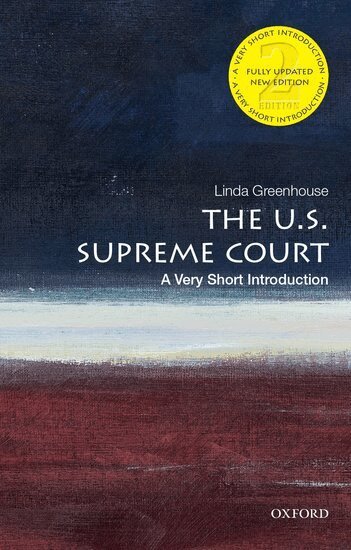
For 30 years, Pulitzer Prize-winning journalist Linda Greenhouse chronicled the activities of the U.S. Supreme Court and its justices as a correspondent for the New York Times. In this Very Short Introduction, she draws on her deep knowledge of the court's history and of its written and unwritten rules to show readers how the Supreme Court really works. Greenhouse offers a fascinating institutional biography of a place and its people--men and women who exercise great power but whose names and faces are unrecognized by many Americans and whose work often appears cloaked in mystery. How do cases get to the Supreme Court? How do the justices go about deciding them? What special role does the chief justice play? What do the law clerks do? How does the court relate to the other branches of government? Greenhouse answers these questions by depicting the justices as they confront deep constitutional issues or wrestle with the meaning of confusing federal statutes. Throughout, the author examines many individual Supreme Court cases to illustrate points under discussion, ranging from Marbury v. Madison, the seminal case which established judicial review, to the recent District of Columbia v. Heller (2008), which struck down the District of Columbia's gun-control statute and which was, surprisingly, the first time in its history that the Court issued an authoritative interpretation of the Second Amendment. To add perspective, Greenhouse also compares the Court to foreign courts, revealing interesting differences. For instance, no other country in the world has chosen to bestow life tenure on its judges. The second edition of Greenhouse's Very Short Introduction tracks the changes in the Court's makeup over the last eight years, considers the landmark decisions of the Obama and Trump eras, and reexamines the precarious fates of such precedents as Roe v. Wade. A superb overview packed with telling details, this volume offers a matchless introduction to one of the pillars of American government.
E-bok
PDF, Engelska, 202089 kr
Läs direkt efter köp
For 30 years, Pulitzer Prize-winning journalist Linda Greenhouse chronicled the activities of the U.S. Supreme Court and its justices as a correspondent for the New York Times. In this Very Short Introduction, she draws on her deep knowledge of the court''s history and of its written and unwritten rules to show readers how the Supreme Court really works. Greenhouse offers a fascinating institutional biography of a place and its people--men and women who exercise great power but whose names and faces are unrecognized by many Americans and whose work often appears cloaked in mystery. How do cases get to the Supreme Court? How do the justices go about deciding them? What special role does the chief justice play? What do the law clerks do? How does the court relate to the other branches of government? Greenhouse answers these questions by depicting the justices as they confront deep constitutional issues or wrestle with the meaning of confusing federal statutes. Throughout, the author examines many individual Supreme Court cases to illustrate points under discussion, ranging from Marbury v. Madison, the seminal case which established judicial review, to the recent District of Columbia v. Heller (2008), which struck down the District of Columbia''s gun-control statute and which was, surprisingly, the first time in its history that the Court issued an authoritative interpretation of the Second Amendment. To add perspective, Greenhouse also compares the Court to foreign courts, revealing interesting differences. For instance, no other country in the world has chosen to bestow life tenure on its judges. The second edition of Greenhouse''s Very Short Introduction tracks the changes in the Court''s makeup over the last eight years, considers the landmark decisions of the Obama and Trump eras, and reexamines the precarious fates of such precedents as Roe v. Wade. A superb overview packed with telling details, this volume offers a matchless introduction to one of the pillars of American government.
E-bok
Engelska, 202090 kr
Läs direkt efter köp
For 30 years, Pulitzer Prize-winning journalist Linda Greenhouse chronicled the activities of the U.S. Supreme Court and its justices as a correspondent for the New York Times. In this Very Short Introduction, she draws on her deep knowledge of the court''s history and of its written and unwritten rules to show readers how the Supreme Court really works. Greenhouse offers a fascinating institutional biography of a place and its people--men and women who exercise great power but whose names and faces are unrecognized by many Americans and whose work often appears cloaked in mystery. How do cases get to the Supreme Court? How do the justices go about deciding them? What special role does the chief justice play? What do the law clerks do? How does the court relate to the other branches of government? Greenhouse answers these questions by depicting the justices as they confront deep constitutional issues or wrestle with the meaning of confusing federal statutes. Throughout, the author examines many individual Supreme Court cases to illustrate points under discussion, ranging from Marbury v. Madison, the seminal case which established judicial review, to the recent District of Columbia v. Heller (2008), which struck down the District of Columbia''s gun-control statute and which was, surprisingly, the first time in its history that the Court issued an authoritative interpretation of the Second Amendment. To add perspective, Greenhouse also compares the Court to foreign courts, revealing interesting differences. For instance, no other country in the world has chosen to bestow life tenure on its judges. The second edition of Greenhouse''s Very Short Introduction tracks the changes in the Court''s makeup over the last eight years, considers the landmark decisions of the Obama and Trump eras, and reexamines the precarious fates of such precedents as Roe v. Wade. A superb overview packed with telling details, this volume offers a matchless introduction to one of the pillars of American government.
Häftad, Engelska, 2023
110 kr
Skickas inom 5-8 vardagar
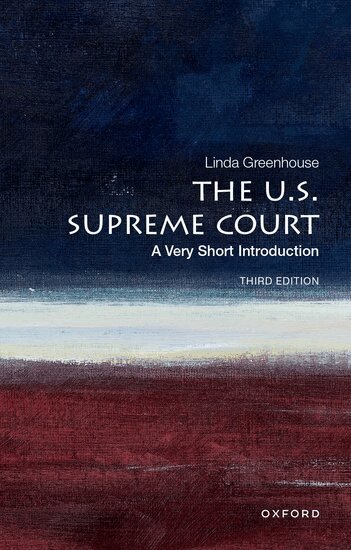
Very Short Introductions: Brilliant, Sharp, InspiringFor 30 years, Pulitzer Prize-winning journalist Linda Greenhouse chronicled the activities of the U.S. Supreme Court and its justices as a correspondent for the New York Times. In this Very Short Introduction, she draws on her deep knowledge of the court's history and of its written and unwritten rules to show readers how the Supreme Court really works.Greenhouse offers a fascinating institutional biography of a place and its people--men and women who exercise great power but whose names and faces are unrecognized by many Americans and whose work often appears cloaked in mystery. How do cases get to the Supreme Court? How do the justices go about deciding them? What special role does the chief justice play? What do the law clerks do? How does the court relate to the other branches of government? Greenhouse answers these questions by depicting the justices as they confront deep constitutional issues or wrestle with the meaning of confusing federal statutes. Throughout, the author examines many individual Supreme Court cases to illustrate points under discussion, including Marbury v. Madison, the seminal case which established judicial review; District of Columbia v. Heller (2008), which struck down the District of Columbia's gun-control statute and which was, surprisingly, the first time in its history that the Court issued an authoritative interpretation of the Second Amendment; and Dobbs v. Jackson Women's Health Organization (2022), which repudiated the right to abortion the Court had recognized nearly fifty years earlier in Roe v. Wade (1973). To add perspective, Greenhouse also compares the Court to foreign courts, revealing interesting differences. For instance, no other country in the world has chosen to bestow life tenure on its judges.The third edition of Greenhouse's Very Short Introduction tracks the changes in the Court's makeup over the past decade, including the landmark decisions of the Obama and Trump eras and the emergence of a conservative supermajority.A superb overview packed with telling details, this volume offers a matchless introduction to one of the pillars of American government.
E-bok
Engelska, 2021214 kr
Läs direkt efter köp
Del 19 - William E. Massey Sr. Lectures in American Studies
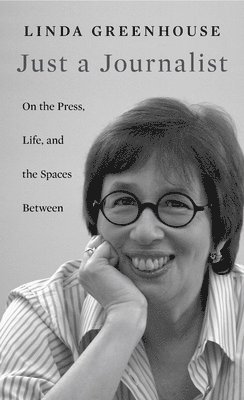
Just a Journalist
On the Press, Life, and the Spaces Between
Inbunden, Engelska, 2017
202 kr
Skickas inom 5-8 vardagar
In this timely book, a Pulitzer Prize–winning reporter trains an autobiographical lens on a moment of remarkable transition in American journalism. Just a few years ago, the mainstream press was wrestling with whether labeling waterboarding as torture violated important norms of neutrality and objectivity. Now, major American newspapers regularly call the president of the United States a liar. Clearly, something has changed as the old rules of “balance” and “two sides to every story” have lost their grip. Is the change for the better? Will it last?In Just a Journalist, Linda Greenhouse—who for decades covered the U.S. Supreme Court for The New York Times—tackles these questions from the perspective of her own experience. A decade ago, she faced criticism from her own newspaper and much of journalism’s leadership for a speech to a college alumnae group in which she criticized the Bush administration for, among other things, seeking to create a legal black hole at Guantánamo Bay—two years after the Supreme Court itself had ruled that the detainees could not be hidden away from the reach of federal judges who might hear their appeals.One famous newspaper editor expressed his belief that it was unethical for a journalist to vote, because the act of choosing one candidate over another could compromise objectivity. Linda Greenhouse disagrees. Calling herself “an accidental activist,” she raises urgent questions about the role journalists can and should play as citizens, even as participants, in the world around them.
Häftad, Engelska, 2006
189 kr
Skickas inom 5-8 vardagar
Häftad, Engelska, 2017
370 kr
Skickas inom 3-6 vardagar
E-bok
Engelska, 2016170 kr
Läs direkt efter köp
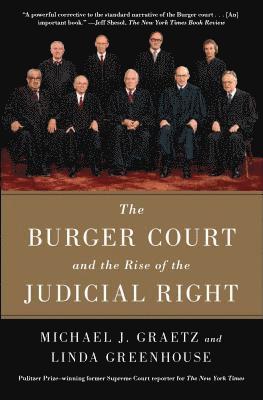
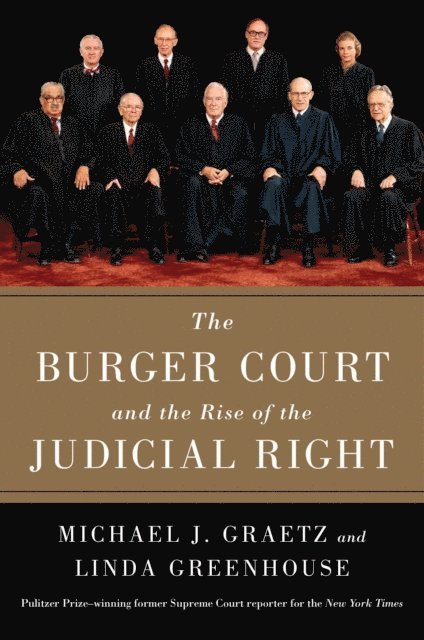
A revelatory look at the Warren Burger Supreme Court finds that it was not moderate or transitional, but conservative—and it shaped today’s constitutional landscape. It is an “important book…a powerful corrective to the standard narrative of the Burger Court” (The New York Times Book Review).When Richard Nixon campaigned for the presidency in 1968 he promised to change the Supreme Court. With four appointments to the court, including Warren E. Burger as the chief justice, he did just that. In 1969, the Burger Court succeeded the famously liberal Warren Court, which had significantly expanded civil liberties and was despised by conservatives across the country. The Burger Court is often described as a “transitional” court between the Warren Court and the Rehnquist and Roberts Courts, a court where little of importance happened. But as this “landmark new book” (The Christian Science Monitor) shows, the Burger Court veered well to the right in such areas as criminal law, race, and corporate power. Authors Graetz and Greenhouse excavate the roots of the most significant Burger Court decisions and in “elegant, illuminating arguments” (The Washington Post) show how their legacy affects us today. “Timely and engaging” (Richmond Times-Dispatch), The Burger Court and the Rise of the Judicial Right draws on the personal papers of the justices as well as other archives to provide “the best kind of legal history: cogent, relevant, and timely” (Publishers Weekly).