Linda Hess – författare
Visar alla böcker från författaren Linda Hess. Handla med fri frakt och snabb leverans.
11 produkter
11 produkter
E-bok
Engelska, 2015746 kr
Läs direkt efter köp
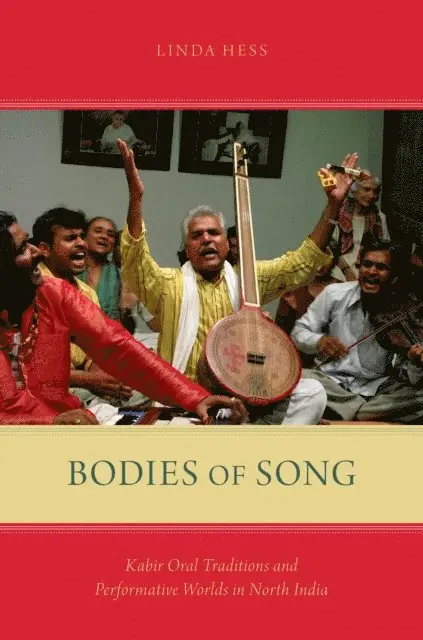
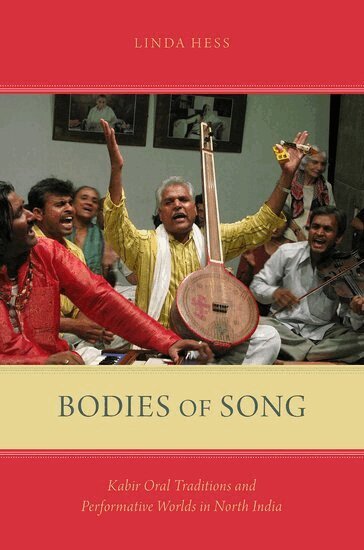
Kabir was a great iconoclastic-mystic poet of fifteenth-century North India; his poems were composed orally, written down by others in manuscripts and books, and transmitted through song. Scholars and translators usually attend to written collections, but these present only a partial picture of the Kabir who has remained vibrantly alive through the centuries mostly in oral forms. Entering the worlds of singers and listeners in rural Madhya Pradesh, Bodies of Song combines ethnographic and textual study in exploring how oral transmission and performance shape the content and interpretation of vernacular poetry in North India. The book investigates textual scholars'' study of oral-performative traditions in a milieu where texts move simultaneously via oral, written, audio/video-recorded, and electronic pathways.As texts and performances are always socially embedded, Linda Hess brings readers into the lives of those who sing, hear, celebrate, revere, and dispute about Kabir. Bodies of Song is rich in stories of individuals and families, villages and towns, religious and secular organizations, castes and communities. Dialogue between religious/spiritual Kabir and social/political Kabir is a continuous theme throughout the book: ambiguously located between Hindu and Muslim cultures, Kabir rejected religious identities, pretentions, and hypocrisies. But even while satirizing the religious, he composed stunning poetry of religious experience and psychological insight. A weaver by trade, Kabir also criticized caste and other inequalities and today serves as an icon for Dalits and all who strive to remove caste prejudice and oppression.
Häftad, Engelska, 2002
552 kr
Skickas inom 5-8 vardagar
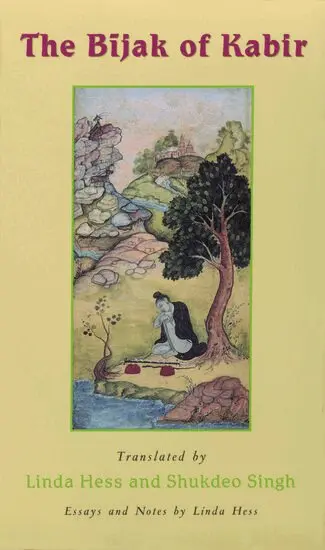
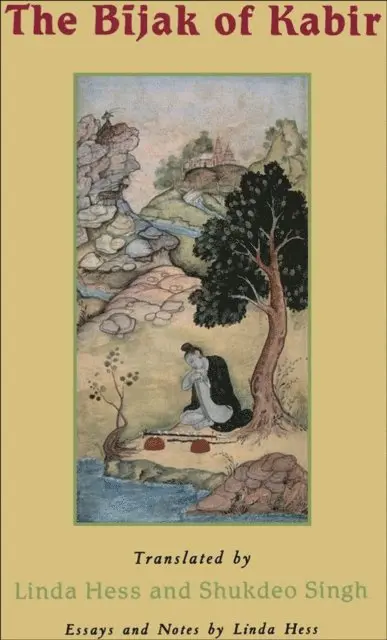
Kabir was an extraordinary oral poet whose works have been sung and recited by millions throughout North India for half a millenium. He may have been illiterate--'I do not touch ink or paper, this hand has never grasped a pen'--and he preached an abrasive, sometimes shocking, always uncompromising message that exhorted his audience to shed their delusions, pretensions, and empty orthodoxies in favour of an intense, direct, and personal confrontation with the truth. Thousands of poems are popularly attributed to Kabir, but only a few written collections have survived over the centuries. The Bijak is one of the most important, and is the sacred book of those who follow Kabir.
E-bok
PDF, Engelska, 2002615 kr
Läs direkt efter köp
Kabir was an extraordinary oral poet whose works have been sung and recited by millions throughout North India for half a millennium. He may have been illiterate and he preached an abrasive, sometimes shocking, always uncompromising message that exhorted his audience to shed their delusions, pretentions, and empty orthodoxies in favor of an intense, direct, and personal confrontation with the truth. Thousands of poems are popularly attributed to Kabir, but only a few written collections have survived over the centuries. The Bijak is one of the most important, and is the sacred book of those who follow Kabir.
Inbunden, Engelska, 2015
1 961 kr
Skickas inom 5-8 vardagar
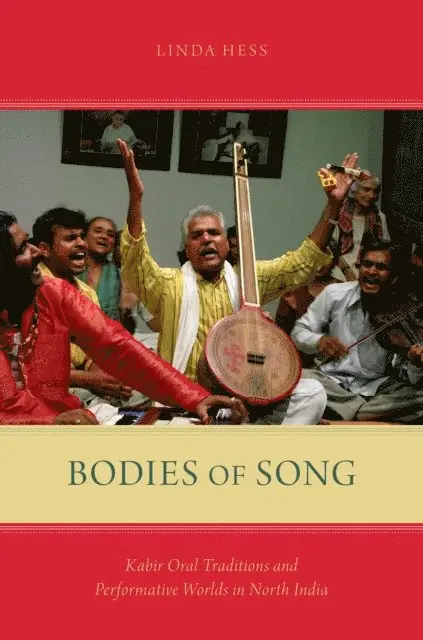
Kabir was a great iconoclastic-mystic poet of fifteenth-century North India; his poems were composed orally, written down by others in manuscripts and books, and transmitted through song. Scholars and translators usually attend to written collections, but these present only a partial picture of the Kabir who has remained vibrantly alive through the centuries mostly in oral forms. Entering the worlds of singers and listeners in rural Madhya Pradesh, Bodies of Song combines ethnographic and textual study in exploring how oral transmission and performance shape the content and interpretation of vernacular poetry in North India. The book investigates textual scholars' study of oral-performative traditions in a milieu where texts move simultaneously via oral, written, audio/video-recorded, and electronic pathways.As texts and performances are always socially embedded, Linda Hess brings readers into the lives of those who sing, hear, celebrate, revere, and dispute about Kabir. Bodies of Song is rich in stories of individuals and families, villages and towns, religious and secular organizations, castes and communities. Dialogue between religious/spiritual Kabir and social/political Kabir is a continuous theme throughout the book: ambiguously located between Hindu and Muslim cultures, Kabir rejected religious identities, pretentions, and hypocrisies. But even while satirizing the religious, he composed stunning poetry of religious experience and psychological insight. A weaver by trade, Kabir also criticized caste and other inequalities and today serves as an icon for Dalits and all who strive to remove caste prejudice and oppression.
Häftad, Engelska, 2015
672 kr
Skickas inom 5-8 vardagar
Kabir was a great iconoclastic-mystic poet of fifteenth-century North India; his poems were composed orally, written down by others in manuscripts and books, and transmitted through song. Scholars and translators usually attend to written collections, but these present only a partial picture of the Kabir who has remained vibrantly alive through the centuries mostly in oral forms. Entering the worlds of singers and listeners in rural Madhya Pradesh, Bodies of Song combines ethnographic and textual study in exploring how oral transmission and performance shape the content and interpretation of vernacular poetry in North India. The book investigates textual scholars' study of oral-performative traditions in a milieu where texts move simultaneously via oral, written, audio/video-recorded, and electronic pathways.As texts and performances are always socially embedded, Linda Hess brings readers into the lives of those who sing, hear, celebrate, revere, and dispute about Kabir. Bodies of Song is rich in stories of individuals and families, villages and towns, religious and secular organizations, castes and communities. Dialogue between religious/spiritual Kabir and social/political Kabir is a continuous theme throughout the book: ambiguously located between Hindu and Muslim cultures, Kabir rejected religious identities, pretentions, and hypocrisies. But even while satirizing the religious, he composed stunning poetry of religious experience and psychological insight. A weaver by trade, Kabir also criticized caste and other inequalities and today serves as an icon for Dalits and all who strive to remove caste prejudice and oppression.
E-bok
PDF, Engelska, 2015720 kr
Läs direkt efter köp
Kabir was a great iconoclastic-mystic poet of fifteenth-century North India; his poems were composed orally, written down by others in manuscripts and books, and transmitted through song. Scholars and translators usually attend to written collections, but these present only a partial picture of the Kabir who has remained vibrantly alive through the centuries mostly in oral forms. Entering the worlds of singers and listeners in rural Madhya Pradesh, Bodies of Song combines ethnographic and textual study in exploring how oral transmission and performance shape the content and interpretation of vernacular poetry in North India. The book investigates textual scholars'' study of oral-performative traditions in a milieu where texts move simultaneously via oral, written, audio/video-recorded, and electronic pathways.As texts and performances are always socially embedded, Linda Hess brings readers into the lives of those who sing, hear, celebrate, revere, and dispute about Kabir. Bodies of Song is rich in stories of individuals and families, villages and towns, religious and secular organizations, castes and communities. Dialogue between religious/spiritual Kabir and social/political Kabir is a continuous theme throughout the book: ambiguously located between Hindu and Muslim cultures, Kabir rejected religious identities, pretentions, and hypocrisies. But even while satirizing the religious, he composed stunning poetry of religious experience and psychological insight. A weaver by trade, Kabir also criticized caste and other inequalities and today serves as an icon for Dalits and all who strive to remove caste prejudice and oppression.
E-bok
Engelska, 2002615 kr
Läs direkt efter köp
Kabir was an extraordinary oral poet whose works have been sung and recited by millions throughout North India for half a millennium. He may have been illiterate and he preached an abrasive, sometimes shocking, always uncompromising message that exhorted his audience to shed their delusions, pretentions, and empty orthodoxies in favor of an intense, direct, and personal confrontation with the truth. Thousands of poems are popularly attributed to Kabir, but only a few written collections have survived over the centuries. The Bijak is one of the most important, and is the sacred book of those who follow Kabir.
Häftad, Engelska, 2021
418 kr
Skickas inom 11-20 vardagar
Now in paperback, the journey of a great Hindustani classical vocalist's search for the voice of emptiness.Here, two men, five centuries apart, make contact with each other through poetry, music, and performance. Kumar Gandharva, the great twentieth-century Hindustani classical vocalist, sings Kabir, the great fifteenth-century poet. Kabir composed poetry that evoked a space called nirgun or shunya—something without qualities or boundaries, empty—which challenged listeners to know it and to know themselves. Kumar Gandharva, drawn to Kabir and other poets of the nirgun experience, seeks the voice that can actually sing emptiness. Singing Emptiness includes a substantial introductory essay, bilingual texts of 30 songs, and contributions by two renowned Indian writers, U. R. Ananthamurthy and Ashok Vajpeyi.
Häftad, Engelska, 2027
340 kr
Kommande
Del 26 - Publikationen der Bayerischen Amerika-Akademie
Environmental Citizenship
Inbunden, Engelska, 2026
588 kr
Skickas inom 3-6 vardagar
Inbunden, Engelska, 2009
457 kr
Tillfälligt slut
Here, two men, 5 centuries apart, make contact with each other through poetry, music, and performance. Kumar Gandharva is the great 20th Century Hindustani classical vocalist and Kabir is the great 15th Century poet. Kabir composed poetry that evoked a space called nirgun or shunya - something without qualities or boundaries, empty - which challenged listeners to know it and to know themselves. Kumar Gandharva, drawn to Kabir and other poets of the nirgun experience, seeks the voice that can actually sing emptiness. "Singing Emptiness" includes an explanatory introduction, bilingual texts of 30 songs, and a CD with selected songs by Kumar Gandharva.