Linda S. Kauffman – författare
Visar alla böcker från författaren Linda S. Kauffman. Handla med fri frakt och snabb leverans.
3 produkter
3 produkter
Häftad, Engelska, 1992
697 kr
Skickas inom 3-6 vardagar
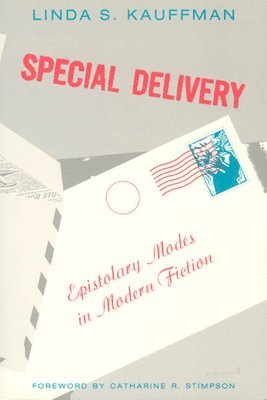
Though letter writing is almost a lost art, twentieth-century writers have mimed the epistolary mode as a means of reevaluating the theme of love. In Special Delivery, Linda S. Kauffman places the narrative treatment of love in historical context, showing how politics, economics, and commodity culture have shaped the meaning of desire. Kauffman first considers male writers whose works, testing the boundaries of genre and gender, imitate love letters: Viktor Shklovsky's Zoo, Vladimir Nabokov's Lolita, Roland Barthes's A Lover's Discourse, and Jacques Derrida's The Post Card. She then turns to three novels by women who are more preoccupied with politics than passion: Doris Lessing's The Golden Notebook, Alice Walker's The Color Purple, and Margaret Atwood's The Handmaid's Tale. By juxtaposing these "women's productions" with the men's "production of Woman," Special Delivery dismantles the polarities between male and female, theory and fiction, high and low culture, male critical theory, and feminist literary criticism. Kauffman demonstrates how all seven texts mercilessly expose the ideology of individualism and romantic love; each presents alternate paradigms of desire, wrested from Oedipus, grounded in history and politics, giving epistolarity a distinctively postmodern stamp.
Häftad, Engelska, 1998
305 kr
Skickas inom 5-8 vardagar
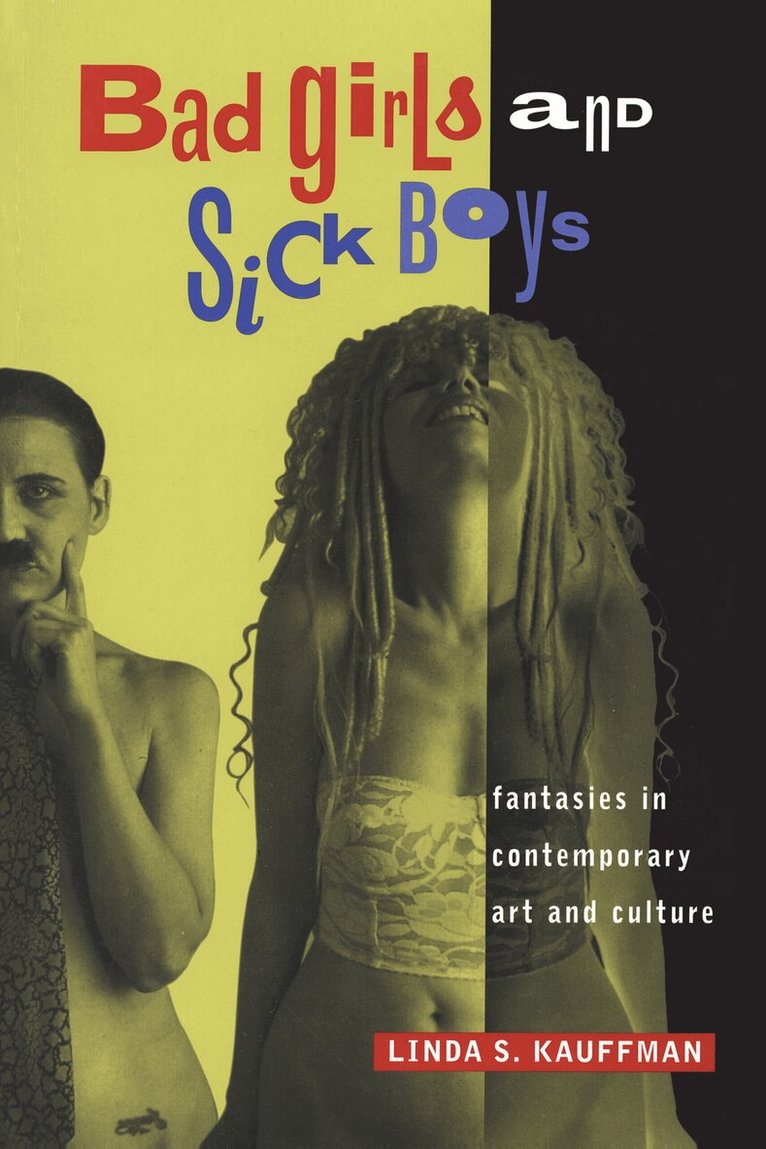
Linda S. Kauffman turns the pornography debate on its head with this audacious analysis of recent taboo-shattering fiction, film, and performance art. Investigating the role of fantasy in art, politics, and popular culture, she shows how technological advances in medicine and science (magnetic resonance imaging, computers, and telecommunications) have profoundly altered our concepts of the human body. Cyberspace is producing new forms of identity and subjectivity. The novelists, filmmakers, and performers in Bad Girls and Sick Boys are the interpreters of these brave new worlds, cartographers who are busy mapping the fin-de-millennium environment that already envelops us. Bad Girls and Sick Boys offers a vital and entertaining tour of the current cultural landscape. Kauffman boldly connects the dots between the radical artists who shatter taboos and challenge legal and aesthetic conventions. She links writers like John Hawkes and Robert Coover to Kathy Acker and William Vollmann; filmmakers like Ngozi Onwurah and Isaac Julien to Brian De Palma and Gus Van Sant; and performers like Carolee Schneemann and Annie Sprinkle to the visual arts. Kauffman's lively interviews with J. G.Ballard, David Cronenberg, Bob Flanagan, and Orlan add an extraordinary dimension to her timely and convincing argument.
Inbunden, Engelska, 1992
1 125 kr
Tillfälligt slut
Though letter writing is almost a lost art, twentieth-century writers have mimed the epistolary mode as a means of reevaluating the theme of love. In Special Delivery, Linda S. Kauffman places the narrative treatment of love in historical context, showing how politics, economics, and commodity culture have shaped the meaning of desire. Kauffman first considers male writers whose works, testing the boundaries of genre and gender, imitate love letters: Viktor Shklovsky's Zoo, Vladimir Nabokov's Lolita, Roland Barthes's A Lover's Discourse, and Jacques Derrida's The Post Card. She then turns to three novels by women who are more preoccupied with politics than passion: Doris Lessing's The Golden Notebook, Alice Walker's The Color Purple, and Margaret Atwood's The Handmaid's Tale. By juxtaposing these "women's productions" with the men's "production of Woman," Special Delivery dismantles the polarities between male and female, theory and fiction, high and low culture, male critical theory, and feminist literary criticism. Kauffman demonstrates how all seven texts mercilessly expose the ideology of individualism and romantic love; each presents alternate paradigms of desire, wrested from Oedipus, grounded in history and politics, giving epistolarity a distinctively postmodern stamp.