Linda Stone Fish – författare
Visar alla böcker från författaren Linda Stone Fish. Handla med fri frakt och snabb leverans.
7 produkter
Treating Complex Trauma
A Relational Blueprint for Collaboration and Change
Av Mary Jo Barrett, Linda Stone Fish
Inbunden, 2014
1957 kr
Lägg i varukorg
In Treating Complex Trauma, renowned clinicians Mary Jo Barrett and Linda Stone Fish present the Collaborative Change Model (CCM), a clinically evaluated model that facilitates client and practitioner collaboration and provides invaluable tools for clients struggling with the impact and effects of …
Treating Complex Trauma
A Relational Blueprint for Collaboration and Change
Av Mary Jo Barrett, Linda Stone Fish
Häftad, 2014
532 kr
Lägg i varukorg
In Treating Complex Trauma, renowned clinicians Mary Jo Barrett and Linda Stone Fish present the Collaborative Change Model (CCM), a clinically evaluated model that facilitates client and practitioner collaboration and provides invaluable tools for clients struggling with the impact and effects of …
Treating Complex Trauma
A Relational Blueprint for Collaboration and Change
Av Linda Stone Fish, Mary Jo Barrett
E-bok, 2014
624 kr
Lägg i varukorg
In Treating Complex Trauma , renowned clinicians Mary Jo Barrett and Linda Stone Fish present the Collaborative Change Model (CCM), a clinically evaluated model that facilitates client and practitioner collaboration and provides invaluable tools for clients struggling with the impact and effects of …
Treating Complex Trauma
A Relational Blueprint for Collaboration and Change
Av Linda Stone Fish, Mary Jo Barrett
E-bok, 2014
624 kr
Lägg i varukorg
In Treating Complex Trauma , renowned clinicians Mary Jo Barrett and Linda Stone Fish present the Collaborative Change Model (CCM), a clinically evaluated model that facilitates client and practitioner collaboration and provides invaluable tools for clients struggling with the impact and effects of …
Komplexe Traumafolgestörungen erfolgreich behandeln
Av Mary Jo Barrett, Linda Stone Fish
E-bok, 2016
381 kr
Lägg i varukorg
Traumatisierte Menschen gezielt unterstützenIn diesem Buch stellen die Autorinnen das Collaborative Change Model (CCM) vor, eine wissenschaftlich fundierte und in der Praxis bewährte Methode, um das Zusammenwirken von komplex traumatisierten Menschen und ihren professionellen Betreuern zu …
Komplexe Traumafolgestörungen erfolgreich behandeln
Av Mary Jo Barrett, Linda Stone Fish
E-bok, 2016
381 kr
Lägg i varukorg
Traumatisierte Menschen gezielt unterstützenIn diesem Buch stellen die Autorinnen das Collaborative Change Model (CCM) vor, eine wissenschaftlich fundierte und in der Praxis bewährte Methode, um das Zusammenwirken von komplex traumatisierten Menschen und ihren professionellen Betreuern zu …
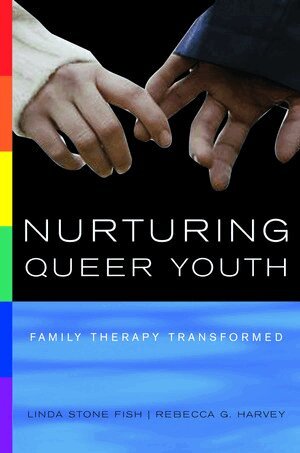
Nurturing Queer Youth
Family Therapy Transformed
Av Linda Stone Fish, Rebecca G. Harvey
Inbunden, 2005
267 kr
Tillfälligt slut
This burgeoning population of sexual minority youth, along with their families, is looking for help from therapists in order to manage the stresses of late childhood and adolescence.Nurturing Queer Youth provides therapists and other mental health professionals with the insight and guidance to …