Linda Worrall - Böcker
Visar alla böcker från författaren Linda Worrall. Handla med fri frakt och snabb leverans.
4 produkter
4 produkter
836 kr
Tillfälligt slut
1 427 kr
Skickas inom 7-10 vardagar
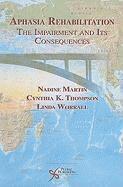
As a consequence of the disability movement, the thinking generated by the World Health Organization's classification of disability and functioning, and an upturn in concern for the long-term consequences of aphasia, it has become apparent that two distinctive pathways for the treatment of aphasia have emerged over the past decade. The first (and most traditional) involves assessment and management directed toward lessening the effects of the impairment of aphasia, while the second pathway focuses less on specific language than on the psychosocial consequences of aphasia. This unique text specifically contrasts impairment- and consequences-focused treatment with the aim of providing clinicians with a level playing field that permits them to evaluate for themselves the relative contributions that each approach provides, to evaluate their relative strengths and weaknesses, and finally to seek common ground. An opening chapter sets the scene, while the heart of the book, based on real cases, concerns five meticulously described, yet hypothetical individuals with aphasia.In each of the cases, detailed descriptions and assessment results are provided and clinical management plans, representing each approach, are presented by internationally recognized experts in aphasia rehabilitation.
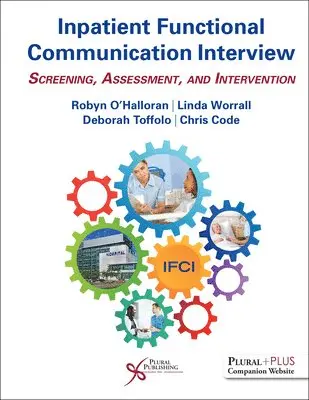
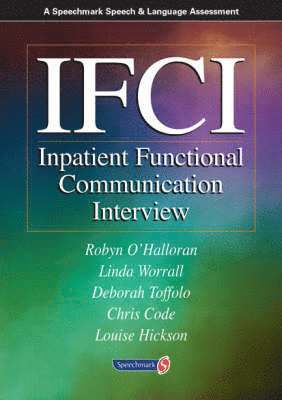
Inpatient Functional Communication Interview
Screening, Assessment, and Intervention
Häftad, Engelska, 2019
1 595 kr
Skickas inom 5-8 vardagar
The Inpatient Functional Communication Interview: Screening, Assessment, and Intervention (IFCI: SAI) is a set of four resources for speech-language pathologists (SLPs) and other healthcare professionals working in acute and rehabilitation hospitals. They can be used separately or together to enhance patient-provider communication in hospitals. The IFCI: SAI has been developed so healthcare professionals can identify and support patients who have difficulty communicating, with a focus on patients with communication disability.The first resource is the Screening Questionnaire. The Screening Questionnaire is designed to identify patients who have difficulty communicating about their healthcare and will need support to communicate with healthcare providers in hospital.The second resource is the Inpatient Functional Communication Interview (IFCI). The IFCI is a semi-structured interview that the SLP conducts at the patient's bedside. During the interview, the SLP investigates how well the patient can communicate in everyday healthcare communication activities. If the SLP and patient have difficulty communicating, the clinician investigates if any communication supports or strategies enable successful communication.The third resource is a set of impairment rating scales. These assist the SLP to rate their initial clinical impressions of the patient's speech intelligibility, spoken language, and cognitive-communicative function. Each rating scale provides descriptions of speech, language, and cognitive-communicative function on a five-point scale ranging from no impairment to complete impairment.The final resource is a set of Environmental Questionnaires (EQs). The EQs assist SLPs and other healthcare professionals to screen the communicative environment for factors influencing patient-provider communication in their setting. Once the factors that influence patient-provider communication have been identified, SLPs and other healthcare professionals may be better informed and more able to systematically address these factors to develop communicatively accessible hospital services.Speech-language pathologists play a vital role in supporting hospital patients with communication disorders and their healthcare providers to communicate in optimal ways. This requires a broad view of the role of SLPs in hospitals: one that incorporates individual patient-provider interactions and the broader communicative environment of the hospital as well. The Inpatient Functional Communication Interview: Screening, Assessment, and Intervention provides SLPs and other healthcare professionals with the resources to explore and develop this emerging, new role. Additionally, a PluralPlus companion website includes video examples that pair with case studies from the book to demonstrate how to use the resources in practice.
512 kr
Skickas inom 10-15 vardagar
Improving quality of life could be considered the ultimate goal of aphasia rehabilitation. Understanding clients' perspectives of their own quality of life is also crucial for targeting appropriate and effective interventions. Measuring quality of life is also an important outcome measure, crucial for ensuring adequate funding is available for aphasia services. Hence, quality of life has become a significant topic in aphasiology.This special issue of Aphasiology is dedicated to the topic of quality of life in aphasia. The issue includes a number of studies from around the world describing and measuring quality of life in this population. It also contains studies that have developed and evaluated interventions that have addressed quality of life issues in people with aphasia. The issue provides a comprehensive view of quality of life research currently being conducted in aphasiology around the world.