Lindsay Caplan - Böcker
Visar alla böcker från författaren Lindsay Caplan. Handla med fri frakt och snabb leverans.
5 produkter
5 produkter
1 453 kr
Skickas inom 7-10 vardagar
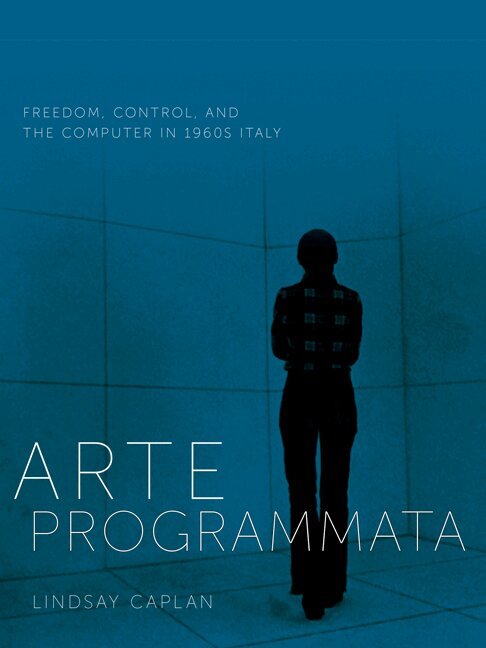
Tracing the evolution of the Italian avant-garde’s pioneering experiments with art and technology and their subversion of freedom and controlIn postwar Italy, a group of visionary artists used emergent computer technologies as both tools of artistic production and a means to reconceptualize the dynamic interrelation between individual freedom and collectivity. Working contrary to assumptions that the rigid, structural nature of programming limits subjectivity, this book traces the multifaceted practices of these groundbreaking artists and their conviction that technology could provide the conditions for a liberated social life.Situating their developments within the context of the Cold War and the ensuing crisis among the Italian left, Arte Programmata describes how Italy’s distinctive political climate fueled the group’s engagement with computers, cybernetics, and information theory. Creating a broad range of immersive environments, kinetic sculptures, domestic home goods, and other multimedia art and design works, artists such as Bruno Munari, Enzo Mari, and others looked to the conceptual frameworks provided by this new technology to envision a way out of the ideological impasses of the age.Showcasing the ingenuity of Italy’s earliest computer-based art, this study highlights its distinguishing characteristics while also exploring concurrent developments across the globe. Centered on the relationships between art, technology, and politics, Arte Programmata considers an important antecedent to the digital age.
348 kr
Skickas inom 7-10 vardagar
Tracing the evolution of the Italian avant-garde’s pioneering experiments with art and technology and their subversion of freedom and controlIn postwar Italy, a group of visionary artists used emergent computer technologies as both tools of artistic production and a means to reconceptualize the dynamic interrelation between individual freedom and collectivity. Working contrary to assumptions that the rigid, structural nature of programming limits subjectivity, this book traces the multifaceted practices of these groundbreaking artists and their conviction that technology could provide the conditions for a liberated social life.Situating their developments within the context of the Cold War and the ensuing crisis among the Italian left, Arte Programmata describes how Italy’s distinctive political climate fueled the group’s engagement with computers, cybernetics, and information theory. Creating a broad range of immersive environments, kinetic sculptures, domestic home goods, and other multimedia art and design works, artists such as Bruno Munari, Enzo Mari, and others looked to the conceptual frameworks provided by this new technology to envision a way out of the ideological impasses of the age.Showcasing the ingenuity of Italy’s earliest computer-based art, this study highlights its distinguishing characteristics while also exploring concurrent developments across the globe. Centered on the relationships between art, technology, and politics, Arte Programmata considers an important antecedent to the digital age.
426 kr
Skickas
A ground-breaking exploration of how art responds to democratic crisis.Is democracy over? Did we ever really have it? Most people would agree that today democracy finds itself in crisis. As this crisis has intensified, art has emerged as an important means of experimenting with new democratic processes and possibilities.In Model collapse, an incisive group of art historians and theorists investigate the relationship between art and democracy since the 1990s. Exploring a wide range of artistic responses, from interactive public sculptures to autonomous curatorial projects, critical engagement with electoral politics and creative street protest, they offer fresh insights into the limits of representation, the appeal of collaboration and the role of the nation-state in post-national frameworks.‘Model collapse’ is what happens when large language models start learning from their own generated data and lose all connection to reality. This book examines the multiple, intersecting crises that shape the conditions for artistic practice and define its socio-political aims. It advances our understanding of how art can contribute to one of the most vital political issues of our time.
1 264 kr
Skickas
A ground-breaking exploration of how art responds to democratic crisis.Is democracy over? Did we ever really have it? Most people would agree that today democracy finds itself in crisis. As this crisis has intensified, art has emerged as an important means of experimenting with new democratic processes and possibilities.In Model collapse, an incisive group of art historians and theorists investigate the relationship between art and democracy since the 1990s. Exploring a wide range of artistic responses, from interactive public sculptures to autonomous curatorial projects, critical engagement with electoral politics and creative street protest, they offer fresh insights into the limits of representation, the appeal of collaboration and the role of the nation-state in post-national frameworks.‘Model collapse’ is what happens when large language models start learning from their own generated data and lose all connection to reality. This book examines the multiple, intersecting crises that shape the conditions for artistic practice and define its socio-political aims. It advances our understanding of how art can contribute to one of the most vital political issues of our time.
605 kr
Skickas inom 7-10 vardagar
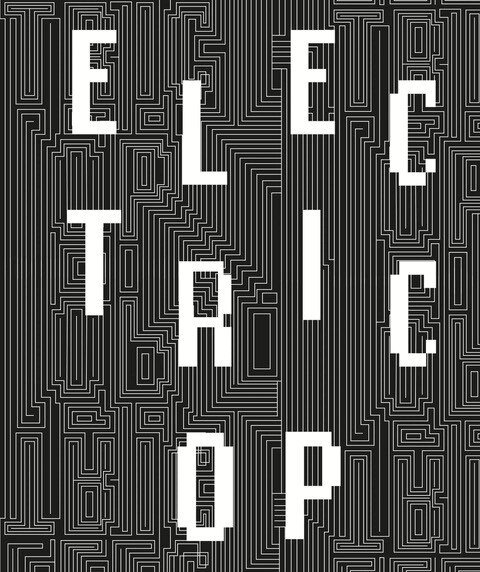
One of the most popular artistic styles of the 20th century, Op art transformed European geometric abstraction into a global phenomenon in the mid-1960s. Its disorienting patterns and illusions, rendered with machine-like precision, became icons of the futuristic Space Age. As the 1960s faded, Op became a short-lived fad, dismissed by art historians and critics as visual kitsch. However, over the last 15 years, many museums have reintroduced Op to audiences who enthusiastically embrace it as a reflection of contemporary life. Emerging at precisely the same time as mainstream video technologies and the modern digital computer, Op helped shape the aesthetics of electronic media, becoming the first artistic movement of the Information Age.Featuring plates of 123 artworks by 88 international artists and collectives from the 1960s to the present (including Victor Vasarely, Vera Molnar, Lillian Schwartz, Peter Halley, Angela Bulloch, JODI, Ryoji Ikeda and Cory Arcangel), Electric Op offers a scholarly re-evaluation of the legacy of abstraction and the surprisingly intertwined histories of contemporary and digital art. It is also a blockbuster of dazzling works that appeal to all ages, including iconic masterpieces alongside rarely-seen gems. Outstanding works from the collections of the Buffalo AKG Art Museum and the Musee d'Arts de Nantes are supplemented with key loans from other major museums, private collections and artists.