Lindsay Pérez Huber - Böcker
Visar alla böcker från författaren Lindsay Pérez Huber. Handla med fri frakt och snabb leverans.
7 produkter
7 produkter
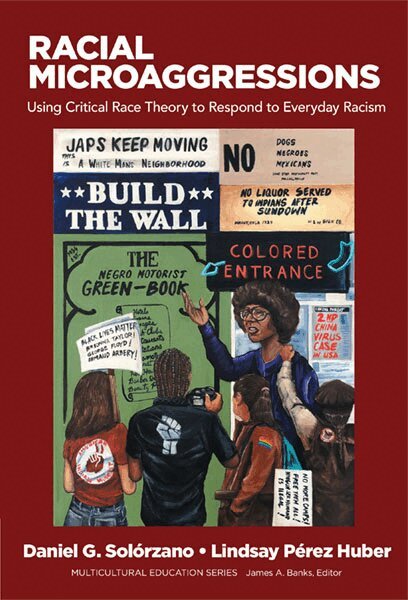
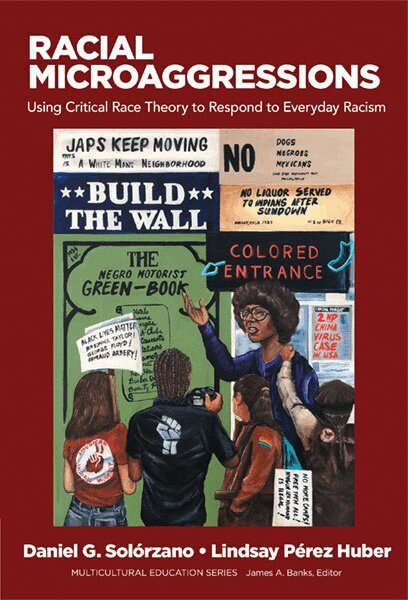
Racial Microaggressions
Using Critical Race Theory to Respond to Everyday Racism
Häftad, Engelska, 2020
351 kr
Skickas inom 7-10 vardagar
Drawing from over 2 decades of research, this book offers an in-depth analysis of a systemic form of everyday racism commonly experienced by People of Color. Racial microaggressions are layered and cumulative assaults, often carried out in subtle and unconscious ways, which take a psychological and physiological toll on the body, mind, and spirit. The authors make a unique contribution to the study of racial microaggressions by using Critical Race Theory (CRT) to develop the concepts, frameworks, and models provided in this book. Focusing on the lived experiences of People of Color, Racial Microaggressions in Education can be used to disrupt the everyday racism that continues to target so many Communities of Color. Book Features:Theoretical, conceptual, and pedagogical tools to help all people recognize, respond to, and challenge racial microaggressions.An interdisciplinary approach that draws from the fields of education, law, policy, ethnic studies, Women of Color feminisms, sociology, history, theatre, psychology, and public health.Visual examples of racial microaggressions in historical and contemporary life.
Racial Microaggressions
Using Critical Race Theory to Respond to Everyday Racism
Inbunden, Engelska, 2020
1 164 kr
Skickas inom 11-20 vardagar
Drawing from over 2 decades of research, this book offers an in-depth analysis of a systemic form of everyday racism commonly experienced by People of Color. Racial microaggressions are layered and cumulative assaults, often carried out in subtle and unconscious ways, which take a psychological and physiological toll on the body, mind, and spirit. The authors make a unique contribution to the study of racial microaggressions by using Critical Race Theory (CRT) to develop the concepts, frameworks, and models provided in this book. Focusing on the lived experiences of People of Color, Racial Microaggressions in Education can be used to disrupt the everyday racism that continues to target so many Communities of Color. Book Features:Theoretical, conceptual, and pedagogical tools to help all people recognize, respond to, and challenge racial microaggressions.An interdisciplinary approach that draws from the fields of education, law, policy, ethnic studies, Women of Color feminisms, sociology, history, theatre, psychology, and public health.Visual examples of racial microaggressions in historical and contemporary life.
388 kr
Skickas inom 11-20 vardagar
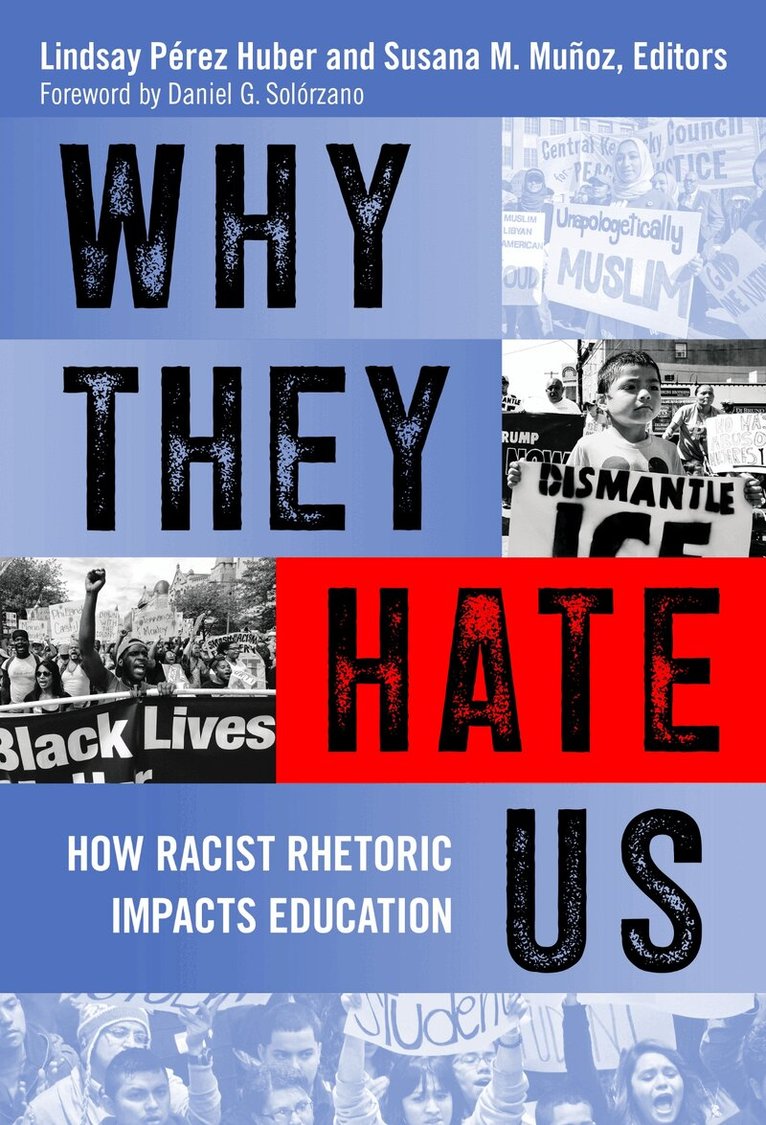
This book examines how racist political rhetoric has created damaging and dangerous conditions for Students of Color in schools and higher education institutions throughout the United States. The authors show how the election of the 45th president has resulted in a defining moment in U.S. history where racist discourses, reinforced by ideologies of white supremacy, have affected the educational experiences of our most vulnerable students. This volume situates the rhetoric of the Trump presidency within a broader historical narrative and provides recommendations for those who seek to advocate for anti-racism and social justice. As we enter the uncharted waters of a global pandemic and national racial reckoning, this will be invaluable reading for scholars, educators, and administrators who want to be part of the solution. Book Features:Uses Donald Trump's presidency as a case study to show how and why racist rhetoric can be used to mobilize large numbers of U.S. voters. Examines how the current administration has changed perspectives on contemporary racism that will have a lasting impact throughout the K–16 educational system.Demonstrates how the current discourses around race and immigration are resulting in increased racism and violence in schools and universities.Provides strategies for how anti-racist social justice efforts in education will need to shift to respond to the new landscape.
1 192 kr
Skickas inom 11-20 vardagar
This book examines how racist political rhetoric has created damaging and dangerous conditions for Students of Color in schools and higher education institutions throughout the United States. The authors show how the election of the 45th president has resulted in a defining moment in U.S. history where racist discourses, reinforced by ideologies of white supremacy, have affected the educational experiences of our most vulnerable students. This volume situates the rhetoric of the Trump presidency within a broader historical narrative and provides recommendations for those who seek to advocate for anti-racism and social justice. As we enter the uncharted waters of a global pandemic and national racial reckoning, this will be invaluable reading for scholars, educators, and administrators who want to be part of the solution. Book Features:Uses Donald Trump's presidency as a case study to show how and why racist rhetoric can be used to mobilize large numbers of U.S. voters. Examines how the current administration has changed perspectives on contemporary racism that will have a lasting impact throughout the K–16 educational system.Demonstrates how the current discourses around race and immigration are resulting in increased racism and violence in schools and universities.Provides strategies for how anti-racist social justice efforts in education will need to shift to respond to the new landscape.
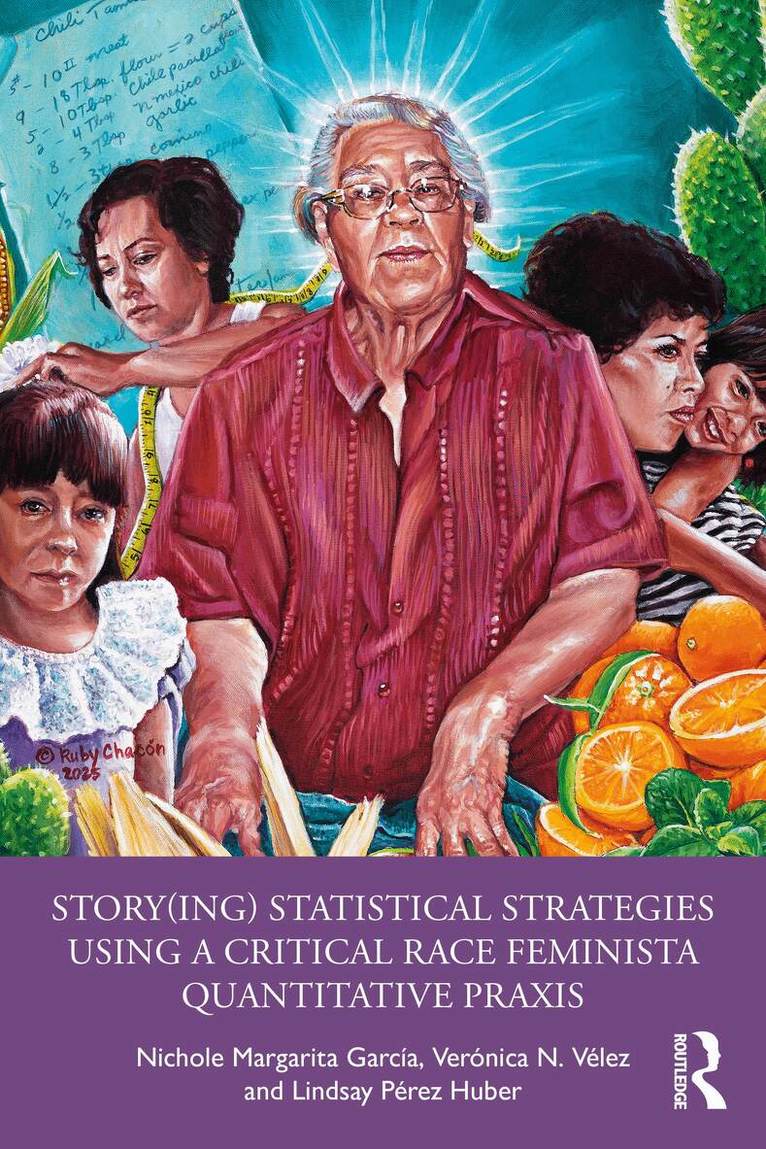
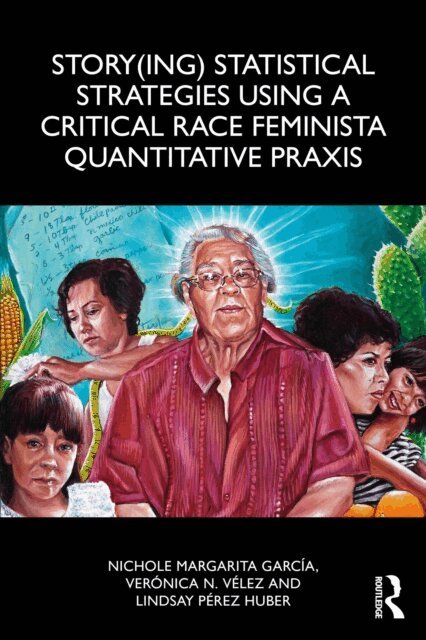
Story(ing) Statistical Strategies Using a Critical Race Feminista Quantitative Praxis
Häftad, Engelska, 2026
611 kr
Skickas inom 10-15 vardagar
Story(ing) Statistical Strategies Using a Critical Race Feminista Quantitative Praxis is a groundbreaking book that reimagines the relationship between storytelling, mathematics, and statistics. Grounded in Critical Race Theory and Chicana Feminist traditions, the text demonstrates how stories can animate numbers, challenging deficit narratives and reclaiming the mathematical wisdom and genius of Communities of Color.Through personal narratives, theoretical insights, and methodological innovations, the authors chart a pathway for transforming statistical practices into acts of resistance, remembrance, and care. Each chapter interweaves lived experiences of exclusion and resilience with critical frameworks such as racial realism, intersectionality, and cultural intuition. The book foregrounds how story(ing) numbers—treating data as narrative and action—opens possibilities for reclaiming mathematics as a communal, embodied, and justice-oriented practice. Case studies on educational pipelines, geographic information systems (GIS) mapping, and epistemic network analysis illustrate how computational tools can be repurposed to visualize inequities while honoring the dignity of marginalized communities. Ultimately, this work offers a praxis for engaging data in ways that resist invisibility, expose structural inequities, and advance equity, healing, and liberation.This book is written for scholars, graduate students, educators, and practitioners across education, sociology, ethnic studies, and data sciences. It will especially benefit those interested in critical methodologies, QuantCrit, Women of Color feminist theory, and Chicana Feminist approaches to research—providing tools to rethink how numbers and stories together can advance justice in education and beyond.
Story(ing) Statistical Strategies Using a Critical Race Feminista Quantitative Praxis
Inbunden, Engelska, 2026
2 044 kr
Skickas inom 10-15 vardagar
Story(ing) Statistical Strategies Using a Critical Race Feminista Quantitative Praxis is a groundbreaking book that reimagines the relationship between storytelling, mathematics, and statistics. Grounded in Critical Race Theory and Chicana Feminist traditions, the text demonstrates how stories can animate numbers, challenging deficit narratives and reclaiming the mathematical wisdom and genius of Communities of Color.Through personal narratives, theoretical insights, and methodological innovations, the authors chart a pathway for transforming statistical practices into acts of resistance, remembrance, and care. Each chapter interweaves lived experiences of exclusion and resilience with critical frameworks such as racial realism, intersectionality, and cultural intuition. The book foregrounds how story(ing) numbers—treating data as narrative and action—opens possibilities for reclaiming mathematics as a communal, embodied, and justice-oriented practice. Case studies on educational pipelines, geographic information systems (GIS) mapping, and epistemic network analysis illustrate how computational tools can be repurposed to visualize inequities while honoring the dignity of marginalized communities. Ultimately, this work offers a praxis for engaging data in ways that resist invisibility, expose structural inequities, and advance equity, healing, and liberation.This book is written for scholars, graduate students, educators, and practitioners across education, sociology, ethnic studies, and data sciences. It will especially benefit those interested in critical methodologies, QuantCrit, Women of Color feminist theory, and Chicana Feminist approaches to research—providing tools to rethink how numbers and stories together can advance justice in education and beyond.
2 706 kr
Skickas inom 7-10 vardagar
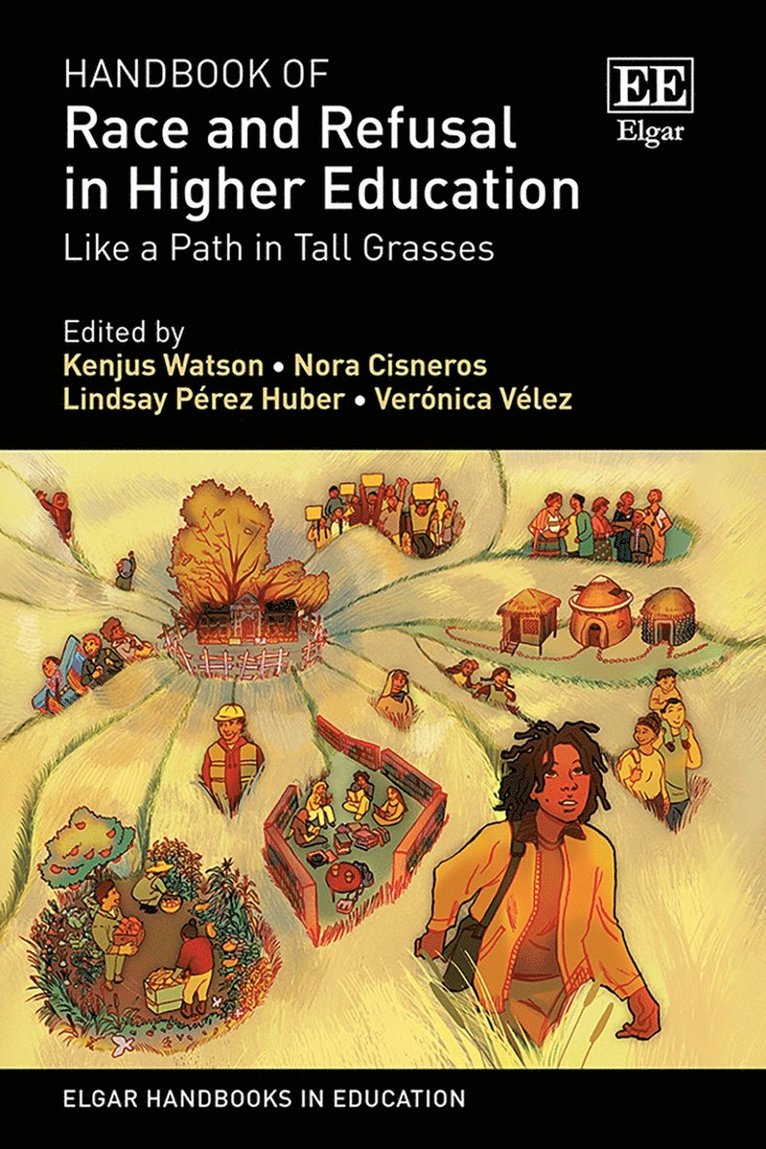
This cutting-edge Handbook goes beyond discourses of equity, inclusion, and diversity, carving a space for critical discussions about the relationships between Black, Indigenous, People of Color (BIPOC) and the university. In doing so, it forges new paths and alternative conceptual starting points to consider in making a commitment to social justice in higher education.Kenjus T. Watson, Nora Cisneros, Lindsay Pérez Huber and Verónica Vélez bring together a dynamic collective of scholars, educators, students, community members, and activists to ask the critical question: how do we work towards justice through a lens of refusal in higher education (HE)? The Handbook presents both traditional and non-traditional scholarship, including creative and artistic work, to explore the distinctive ways white supremacy, settler colonialism, and antiblackness impact students, faculty, and communities within HE, with chapters providing insight into everyday strategies of refusal, radical imaginaries of abolitions and futurities, and projects of decolonization. Taking stock of the tensions and contradictions in ‘undoing’ the university while occupying positions within it, the Handbook concludes that the study of education cannot be divorced from the sociohistorical, political, and economic architectures that have shaped it.This path-breaking Handbook will be a crucial resource for BIPOC students, scholars and faculty within HE institutions, as well as students of the sociology of education, the sociology of discrimination, education policy, and race, ethnicity, and colonial studies.