Lisa A. Rapp-Paglicci – författare
Visar alla böcker från författaren Lisa A. Rapp-Paglicci. Handla med fri frakt och snabb leverans.
10 produkter
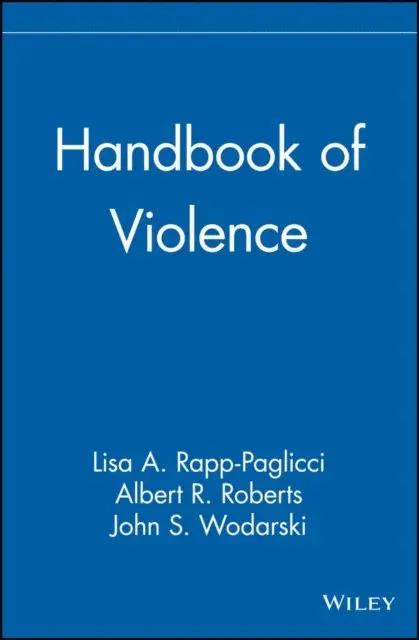
Handbook of Violence
Av John S. Wodarski, Albert R. Roberts m. fl.
E-bok, 2002
1552 kr
Lägg i varukorg
A multidisciplinary team of experts examines violence from a resilience perspective Violence knows no boundaries. It attacks in schools, in families, and even in the workforce-places that should be regarded as safe havens. Encompassing the enormity of violence through a comprehensive, …
Handbook of Preventive Interventions for Children and Adolescents
Av Rapp-Paglicci, Dulmus m. fl.
Inbunden, 2004
987 kr
Lägg i varukorg
Practical information and evidence-based findings on the most effective and current prevention interventions for children and adolescents The Handbook of Preventive Interventions for Children and Adolescents is the first book that thoroughly covers the various types of prevention interventions …
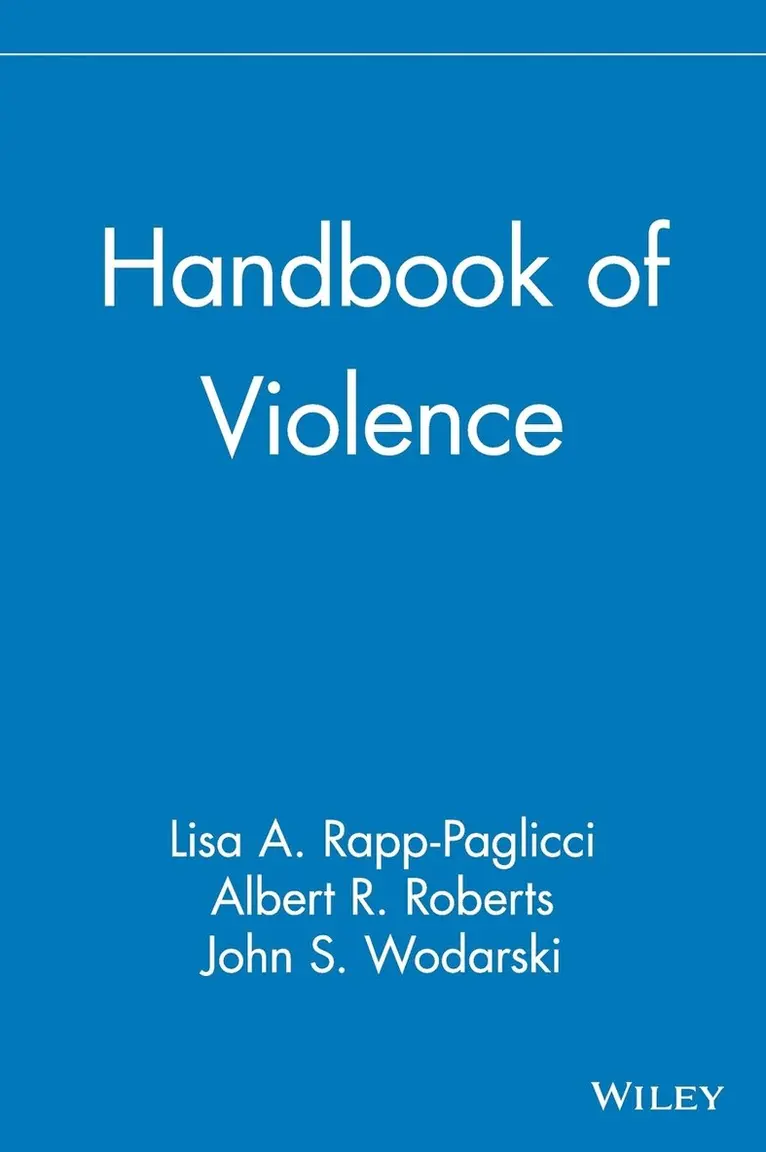
Handbook of Violence
Av Lisa A. Rapp-Paglicci, Albert R. Roberts m. fl.
Inbunden, 2002
1352 kr
Lägg i varukorg
A multidisciplinary team of experts examines violence from a resilience perspective Violence knows no boundaries. It attacks in schools, in families, and even in the workforce-places that should be regarded as safe havens. Encompassing the enormity of violence through a comprehensive, …
Comprehensive Handbook of Social Work and Social Welfare, Social Work Practice
Av Lisa A. Rapp–Paglicci, William Rowe
Inbunden, 2008
2830 kr
Lägg i varukorg
Comprehensive Handbook of Social Work and Social Welfare, Volume 3: The Profession of Social Work features contributions from leading international researchers and practitioners and presents the most comprehensive, in-depth source of information on the field of social work and social welfare.
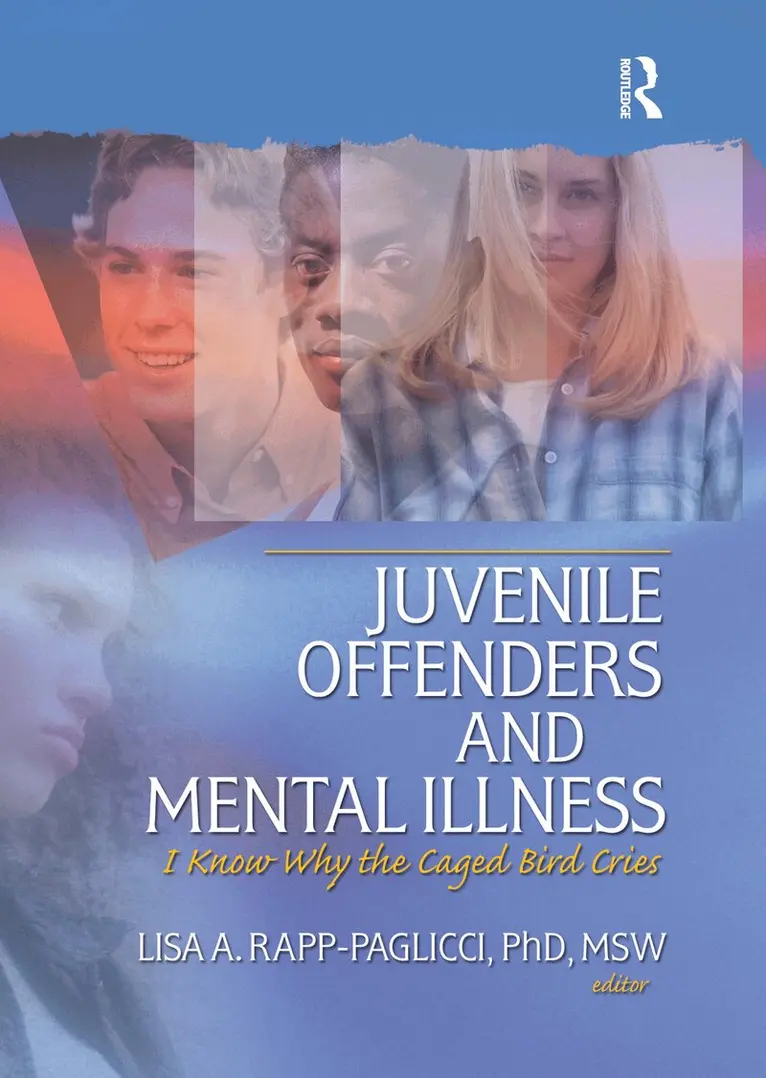
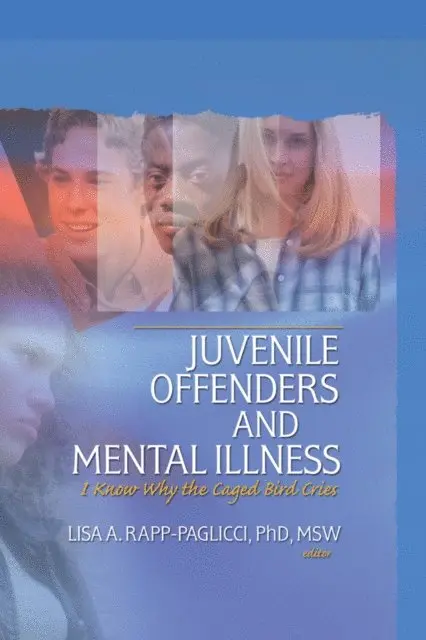
Juvenile Offenders and Mental Illness
I Know Why the Caged Bird Cries
Inbunden, 2005
1830 kr
Lägg i varukorg
Get the latest research on juvenile offenders who have a mental illnessMost youths in the juvenile justice system who have one or more mental disorders do not receive proper treatment or education, nor do they serve sentences appropriate for their crimes. Juvenile Offenders and Mental Illness: I …
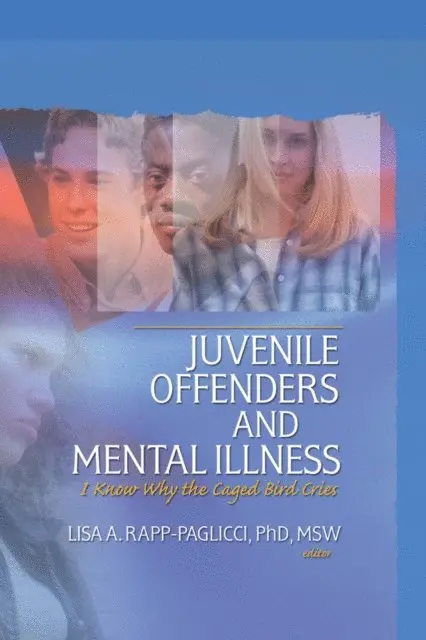
Juvenile Offenders and Mental Illness
I Know Why the Caged Bird Cries
Häftad, 2005
488 kr
Lägg i varukorg
Get the latest research on juvenile offenders who have a mental illnessMost youths in the juvenile justice system who have one or more mental disorders do not receive proper treatment or education, nor do they serve sentences appropriate for their crimes. Juvenile Offenders and Mental Illness: I …
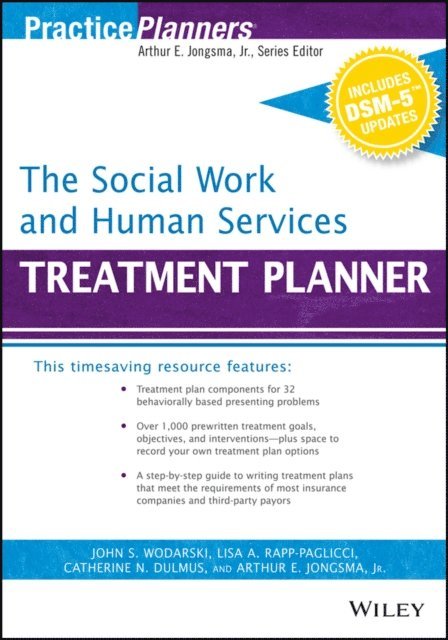
Social Work and Human Services Treatment Planner, with DSM 5 Updates
Av Catherine N. Dulmus, Lisa A. Rapp-Paglicci m. fl.
E-bok, 2015
855 kr
Lägg i varukorg
This timesaving resource features: Treatment plan components for 32 behaviorally based presenting problems Over 1,000 prewritten treatment goals, objectives, and interventions—plus space to record your own treatment plan options A step-by-step guide to writing treatment plans that meet the …
Social Work and Human Services Treatment Planner, with DSM 5 Updates
Av Catherine N. Dulmus, Lisa A. Rapp-Paglicci m. fl.
E-bok, 2015
836 kr
Lägg i varukorg
This timesaving resource features: Treatment plan components for 32 behaviorally based presenting problems Over 1,000 prewritten treatment goals, objectives, and interventions—plus space to record your own treatment plan options A step-by-step guide to writing treatment plans that meet the …
Juvenile Offenders and Mental Illness
I Know Why the Caged Bird Cries
E-bok, 2014
570 kr
Lägg i varukorg
Get the latest research on juvenile offenders who have a mental illness Most youths in the juvenile justice system who have one or more mental disorders do not receive proper treatment or education, nor do they serve sentences appropriate for their crimes. Juvenile Offenders and Mental Illness: I …
Juvenile Offenders and Mental Illness
I Know Why the Caged Bird Cries
E-bok, 2014
589 kr
Lägg i varukorg
Get the latest research on juvenile offenders who have a mental illness Most youths in the juvenile justice system who have one or more mental disorders do not receive proper treatment or education, nor do they serve sentences appropriate for their crimes. Juvenile Offenders and Mental Illness: I …