Lisa De Propris - Böcker
Visar alla böcker från författaren Lisa De Propris. Handla med fri frakt och snabb leverans.
6 produkter
6 produkter
2 103 kr
Skickas inom 10-15 vardagar
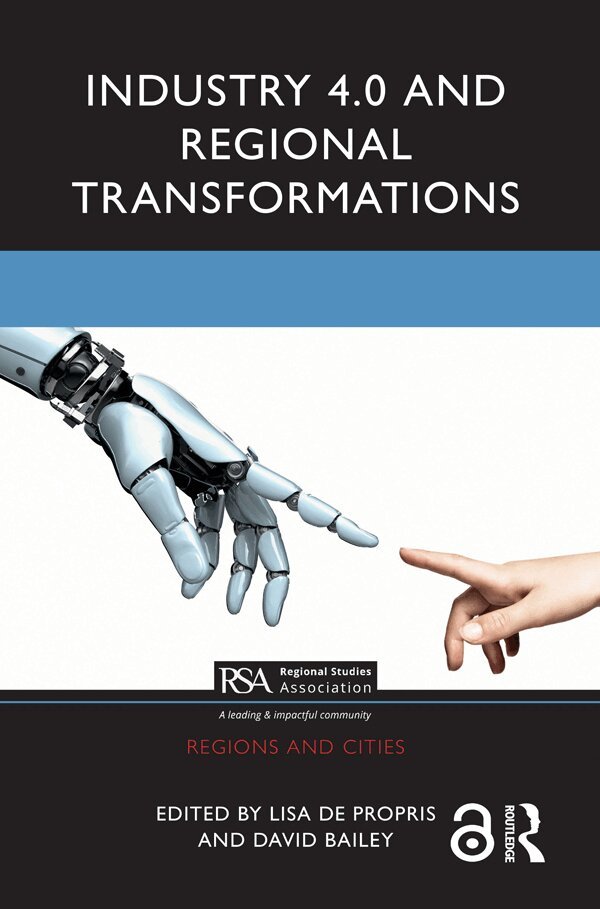
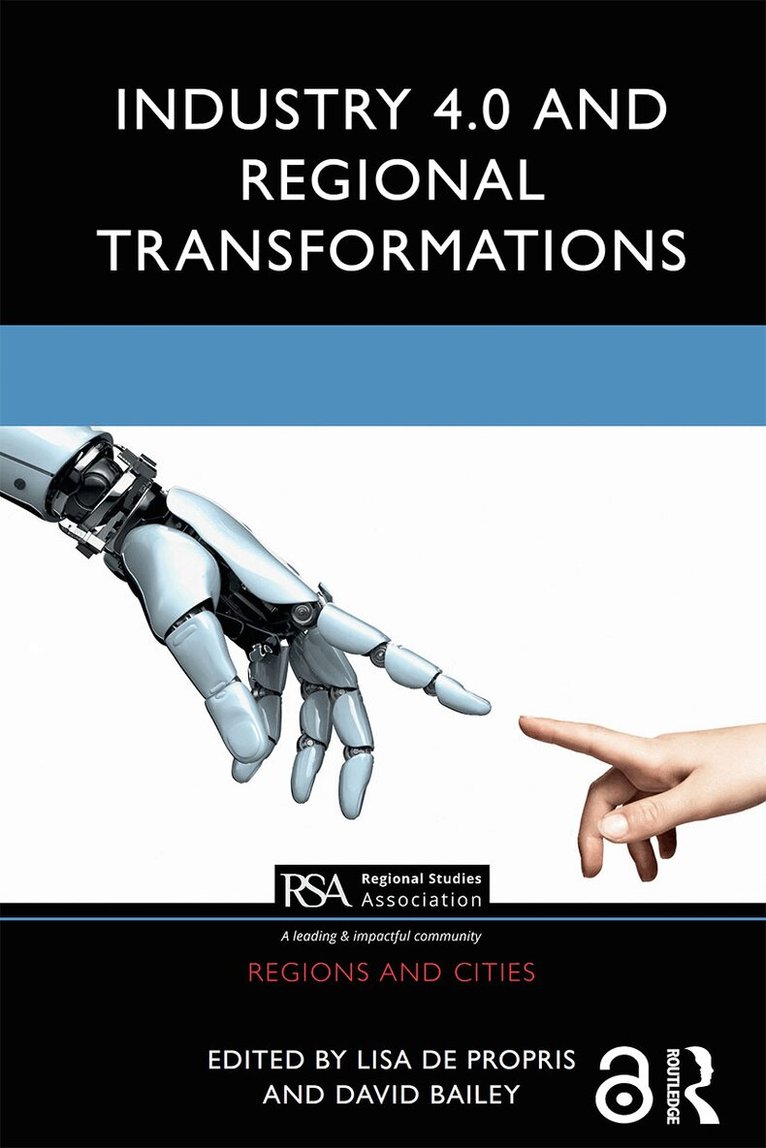
This edited volume brings together a group of expert contributors to explorebthe opportunities and the challenges that Industry 4.0 (smart manufacturing) is likely to pose for regions, fi rms and jobs in Europe. Drawing on theory and empirical cases, it considers emerging issues like servitization, new innovation models for local production systems and the increase in reshoring.Industry 4.0 and Regional Transformations captures the complexity of this new manufacturing model in an accessible way and considers its implications for the future. It will be essential reading for advanced students and researchers and policy makers in regional studies, industrial policy, economic geography, innovation studies, operations management and engineering.
1 440 kr
Skickas inom 10-15 vardagar
After years of near ‘disrepute’ in official circles, Industrial Policy has made something of a comeback over the last few years and is now very much back on the agenda at national and EU levels, driven by concerns over globalisation, deindustrialisation, unemployment and perceived poor growth in the EU. Simultaneously, the European Commission’s Fourth Report on Economic and Social Cohesion has kicked off the debate over challenges to cohesion, the shape of EU Cohesion policy beyond 2013, and how resources should be managed. This debate will find added momentum with the imminent ‘mid-term’ review being launched by the Commission. Discussions over the success or not of the Lisbon Agenda, on-going debates over cluster policies, and recent developments in policy evaluation have also contributed to a burgeoning academic literature over the last eighteen months. This edited volume is especially pertinent given such developments and pulls together a diverse range of contributions from leading authorities in the field to add to these debates and to illustrate connections between them.This book was published as a special issue of Policy Studies.
444 kr
Skickas inom 10-15 vardagar
After years of near ‘disrepute’ in official circles, Industrial Policy has made something of a comeback over the last few years and is now very much back on the agenda at national and EU levels, driven by concerns over globalisation, deindustrialisation, unemployment and perceived poor growth in the EU. Simultaneously, the European Commission’s Fourth Report on Economic and Social Cohesion has kicked off the debate over challenges to cohesion, the shape of EU Cohesion policy beyond 2013, and how resources should be managed. This debate will find added momentum with the imminent ‘mid-term’ review being launched by the Commission. Discussions over the success or not of the Lisbon Agenda, on-going debates over cluster policies, and recent developments in policy evaluation have also contributed to a burgeoning academic literature over the last eighteen months. This edited volume is especially pertinent given such developments and pulls together a diverse range of contributions from leading authorities in the field to add to these debates and to illustrate connections between them.This book was published as a special issue of Policy Studies.
617 kr
Skickas inom 10-15 vardagar
This edited volume brings together a group of expert contributors to explorebthe opportunities and the challenges that Industry 4.0 (smart manufacturing) is likely to pose for regions, fi rms and jobs in Europe. Drawing on theory and empirical cases, it considers emerging issues like servitization, new innovation models for local production systems and the increase in reshoring.Industry 4.0 and Regional Transformations captures the complexity of this new manufacturing model in an accessible way and considers its implications for the future. It will be essential reading for advanced students and researchers and policy makers in regional studies, industrial policy, economic geography, innovation studies, operations management and engineering.
4 717 kr
Skickas inom 7-10 vardagar
In this comprehensive original reference work, the editors have brought together an unrivalled group of distinguished scholars and practitioners to comment on the historical and contemporary role of industrial districts (IDs). This Handbook is uniquely positioned to shed light on the role of global and local forces and how they increasingly interact to shape the welfare of societies and the economic performance of firms and places. It illustrates that IDs are a clear expression of local societies finding their 'place' in the national and international division of labour, and through the constitution and elaboration of productive specialisations congenial to the attitudes and the preferences of their people. Ultimately, the Handbook represents the main strands of a wide-ranging, decades-long debate on the nature of IDs: what they represented in the past, the changes they are currently undergoing, and the future challenges and opportunities they will face in an increasingly global economy.Including conceptual, critical and forward-looking contributions, as well as case studies from Asia, Latin America, Europe and the US, this Handbook will prove an invaluable resource for academics, students and policymakers focusing on industrial districts, local production systems and innovation. It will also appeal to those interested in the local drivers of competitiveness and related public policies.
1 093 kr
Skickas inom 7-10 vardagar
In this comprehensive original reference work, the editors have brought together an unrivalled group of distinguished scholars and practitioners to comment on the historical and contemporary role of industrial districts (IDs). This Handbook is uniquely positioned to shed light on the role of global and local forces and how they increasingly interact to shape the welfare of societies and the economic performance of firms and places. It illustrates that IDs are a clear expression of local societies finding their 'place' in the national and international division of labour, and through the constitution and elaboration of productive specialisations congenial to the attitudes and the preferences of their people. Ultimately, the Handbook represents the main strands of a wide-ranging, decades-long debate on the nature of IDs: what they represented in the past, the changes they are currently undergoing, and the future challenges and opportunities they will face in an increasingly global economy.Including conceptual, critical and forward-looking contributions, as well as case studies from Asia, Latin America, Europe and the US, this Handbook will prove an invaluable resource for academics, students and policymakers focusing on industrial districts, local production systems and innovation. It will also appeal to those interested in the local drivers of competitiveness and related public policies.