Lisa Moses Leff – författare
Visar alla böcker från författaren Lisa Moses Leff. Handla med fri frakt och snabb leverans.
7 produkter
7 produkter
Häftad, Engelska, 2018
253 kr
Skickas inom 5-8 vardagar
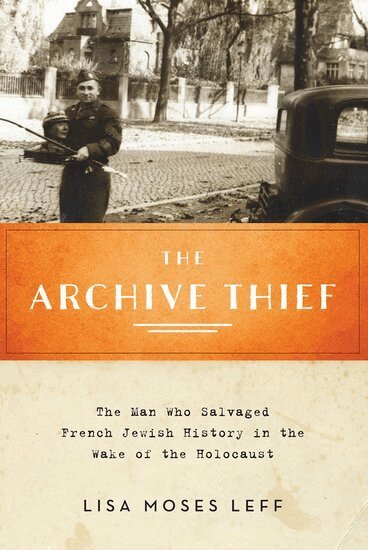
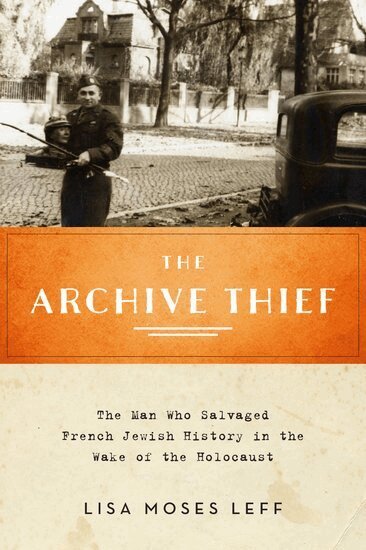
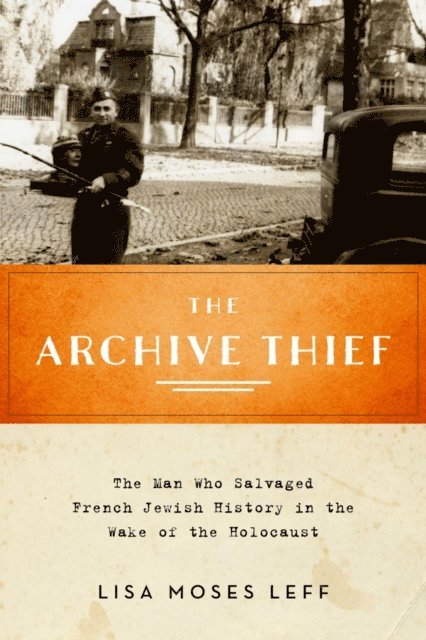
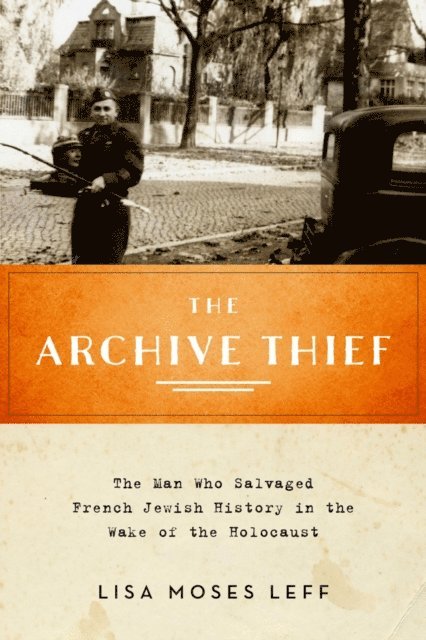
In the aftermath of the Holocaust, the Jewish historian Zosa Szajkowski stole tens of thousands of archival documents related to French Jewish history from public archives and collections in France and moved them, illicitly, to New York. Why did this respectable historian become a thief? And why did librarians in the United States and Israel accept these materials from him, turning a blind eye to the signs of ownership they bore? With her award-winning book, The Archive Thief, Lisa Moses Leff reconstructs Szajkowski's gripping story in all its ambiguity. Born into poverty in Russian Poland in 1911, Szajkowski was a self-made man who managed to make a life for himself as an intellectual, first as a journalist in 1930s Paris, and then, after a harrowing escape to New York in 1941, as a scholar. Although he never taught at a university or even earned a PhD, Szajkowski became one of the world's foremost experts on the history of the Jews in modern France, publishing in Yiddish, English, and Hebrew. His work opened up new ways of thinking about Jewish emancipation, economic and social modernization, and the rise of modern anti-Semitism. But beneath Szajkowski's scholarly accomplishments lay his shameful secret: his pathbreaking articles were based upon documents that he moved illicitly to New York. Eventually, he sold these documents, piecemeal, to American and Israeli research libraries where they still remain. Leff takes us into the backstage of the archives, revealing the powerful ideological, economic, and psychological forces that made Holocaust-era Jewish scholars care more deeply than ever before about preserving the remnants of their past. As Leff shows, it is only when we understand the issues at the heart of his story, in all their ambiguity and complexity, that we can begin to address the larger questions of the rightful ownership of Jewish archives, as well as other contested archives, that are still at issue today.
Inbunden, Engelska, 2015
475 kr
Skickas inom 5-8 vardagar
Born into poverty in Russian Poland in 1911, Zosa Szajkowski (Shy-KOV-ski) was a self-made man who managed to make a life for himself as an intellectual, first as a journalist in 1930s Paris, and then, after a harrowing escape to New York in 1941, as a scholar. Although he never taught at a university or even earned a PhD, Szajkowski became one of the world's foremost experts on the history of the Jews in modern France, publishing in Yiddish, English, and Hebrew. His work opened up new ways of thinking about Jewish emancipation, economic and social modernization, and the rise of modern anti-Semitism.But beneath Szajkowski's scholarly success lay a shameful secret. In the aftermath of the Holocaust, the scholar stole tens of thousands of archival documents related to French Jewish history from public archives and private synagogue collections in France and moved them, illicitly, to New York. There, he used them as the basis for his pathbreaking articles. Eventually, he sold them, piecemeal, to American and Israeli research libraries, where they still remain today. Why did this respectable historian become an archive thief? And why did librarians in the United States and Israel buy these materials from him, turning a blind eye to the signs of ownership they bore? These are the questions that motivate this gripping tale. Throughout, it is clear that all involved--perpetrator, victims, and buyers--saw what Szajkowski was doing through the prism of the Holocaust. The buyers shared a desire to save these precious remnants of the European Jewish past, left behind on a continent where six million Jews had just been killed by the Nazis and their collaborators. The scholars who read Szajkowski's studies, based largely on the documents he had stolen, saw the treasures as offering an unparalleled window into the history that led to that catastrophe. And the Jewish caretakers of many of the institutions Szajkowski robbed in France saw the losses as a sign of their difficulties reconstructing their community after the Holocaust, when the balance of power in the Jewish world was shifting away from Europe to new centers in America and Israel. Based on painstaking research, Lisa Leff reconstructs Szajkowski's story in all its ambiguity by taking us backstage at the archives, revealing the powerful ideological, economic and scientific forces that made Holocaust-era Jewish scholars care more deeply than ever before about preserving the remnants of their past.
E-bok
PDF, Engelska, 2015196 kr
Läs direkt efter köp
In the aftermath of the Holocaust, Jewish historian Zosa Szajkowski gathered up tens of thousands of documents from Nazi buildings in Berlin, and later, public archives and private synagogues in France, and moved them all, illicitly, to New York. In The Archive Thief, Lisa Moses Leff reconstructs Szajkowski''s story in all its ambiguity. Born into poverty in Russian Poland, Szajkowski first made his name in Paris as a communist journalist. In the late 1930s, as he saw the threats to Jewish safety rising in Europe, he broke with the party and committed himself to defending his people in a new way, as a scholar associated with the YIVO Institute for Jewish Research. Following a harrowing 1941 escape from France and U.S. army service, Szajkowski struggled to remake his life as a historian, eking out a living as a YIVO archivist in postwar New York. His scholarly output was tremendous nevertheless; he published scores of studies on French Jewish history that opened up new ways of thinking about Jewish emancipation, modernization, and the rise of modern antisemitism. But underlying Szajkowski''s scholarly accomplishments were the documents he stole, moved, and eventually sold to American and Israeli research libraries, where they remain today. Part detective story, part analysis of the construction of history, The Archive Thief offers a window into the debates over the rightful ownership of contested Jewish archives and the powerful ideological, economic, and psychological forces that have made Jewish scholars care so deeply about preserving the remnants of their past.
E-bok
Engelska, 2015196 kr
Läs direkt efter köp
In the aftermath of the Holocaust, Jewish historian Zosa Szajkowski gathered up tens of thousands of documents from Nazi buildings in Berlin, and later, public archives and private synagogues in France, and moved them all, illicitly, to New York. In The Archive Thief, Lisa Moses Leff reconstructs Szajkowski''s story in all its ambiguity. Born into poverty in Russian Poland, Szajkowski first made his name in Paris as a communist journalist. In the late 1930s, as he saw the threats to Jewish safety rising in Europe, he broke with the party and committed himself to defending his people in a new way, as a scholar associated with the YIVO Institute for Jewish Research. Following a harrowing 1941 escape from France and U.S. army service, Szajkowski struggled to remake his life as a historian, eking out a living as a YIVO archivist in postwar New York. His scholarly output was tremendous nevertheless; he published scores of studies on French Jewish history that opened up new ways of thinking about Jewish emancipation, modernization, and the rise of modern antisemitism. But underlying Szajkowski''s scholarly accomplishments were the documents he stole, moved, and eventually sold to American and Israeli research libraries, where they remain today. Part detective story, part analysis of the construction of history, The Archive Thief offers a window into the debates over the rightful ownership of contested Jewish archives and the powerful ideological, economic, and psychological forces that have made Jewish scholars care so deeply about preserving the remnants of their past.
Inbunden, Engelska, 2017
1 024 kr
Skickas inom 5-8 vardagar
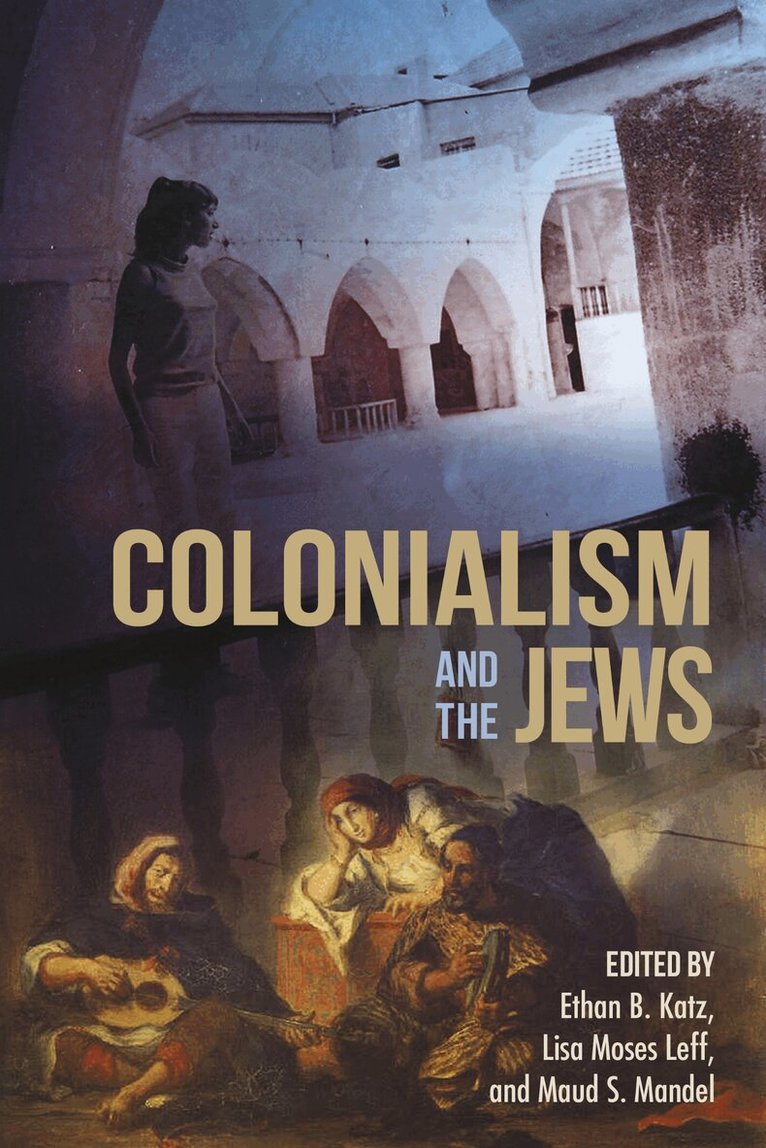
The lively essays collected here explore colonial history, culture, and thought as it intersects with Jewish studies. Connecting the Jewish experience with colonialism to mobility and exchange, diaspora, internationalism, racial discrimination, and Zionism, the volume presents the work of Jewish historians who recognize the challenge that colonialism brings to their work and sheds light on the diverse topics that reflect the myriad ways that Jews engaged with empire in modern times. Taken together, these essays reveal the interpretive power of the "Imperial Turn" and present a rethinking of the history of Jews in colonial societies in light of postcolonial critiques and destabilized categories of analysis. A provocative discussion forum about Zionism as colonialism is also included.
Häftad, Engelska, 2017
445 kr
Skickas inom 5-8 vardagar
The lively essays collected here explore colonial history, culture, and thought as it intersects with Jewish studies. Connecting the Jewish experience with colonialism to mobility and exchange, diaspora, internationalism, racial discrimination, and Zionism, the volume presents the work of Jewish historians who recognize the challenge that colonialism brings to their work and sheds light on the diverse topics that reflect the myriad ways that Jews engaged with empire in modern times. Taken together, these essays reveal the interpretive power of the "Imperial Turn" and present a rethinking of the history of Jews in colonial societies in light of postcolonial critiques and destabilized categories of analysis. A provocative discussion forum about Zionism as colonialism is also included.
Inbunden, Engelska, 2006
911 kr
Skickas inom 5-8 vardagar
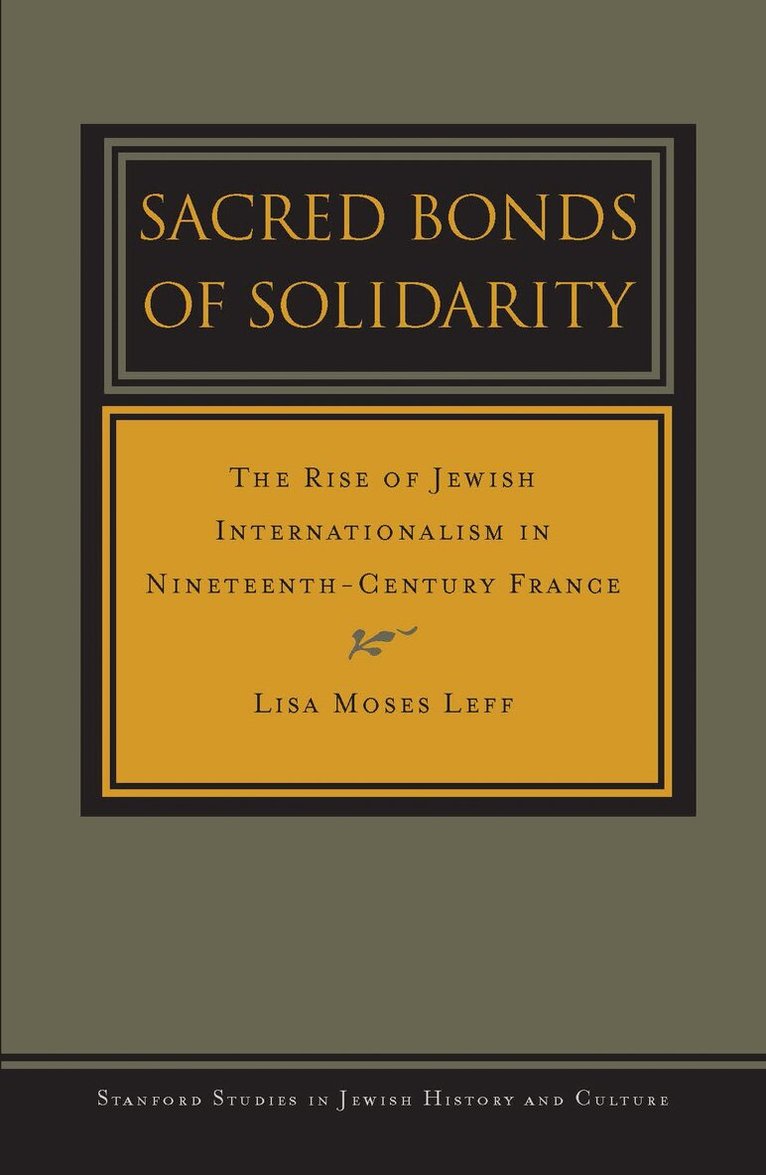
Starting around 1840, French Jews began to reach out in new ways to Jews elsewhere, especially in North Africa and the Middle East. In describing these activities, they spoke of feelings of solidarité and a mission to bring civilisation to Jews everywhere, a language more meaningful in the French public arena than in Jewish tradition. Far from a remnant of ancient feelings, Jewish solidarity is a modern phenomenon with roots in its inventors' integration into French political culture. Why did acculturation inspire elite French Jews to affirm their Jewishness through international aid? What did their actions mean in the French public sphere, and how did they transform Jewish identity?In a book that speaks to French historians and Jewish historians alike, Sacred Bonds of Solidarity explores the historical roots of Jewish international aid and the language of "solidarity" that accompanied it. In using this language, French Jews redefined Jewish identity in lasting ways. At the same time, they helped shape state secularism and the "civilizing mission" in French foreign and colonial policy.